





Content Marketing Best Practice And Strategy For Long-Term Growth
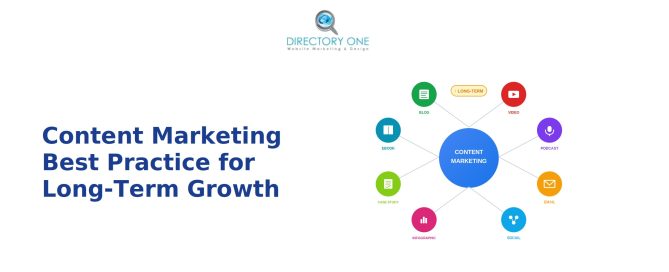
Most businesses create content. But very few follow content marketing best practice lists to create content that actually grows their business. The difference? A smart, well-executed content marketing strategy.
Content marketing generates over 3x as many leads as outbound marketing and costs 62% less yet most brands still treat it as an afterthought. If you are ready to change that, this guide is for you.
At Directory One, we provide SEO and content marketing services that help businesses build real, lasting visibility online. Let’s break down everything you need to know.
What Is a Content Marketing Strategy?
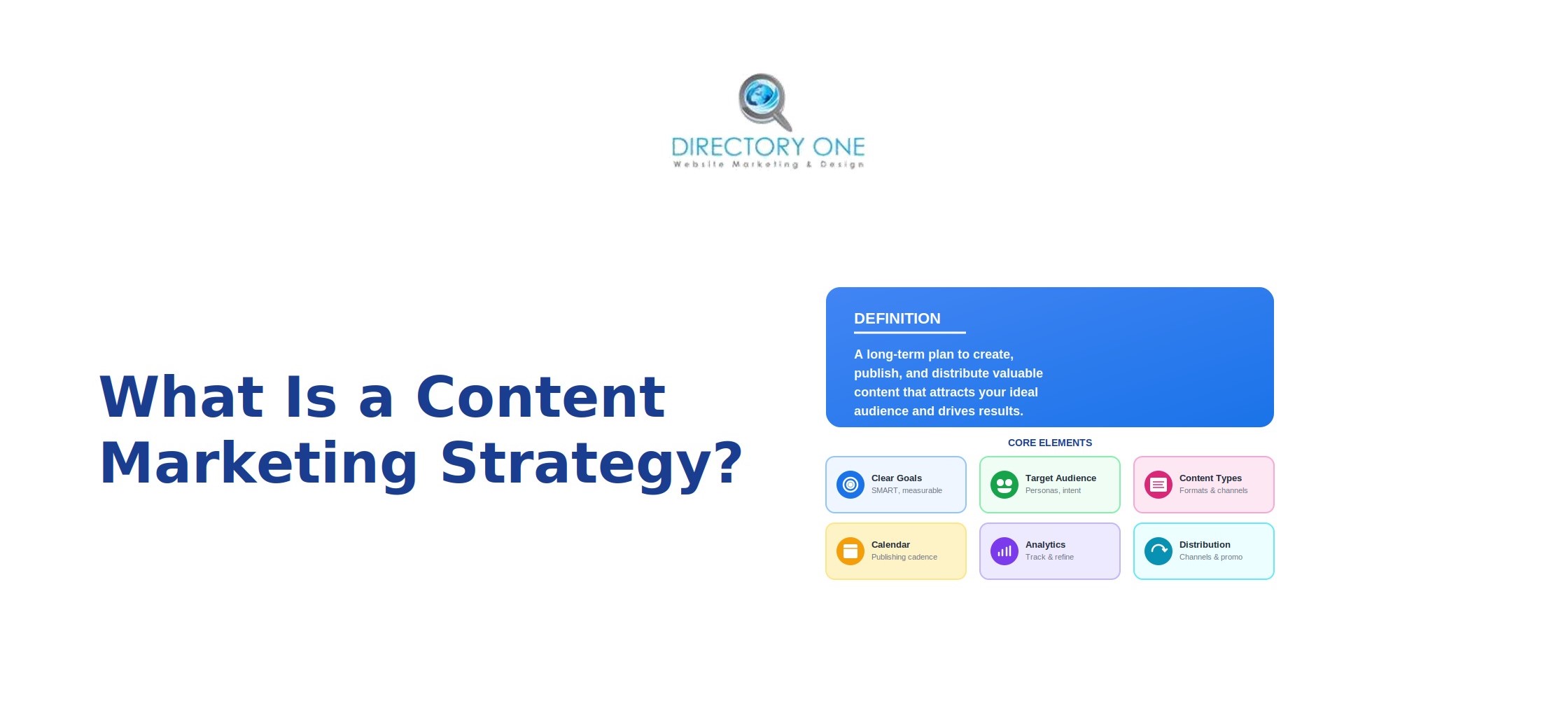
A content marketing strategy is your roadmap. It defines what you create, who you create it for, and how you distribute it to attract and convert your target audience.
It is not just blogging. It includes blog posts, videos, social content, email, case studies, and more — all working together toward one goal: growth.
Besides, content strategy vs content marketing is a question we get often. Here is the simple answer: content strategy is the plan; content marketing is the execution. You need both.
For a foundational look at how SEO and content work together, read our post on SEO Writing: 9 Proven Tips to Create Search-Optimized Content.
Why Content Marketing Is the Only SEO Strategy You Need
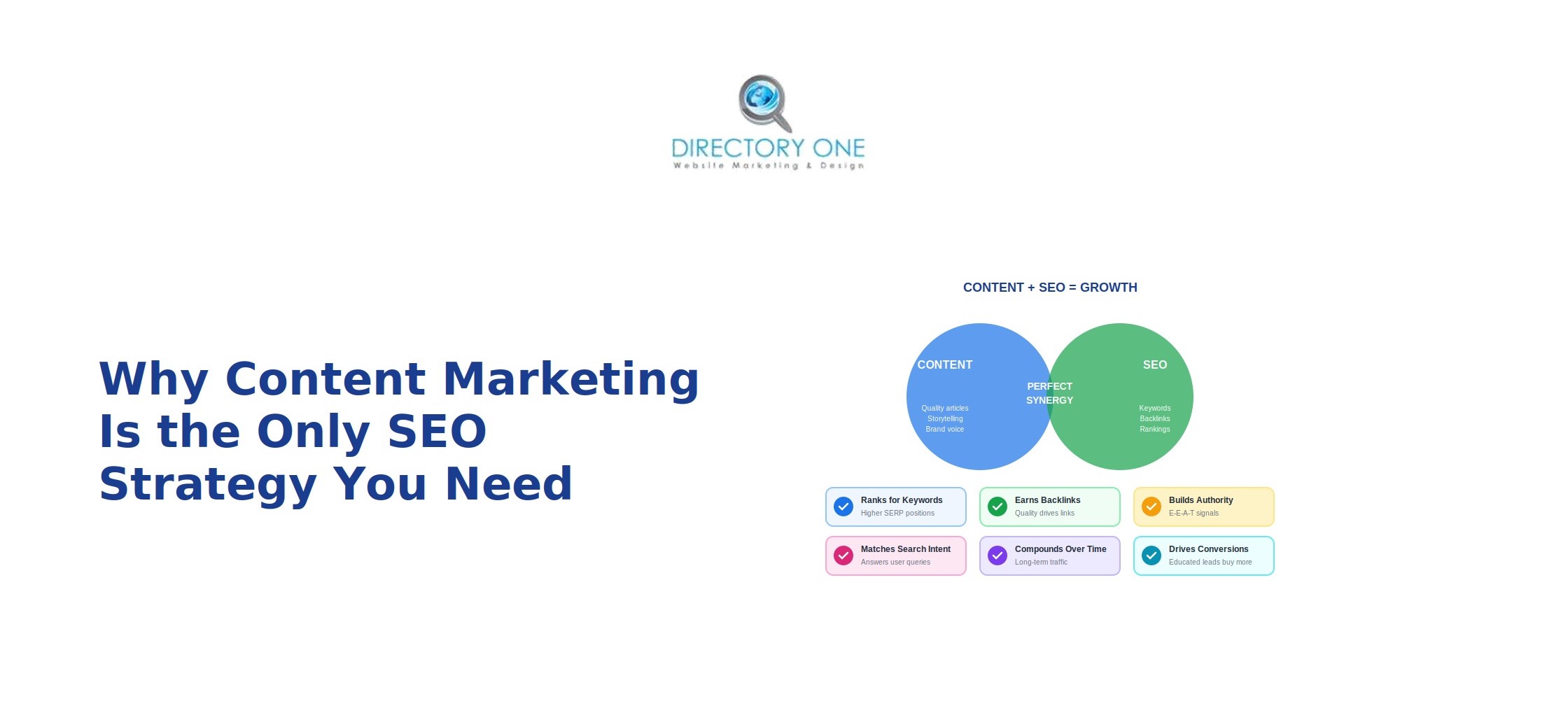
Some say SEO is about keywords. We say it is about answers. In 2026, Google’s algorithms are so advanced that they prioritize user intent over mere keyword density. This is why content marketing is the only SEO strategy you need.
When you provide high-quality information, you naturally earn backlinks, increase dwell time, and reduce bounce rates. High-authority content is what convinces Google that you are an expert in your niche.
Think about it. Every keyword you want to rank for needs a page. Every backlink needs something worth linking to. Every visitor needs something worth reading. Content is the foundation of all of it.
Website, blog, and SEO remain the #1 ROI-generating channel, according to marketers, second only to social media in 2026. And social media itself depends heavily on great content.
In B2B, organic search generates 44.6% of all revenue, making content-driven SEO the single most powerful growth lever for business-to-business brands. Our SEO marketing services are built entirely around content-first strategies that produce measurable results.
How to Create a Content Marketing Strategy That Gets Results
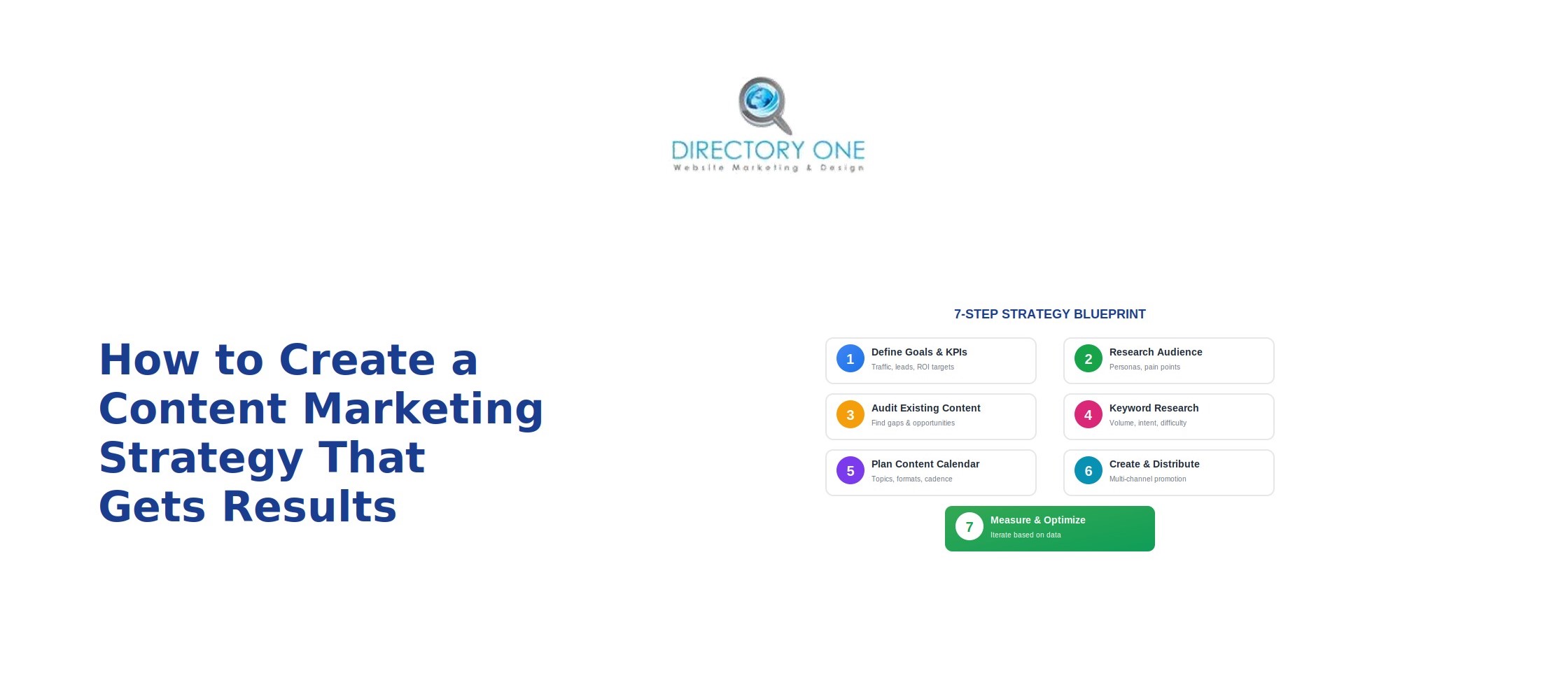
Here is how to create a content marketing strategy that gets results step by step.
Step 1: Define your audience.
Who are you trying to reach? What problems do they have? Build clear buyer personas before you write a single word.
Step 2: Set clear goals.
Are you building brand awareness, generating leads, or driving sales? Your goals shape your content types and metrics.
Step 3: Do keyword research.
Find what your audience is searching for. Use tools like SEMrush or Ubersuggest to find high-intent, low-competition topics.
Step 4: Map content to the buyer journey.
Create top-of-funnel content to attract, middle-of-funnel content to engage, and bottom-of-funnel content to convert.
Step 5: Build a content calendar.
Consistency beats intensity. A predictable publishing schedule builds audience trust and helps Google crawl your site regularly.
Step 6: Distribute and promote.
Publishing is only half the battle. Share content via email, social media, and partnerships to maximize reach.
Our content marketing strategy services cover all six steps, from research to results.
Content Marketing Best Practice for Building a Scalable Strategy
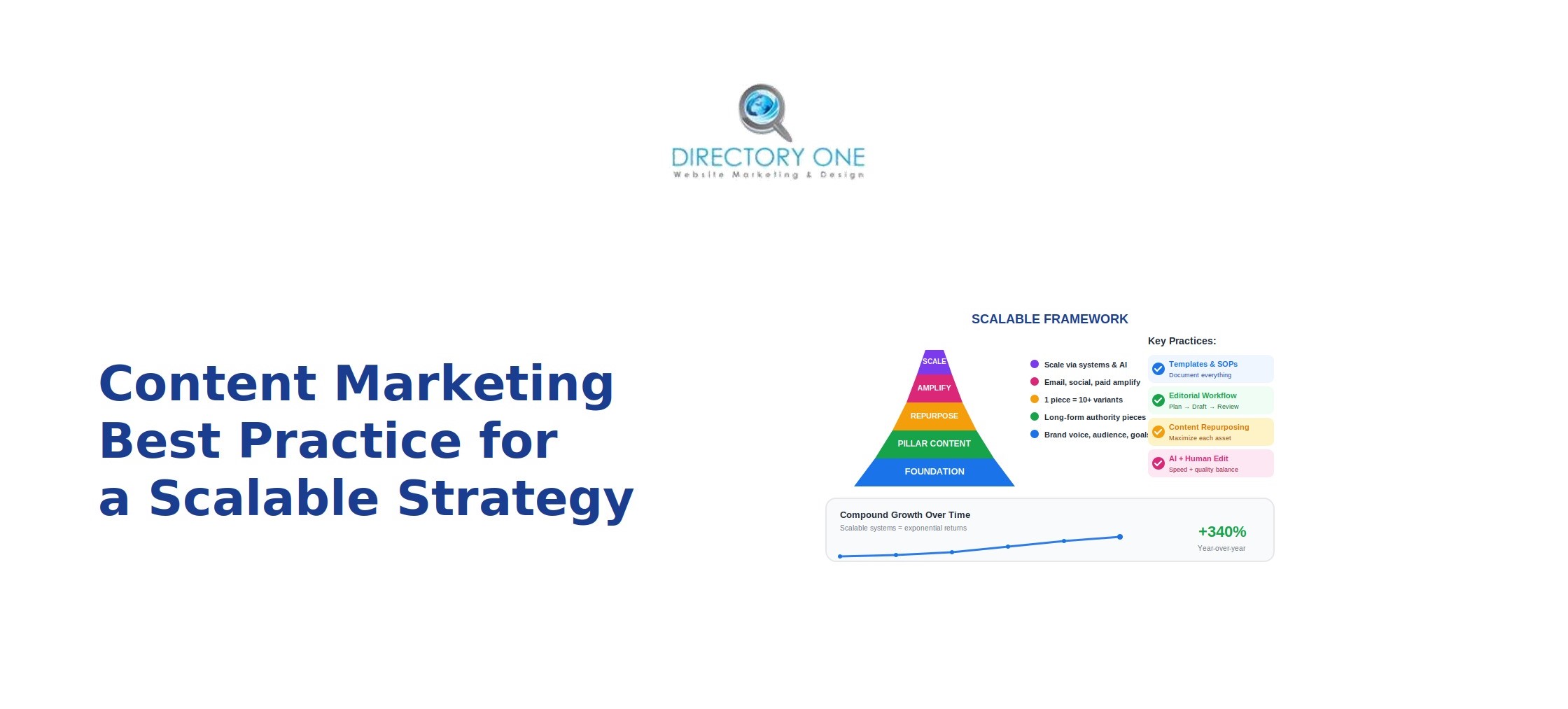
Knowing content marketing best practice is the difference between a strategy that fades in six months and one that compounds for years. Here are the principles that matter most.
- Quality always beats quantity.
Posts of 1,890 or more words earn 77% more backlinks and rank higher on Google. Write less if you must, but make every piece exceptional.
- Target search intent, not just keywords.
Google’s algorithm rewards content that answers what people actually want to know. Understand the “why” behind every search.
- Update existing content regularly.
Updating existing content can boost organic traffic by 106% — one of the most effective and underused SEO tactics available.
- Use internal linking strategically.
Content organized in topic clusters ranks 36% higher on average than standalone articles. Link related pages together to build authority.
- Repurpose across formats.
A single blog post can become a video, a social carousel, a podcast episode, and an email series. Work smarter, not harder.
Content Marketing Strategy Framework to Maximize Reach and Visibility
A solid content marketing strategy framework gives your team a repeatable system — not a one-time project. The framework we use at Directory One follows four pillars:
1. Attract — Use SEO-driven blog content, landing pages, and social content to bring new visitors in.
2. Engage — Use in-depth guides, case studies, and email content to deepen relationships with your audience.
3. Convert — Use bottom-of-funnel content like comparison pages, testimonials, and service pages to drive action.
4. Retain — Use newsletters, product updates, and community content to keep customers coming back.
This framework applies equally to a content marketing strategy for B2B and B2C. It scales with you as your audience grows. Pair this with our Social Media Marketing services to amplify every piece of content you create.
Content Marketing Strategy Checklist
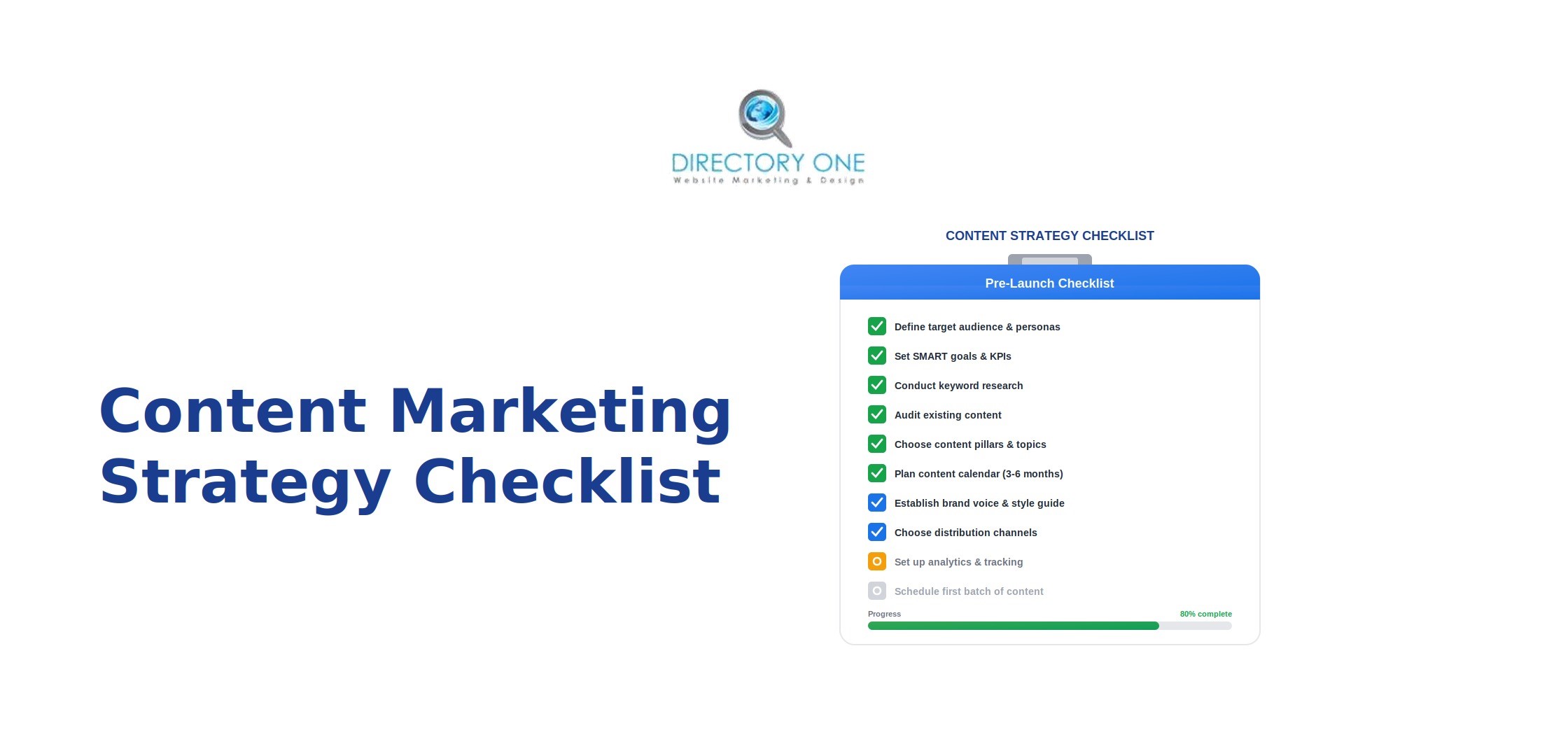
Use this content marketing strategy checklist before launching any campaign:
- Buyer personas are defined and documented
- Business goals clearly set (leads, traffic, sales)
- Keyword research completed for primary and secondary topics
- Content mapped to awareness, consideration, and decision stages
- Publishing calendar built for the next 90 days
- Internal linking structure planned using topic clusters
- Distribution channels identified (email, social, SEO)
- KPIs and tracking set up (traffic, leads, conversions, ROI)
- Content refresh schedule in place for existing posts
- Team roles and responsibilities are clearly assigned
Best Content Marketing Strategies for Startups Growth, Engagement and Conversions
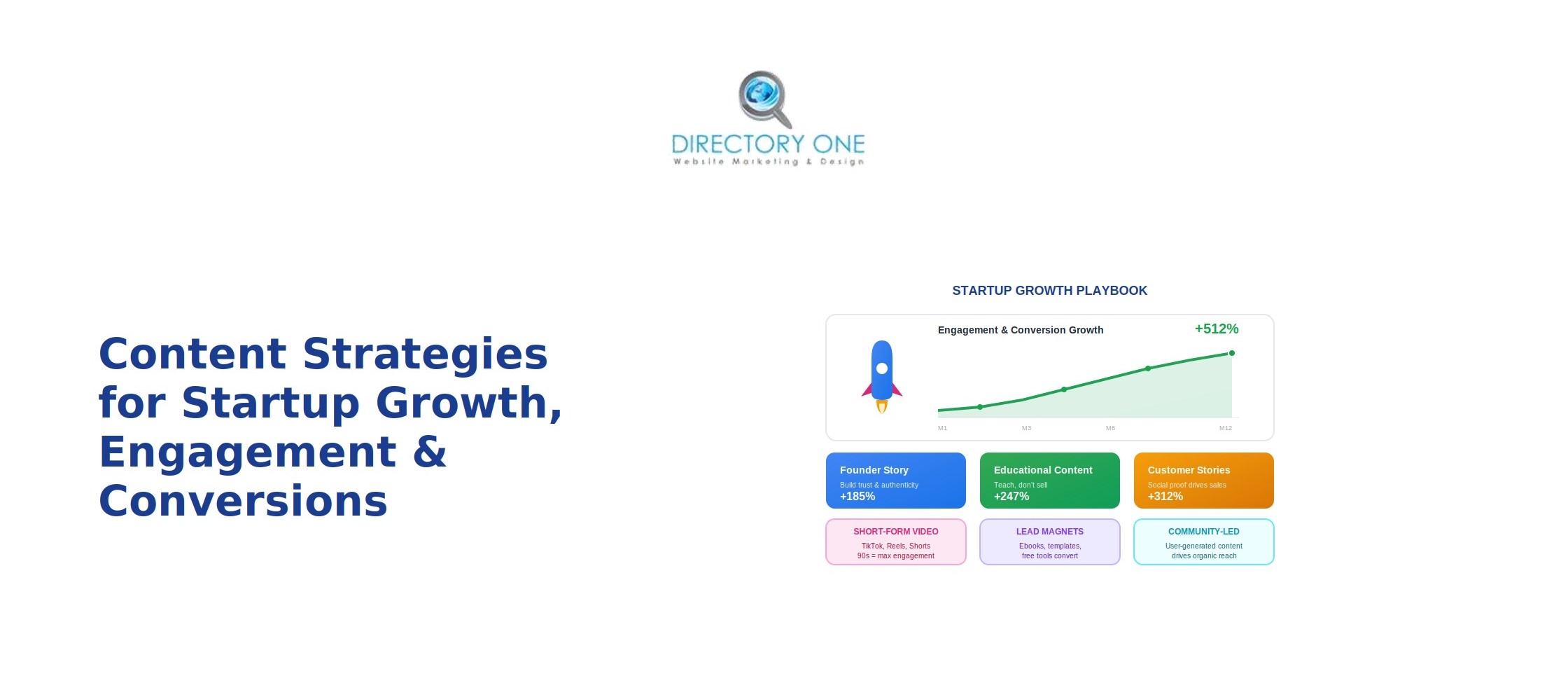
The best content marketing strategies for startups growth focus on doing more with less. Here is what actually works when resources are tight.
- Go niche, not broad.
Startups cannot compete with large brands on high-volume keywords. Instead, dominate a narrow topic area first. Build authority there, then expand.
- Lead with education.
Almost 50% of buyers read a company’s blog when evaluating their purchase options. Teach your audience before you try to sell to them.
- Invest in case studies and social proof.
Nothing converts better than real results. Document customers’ wins and turn them into content that builds credibility.
- Leverage long-tail keywords.
They have lower competition, higher intent, and convert better. According to Backlinko, long-tail searches make up the majority of all Google searches.
- Consistency compounds.
Businesses that blog regularly have 434% more indexed pages — which means far more opportunities to be found.
For startups scaling their digital presence, our best content marketing agency team can fast-track your growth without wasting budget.
How to Create Evergreen Content That Drives Long-Term Traffic
Evergreen content is the secret weapon of a strong content marketing blog strategy. It answers questions that never go out of date — so it keeps driving traffic for years.
Great evergreen topics include how-to guides, glossaries, FAQs, industry fundamentals, and comparison posts. These formats stay relevant regardless of trends. A few rules for evergreen content success:
- Match it to a durable search query. Ask: “Will someone still be searching for this in three years?” If yes, it is evergreen.
- Update it annually. Even timeless content needs a refresh. New statistics, updated examples, and current internal links keep it competitive.
- Build links to it. Evergreen pages are your best candidates for link-building because they provide lasting value to anyone who links to them.
The average page in Google’s top 10 results is more than two years old — proving that content marketing is a long-term investment with compounding returns.
How to Measure Content Performance and ROI Effectively?
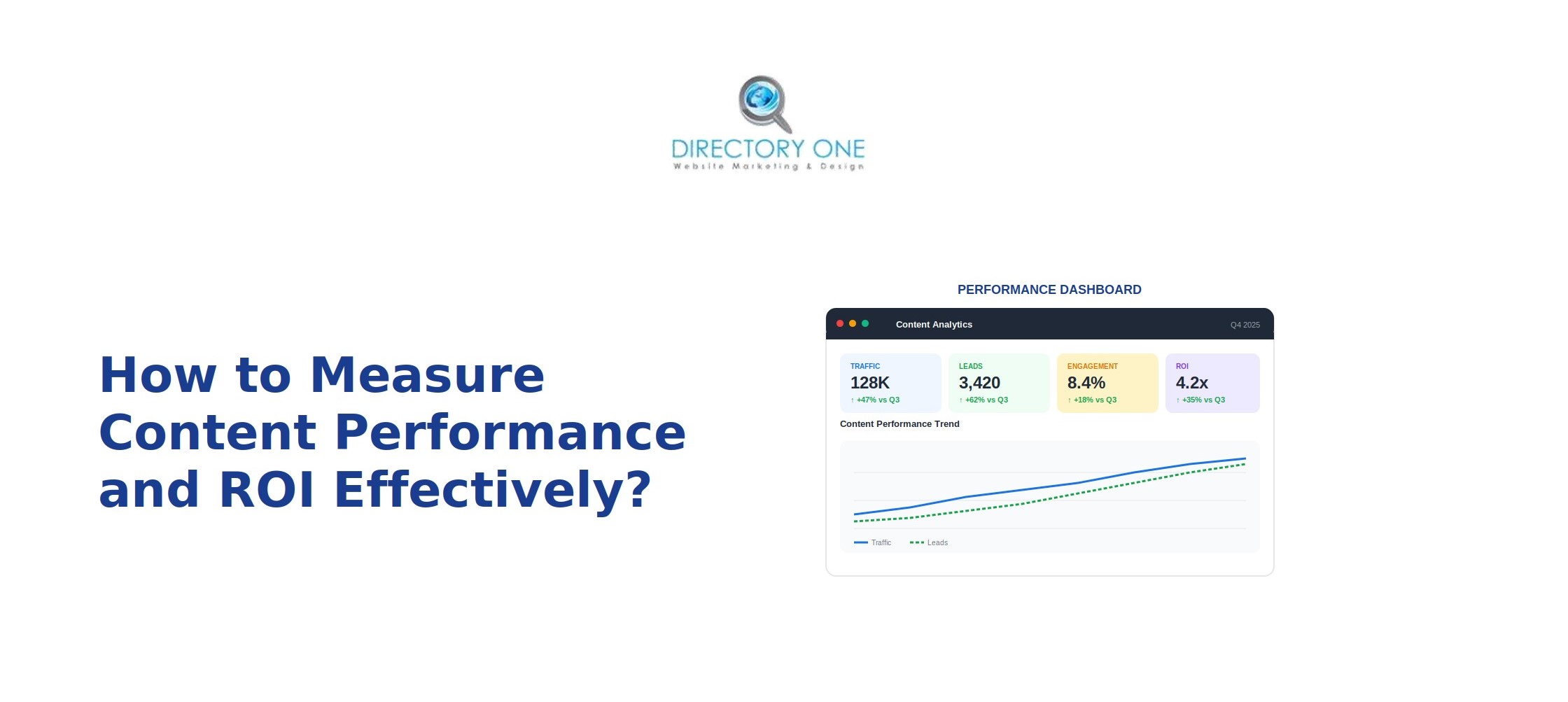
You cannot improve what you do not measure. Yet, only 29% of marketers actively track content’s contribution to revenue — a massive missed opportunity. Here are the metrics that actually matter:
- Traffic — How many people are finding your content through organic search? Track this monthly in Google Search Console.
- Engagement — Time on page, scroll depth, and bounce rate tell you whether your content holds attention.
- Leads generated — How many form fills, calls, or sign-ups came from a specific piece of content?
- Keyword rankings — Are your target pages moving up in search results over time?
- Conversions and revenue — Ultimately, good content drives sales. Track assisted conversions in your analytics platform.
According to data, over 41% of marketers measure content marketing success through ROI. If you are not in that group yet, now is the time to start. For content marketing strategies for local SEO, tracking local keyword rankings and Google Business Profile engagement is equally important. Learn more through our local SEO services.
Common Content Marketing Mistakes That Limit Long-Term Growth
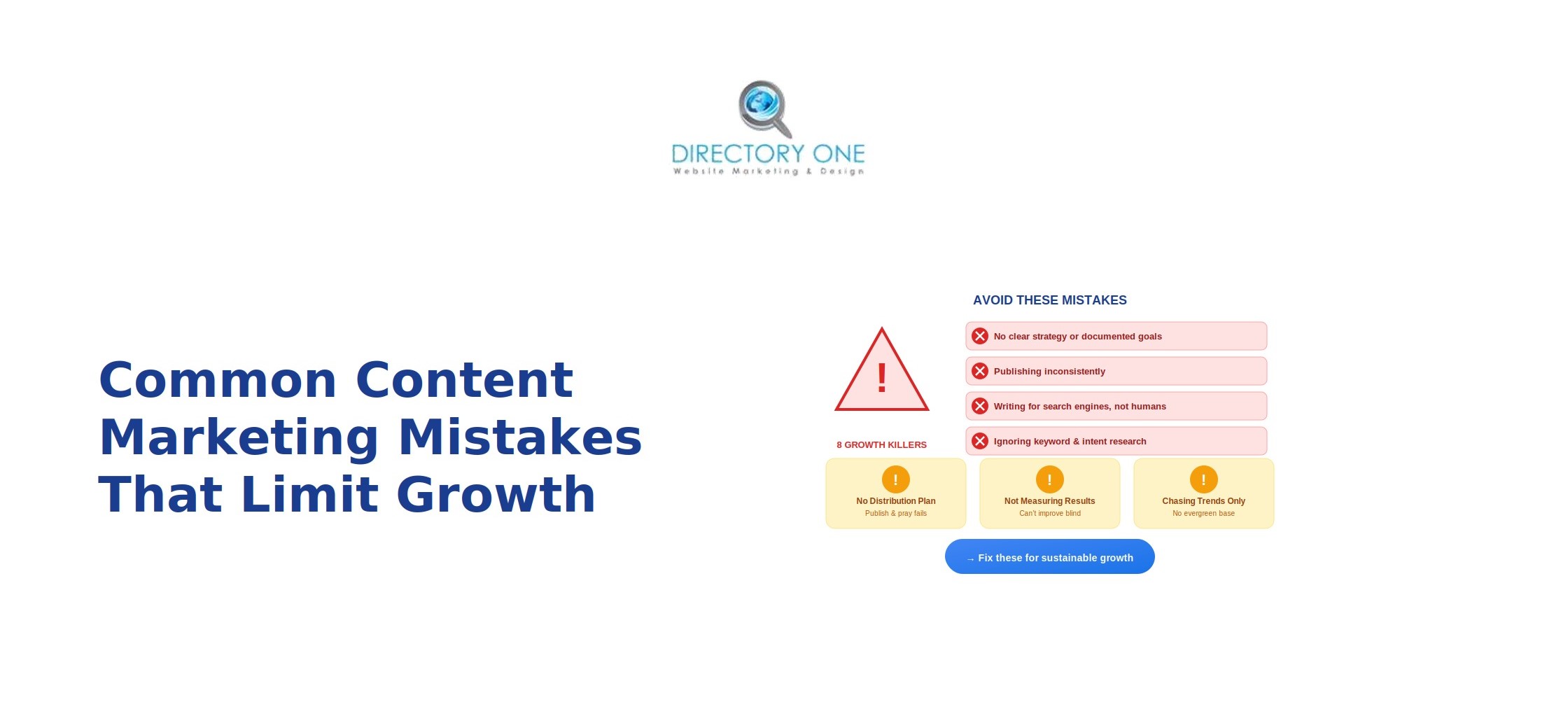
Even smart brands make these mistakes. Avoid them, and you will be ahead of most of your competition.
- Publishing without a strategy.
Random acts of content do not build authority. Every piece needs a purpose and a target keyword.
- Ignoring search intent.
Writing what you want to say instead of what your audience wants to read is the fastest way to create content nobody finds.
- Focusing only on new content.
Refreshing old content is often faster and more effective than creating something new. Do not neglect your existing library.
- Skipping distribution.
Great content with no promotion is like a great product with no marketing. Share everything you publish across every relevant channel.
- Giving up too early.
The average page in Google’s top 10 is more than two years old. SEO and content take time. Consistency is the strategy.
- Not using a documented strategy.
Only 29% of content marketers say their documented strategy is very effective because most teams are still working without one.
Working with a reliable agency providing result-driven B2B content marketing service or SEO and content marketing services helps you avoid these pitfalls from day one.
Ready to Build a Content Marketing Strategy That Works?
Content marketing is not a trend. It is the foundation of every sustainable digital growth strategy. But it only works when it is built right — with the right keywords, the right formats, and the right consistency.
At Directory One, we are a full-service content marketing agency serving businesses across Houston and beyond. Whether you need a content marketing strategy framework for a startup, B2B content marketing services, or a complete SEO and content marketing service package, we build strategies that deliver real results.
Call us today at 713.269.3094 or visit our website www.directoryone.com.
