





5 Technical SEO Fixes That Will Triple Your Google Traffic Overnight

You’ve created great content. You’ve optimized your keywords. You’ve built your authority. Yet your Google traffic plateau remains stubbornly unchanged. The problem isn’t your content strategy—it’s the technical SEO foundation holding it back.
Technical SEO is the invisible engine that determines whether search engines can even find, crawl, and rank your content in the first place. Without it, you’re essentially hiding your best work from Google.
According to First Page Sage’s analysis of Google’s ranking factors, while consistent publication of satisfying content remains the #1 factor, technical SEO forms the essential foundation that allows your content to be discovered and indexed in the first place.
However, fixing technical SEO issues doesn’t require a complete website rebuild. Many sites see immediate traffic improvements within weeks by addressing just five critical technical problems. This guide walks you through each one—with practical, step-by-step solutions you can implement today.
What Is Technical SEO?
Before diving into fixes, let’s clarify what is technical SEO exactly.
Technical SEO refers to the behind-the-scenes optimizations that help search engines crawl, index, and understand your website. It’s not about keywords or content quality—it’s about making sure Google’s robots can actually access your pages, understand their structure, and recognize them as important.
Think of it this way: great content is a beautiful book, but technical SEO is the library system that helps people find it.
Backlinko’s research of over 11 million search results confirms that technical SEO is one of Google’s top three ranking factors, alongside quality content and backlinks. In fact, recent data suggests that 60% of websites fail to meet basic Core Web Vitals standards in 2026, directly costing them visibility in AI-driven search results. If you want to outperform your competitors, you must look under the hood.
At Directory One, we’ve spent over two decades helping businesses master the complexities of the web. As a leading technical SEO company, we know that these five high-impact fixes can be the difference between page 10 and page 1.
5 High-Impact Technical SEO Fixes For Increased Traffic
Fix #1: Optimize Core Web Vitals for Fast Page Speed
Your page loads in 3 seconds. Sounds reasonable, right?
Wrong.
According to Google research, if page load times increase from 1 second to 3 seconds, bounce rates jump by 32%. If your site takes 6 seconds to load, bounce rates skyrocket by 106%. This is why Core Web Vitals—Google’s official measure of user experience—have become a critical ranking factor.
How to Fix It:
- Minimize Main Thread Work: Break up long JavaScript tasks that “freeze” the page.
- Remove Unused Code: Use modern bundlers to ensure users only download the CSS and JS they actually need.
- Reserve Space for Media: Always define height and width attributes for images and ad containers to prevent jarring layout shifts.
Fix #2: Fix Crawlability Issues With Proper Site Architecture
Google’s crawlers are lazy. They have a limited “crawl budget” for each site—a finite number of pages they’ll crawl per day.
If your site structure is a mess and has thousands of low-value, duplicate, or broken pages, the “Googlebot” may stop crawling. They’ll also waste that budget on duplicate pages, redirects, and dead ends. So, your best content never gets crawled.
What Blocks Crawlability
- Poor Internal Linking: Pages isolated without links are essentially invisible.
- Duplicate Content: Multiple versions of the same page waste crawl budget.
- Broken Links: 404 pages serve no purpose and confuse search engines.
- Excessive Redirects: More than one redirect in a chain dilutes page authority.
- Noindex Tags: Pages marked as “no index” won’t appear in results.
How to Fix It:
- Fix Redirect Chains: Ensure every redirect is a 1-to-1 jump. Redirect “chains” (A > B > C), tax the crawler, and slow down your site.
- Clean Up Your XML Sitemap: Your sitemap should only contain 200-OK, indexable pages. Remove 404s, redirects, and “noindex” tags immediately.
- Manage Faceted Navigation: If you run an e-commerce site, use canonical tags or robots.txt to prevent Google from indexing millions of unnecessary filter combinations.
Fix #3: Prioritize Mobile-First Indexing and Content Parity
Google now uses the mobile version of your site for indexing and ranking almost exclusively. A major mistake many brands make is “stripping down” their mobile site for speed, inadvertently removing the very content Google needs to rank them.
According to Google’s latest documentation, content parity—meaning your mobile and desktop sites share the same headings, images, and structured data—is non-negotiable.
Expert Tip from Directory One:
Don’t just make it “responsive.” Ensure your mobile navigation isn’t hiding critical internal links. If a human or a bot can’t find a page via your mobile menu, it effectively doesn’t exist in Google’s eyes. As a specialized technical SEO agency, we often find that simply unhiding mobile menus can lead to a massive spike in indexed pages.
Fix #4: Implement Advanced Schema Markup
In 2026, SEO isn’t just about keywords; it’s about entities. Schema markup provides a structured vocabulary that helps Google and AI models understand the context of your data.
Websites using comprehensive schema are 3.7x more likely to earn Knowledge Panels and see a 20-40% boost in Click-Through Rates (CTR).
Schema Markup Types You Should Use
- Article/Blog Posting: For blog posts, news articles, and long-form content.
- FAQ Schema: For FAQ pages (appears as accordion snippets in search).
- Product Schema: For e-commerce sites.
- Local Business Schema: For businesses with physical locations.
- Author Schema: Connects content to the author’s expertise and authority.
Fix #5: Secure Your Site with Modern TLS and HTTP/3
Security is no longer just about having an “HTTPS” padlock; it’s about the protocol behind it. HTTP/3 with the QUIC protocol has become the industry standard in 2026, offering faster connection speeds over unreliable mobile networks.
If your technical SEO consultant hasn’t checked your server protocol recently, you might be leaving speed—and rankings—on the table. Upgrading to a modern TLS 1.3 implementation reduces handshake overhead, making your site feel “instant” to returning visitors.
Advantages of Hiring A Technical SEO Agency
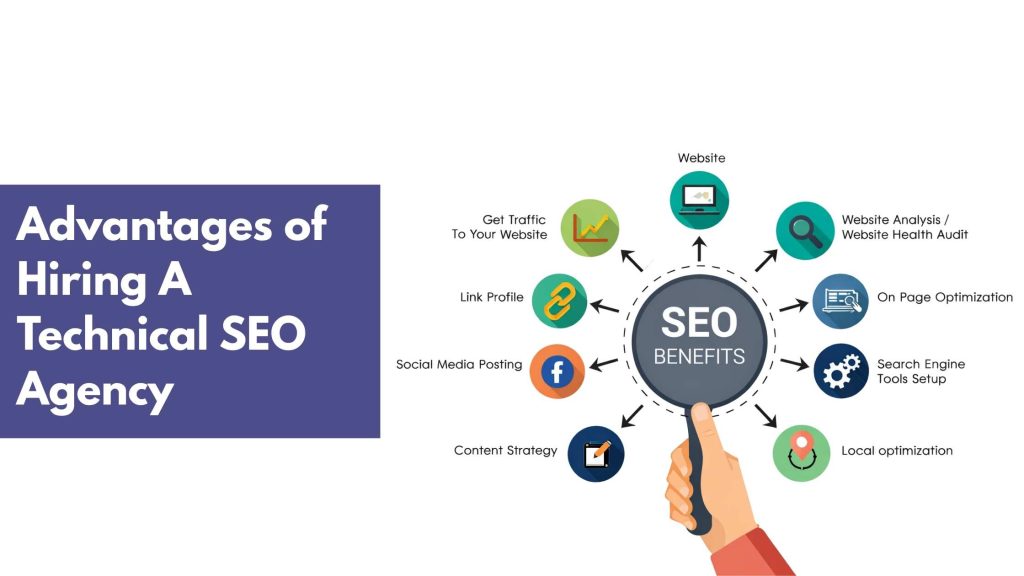
While these five fixes are implementable yourself, the complexity grows quickly. Technical SEO services from specialized agencies like Directory One handle the heavy lifting—from comprehensive technical audits to ongoing optimization and monitoring. Our professional technical SEO consultant brings:
- Rapid Problem Identification: What takes you weeks to discover, a technical SEO specialist identifies in days.
- Custom Strategy: Every site is different. A technical SEO company develops strategies specific to your industry, competition, and goals.
- Implementation Support: Code changes, server configurations, and integration with your development team—handled professionally.
- Ongoing Monitoring: Technical SEO isn’t a one-time fix. Continuous audits catch issues before they impact rankings.
Summing Up
You now have five concrete technical SEO fixes proven to drive traffic. The question isn’t whether they work—it’s whether you’ll implement them.
If you need a partner to guide your technical SEO strategy, Directory One specializes in comprehensive technical SEO audits and implementation. Call 713.269.3094 or visit https://www.directoryone.com/ to discuss your site’s specific challenges.
Your content deserves to rank. Your technical SEO foundation should match its quality.
About The Author
