





GPT Codex 5.1: The Complete Developer Guide to OpenAI’s AI Coding Agent
GPT Codex 5.1 is OpenAI’s specialized AI coding agent — built not just to write code, but to plan, execute, debug, and ship software autonomously across entire repositories.
Released in November 2025, it marks a turning point in how developers use AI at work. 95% of software engineers now use AI tools at least weekly, and 75% use AI for at least half their engineering work. Understanding what GPT Codex 5.1 is, how it compares to alternatives, and when to use it is now a core developer skill.
What Is GPT Codex 5.1?
GPT-5.1-Codex is a specialized coding model optimized for long-running, agentic coding tasks in Codex or Codex-like harnesses. It is a distinct model from the general-purpose GPT-5.1 — sharing the same foundational architecture but fine-tuned specifically for the structured demands of real software engineering workflows.
OpenAI released both gpt-5.1-codex and gpt-5.1-codex-mini in the API alongside GPT-5.1. This gave developers a deliberate choice: use the general model for broad reasoning tasks, or reach for GPT Codex 5.1 when the work involves deep, iterative coding inside a real repository.
GPT-5.1 Codex is tuned to behave like an autonomous operator inside a real project rather than a conversational assistant. This specialization is what makes it suited to multi-file refactoring, debugging cycles, dependency management, and repository-wide changes — tasks that demand persistence and structured tool use, not just code completion.
The OpenAI Codex AI coding agent family includes three 5.1-generation variants:
- GPT Codex 5.1 — the standard agentic coding model, available via API and Codex CLI.
- GPT-5.1 Codex-Mini — a smaller, more cost-effective version for lighter automation tasks.
- GPT-5.1 Codex Max — the frontier agentic model, built for project-scale, multi-hour tasks.
GPT 5.1 Codex Benchmarks
Performance metrics are essential when evaluating GPT 5.1 Codex benchmarks. AI coding models are typically measured using benchmarks such as:
- code generation accuracy
- bug detection ability
- code completion speed
- multi-language programming support
According to research cited by Google AI studies, AI-assisted coding tools can improve developer productivity by up to 55% when used for repetitive coding tasks. Additionally, another research highlights the growing adoption of AI development tools across software engineering teams.
These improvements make Codex GPT 5.1 one of the most promising tools for automated coding workflows.
GPT-5.1 vs GPT-5.1 Codex
A common question developers ask is the difference between GPT-5.1 vs GPT-5.1 Codex. While both models belong to the same AI ecosystem, their purposes differ.
| Feature | GPT-5.1 | GPT-5.1 Codex |
| Primary Use | General AI tasks | Software development |
| Training Data | Mixed knowledge datasets | Programming datasets |
| Output | Text, analysis, conversation | Code generation |
| Use Cases | Chatbots, research, content | Code automation, debugging |
Generative AI vs Traditional AI Tools
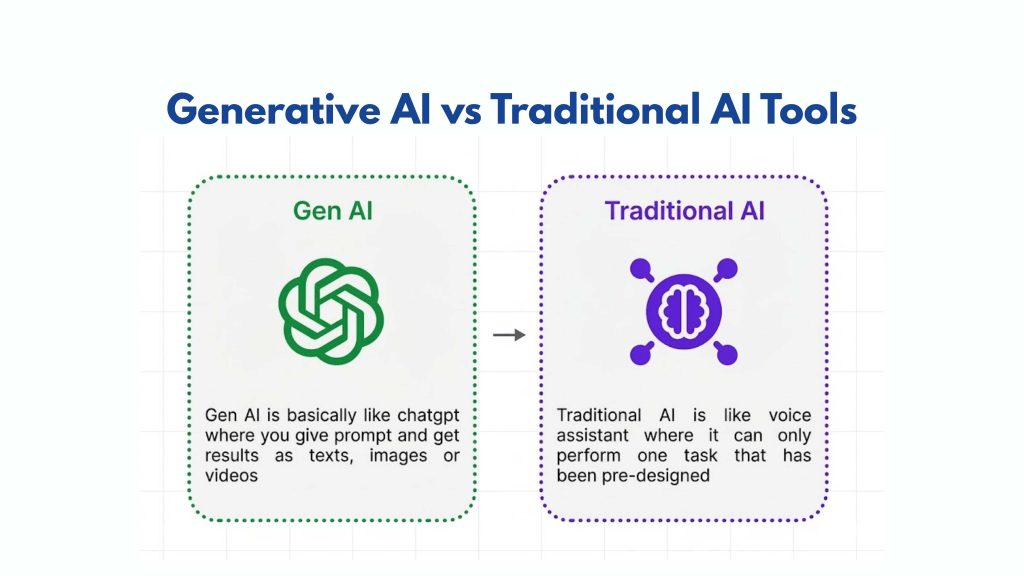
The earlier generation of AI coding tools — including GitHub Copilot, TabNine, and the original 2021 OpenAI Codex — operated primarily as autocomplete systems: predicting the next token, line, or function based on what was already written. This is a form of traditional AI applied to code: statistical pattern matching over large training corpora.
Generative AI tools like GPT Codex 5.1 represent a fundamentally different paradigm:
- Instruction-following over pattern-matching: The model responds to natural language task descriptions rather than predicting the next character
- Multi-step planning: GPT Codex 5.1 decomposes a task into sub-steps, executes them in sequence, evaluates results, and iterates
- Tool use: The model calls shell commands, applies patches, runs tests, reads error messages, and adjusts its approach — it does not just output text
- Context retention: Unlike autocomplete tools that operate on a few lines of visible context, GPT Codex 5.1 can reason across entire repositories
| Feature | Generative AI Tools | Traditional AI Tools |
| Flexibility | High | Limited |
| Code generation | Yes | No |
| Adaptability | Dynamic learning | Fixed rules |
| Development support | End-to-end automation | Task-specific |
The new OpenAI Codex is not just a model — it is a full autonomous software engineering agent, a complete departure from the original 2021 version that was deprecated in March 2023. This shift explains why developers increasingly explore AI code tools vs traditional coding tools comparison when choosing development platforms.
AI Code Tools vs Traditional Coding Tools Comparison
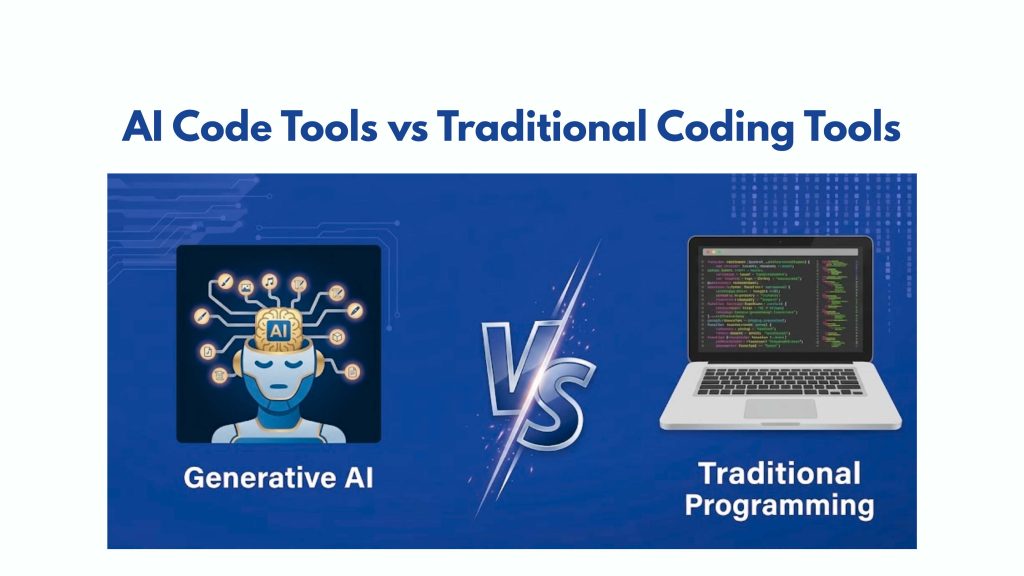
The debate between AI code tools vs traditional coding tools comparison focuses on efficiency, accuracy, and scalability.
Traditional coding tools include:
- IDEs
- compilers
- static code analyzers
- manual debugging tools
AI coding tools like OpenAI Codex AI coding agent systems provide additional capabilities such as:
- automated code generation
- AI-assisted debugging
- natural language programming instructions
- automated documentation generation
Developers comparing OpenAI Codex vs other AI coding tools often evaluate these productivity benefits when selecting AI development platforms.
| Capability | Traditional Tools (IDEs, Linters, Compilers) | AI Code Tools (GPT Codex 5.1, Claude Code) |
| Code completion | Rule-based, syntax-aware | Context-aware, intent-based generation |
| Bug detection | Static analysis, known patterns | Semantic reasoning across full codebases |
| Refactoring | Manual or semi-automated | Autonomous multi-file execution |
| Documentation | Manual writing | Auto-generated from code context |
| Test generation | Templates, manual scaffolding | Full test suite generation with coverage awareness |
| Task scope | Single file or function | Entire repository, multi-hour sessions |
| Learning curve | Stable, well-documented | Evolving rapidly; prompt skill matters |
OpenAI Codex vs Other AI Coding Tools
The rise of AI programming assistants has introduced several competing solutions. Developers frequently compare OpenAI Codex vs other AI coding tools to determine which platform best supports their workflows.
Examples of competing tools include AI assistants and development platforms that provide code generation and debugging automation. Comparisons such as Claude Code vs OpenAI Codex often highlight differences in training data, reasoning ability, and coding support.
Businesses evaluating OpenAI Codex alternatives may consider factors such as:
- programming language support
- integration with development environments
- AI model accuracy
- security and enterprise support
Understanding alternatives to OpenAI Codex allows organizations to select the best AI coding platform for their development needs.
Claude Code vs OpenAI Codex: A Practical Comparison
Claude Code vs OpenAI Codex is now the most important head-to-head comparison in AI-assisted development. Both are agentic coding tools, both are evolving rapidly, and both are backed by the two most advanced AI labs in the world.
Adoption and Market Position
Claude Code for VS Code leads OpenAI’s Codex extension in VS Code Marketplace installs — 5.2 million to 4.9 million — and in ratings, 4 to 3.4 on a 0–5 scale, with 606 reviews for Claude Code versus 272 for Codex.
Claude Code has become the most-used AI coding tool among surveyed software engineers since its release in May 2025, overtaking GitHub Copilot and Cursor. Meanwhile, OpenAI’s Codex already has 60% of Cursor’s usage despite not existing during the previous survey nine months prior.
Performance Differences
Claude Code is better for complex, detailed tasks with multiple steps. Codex is more efficient for straightforward code generation, with faster and cheaper execution on lighter tasks.
Claude uses 3–4x more tokens but produces more thorough output. Claude’s higher token count correlates with more deterministic, thorough outputs.
Workflow and Architecture
The biggest practical difference is where the code runs. Codex runs tasks inside OpenAI-managed cloud containers, while Claude Code runs directly in your terminal using your actual files and environment. For teams with strict data privacy requirements or those working in air-gapped environments, this distinction is critical.
Most experienced engineers now use both tools in a hybrid setup — Claude for planning and architectural reasoning, Codex for execution and production shipping — to get the best results from each.
Pricing
Codex comes with standard ChatGPT plans, and Claude Code comes with standard Claude plans. GPT-5 is significantly more token-efficient than Claude Sonnet, meaning Codex can offer more usage for less at comparable plan tiers.
Alternatives to OpenAI Codex: What Else Is Available?
For developers evaluating OpenAI Codex alternatives, the landscape is competitive. Here are the most relevant options:
Claude Code (Anthropic) — the leading alternative to OpenAI Codex for complex, multi-step coding tasks. Terminal-first, supports MCP integrations, and runs locally on your actual environment. Best for developers who prioritize reasoning quality and architectural planning.

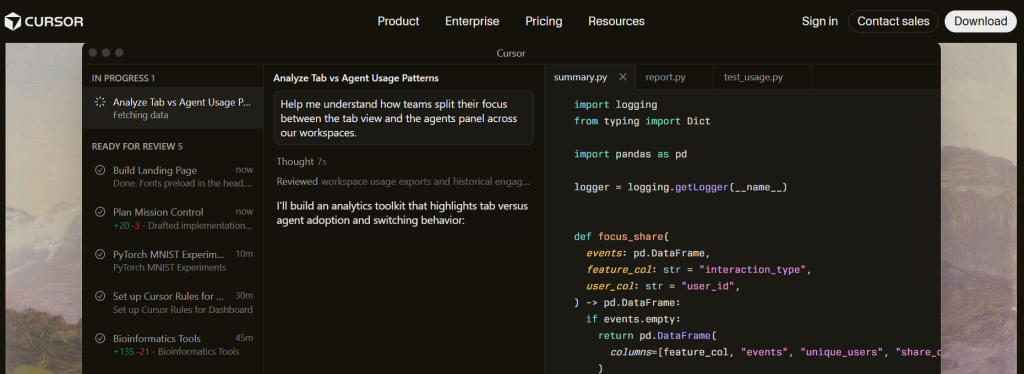
Cursor— an AI-native IDE that integrates multiple models (GPT-5, Claude Sonnet) into an editor experience. Cursor is growing 35% in developer mentions year-over-year and remains popular among engineers who prefer an editor-centric workflow.
GitHub Copilot — the original AI coding assistant, now with agentic features. Best suited for teams deeply embedded in the GitHub ecosystem who need stable enterprise procurement pathways.
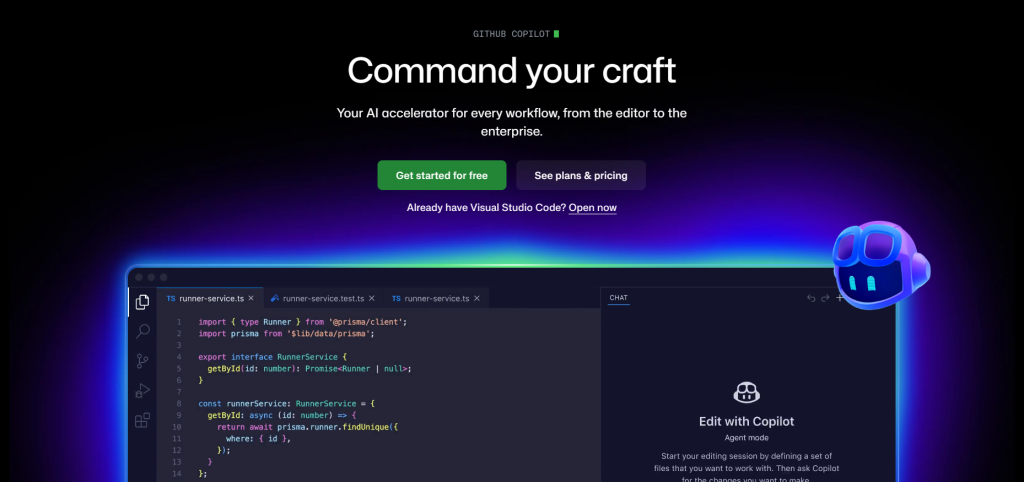
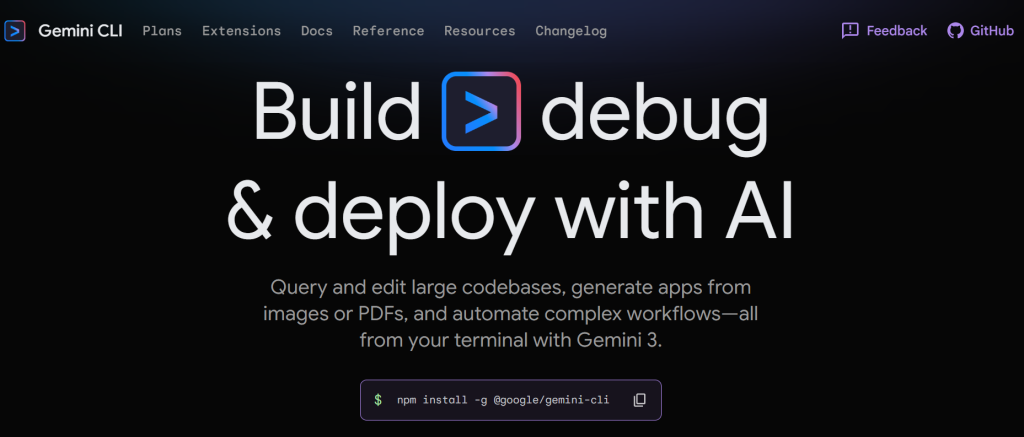
Gemini CLI / Gemini Code Assist — Google’s entry into the agentic coding space, competitive on SWE-bench benchmarks and integrated with Google Cloud and Workspace workflows.
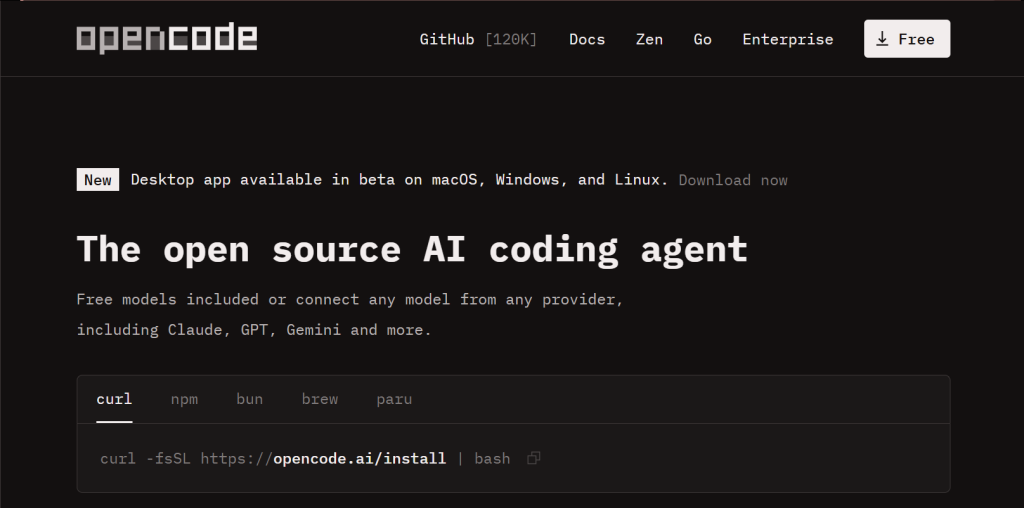
OpenCode — an open-source coding agent that allows model swapping, avoiding vendor lock-in. Suited for teams that want agentic coding capabilities without committing to a single AI provider.
Each of these OpenAI Codex alternatives serves a different developer profile. The actionable guidance: evaluate based on your primary workflow (cloud vs. local execution), your team’s existing toolchain, and the nature of your tasks (analysis vs. generation vs. long-horizon agentic work).
When Businesses Should Use AI Coding Tools
Organizations increasingly adopt AI development platforms to improve efficiency. Businesses benefit from AI code tools vs traditional coding tools comparison when deciding whether to implement AI coding assistants. AI coding tools are particularly useful for:
- rapid prototyping
- repetitive coding tasks
- large codebase maintenance
- debugging automation
However, developers still rely on traditional development practices to ensure security and maintain code quality.
How Directory One Helps Businesses Implement AI Technologies

As AI technologies evolve, businesses often need guidance to integrate these tools effectively. At Directory One, we help organizations understand emerging technologies such as GPT Codex 5.1, evaluate OpenAI Codex alternatives, and develop strategies for adopting modern AI tools.
Our team focuses on helping businesses leverage advanced technologies to improve productivity, streamline workflows, and remain competitive in the rapidly evolving digital landscape.
Conclusion
Traditional AI tools are no longer enough. GPT Codex 5.1 represents a genuine shift in what developers can delegate to AI — from line-by-line code suggestions to full, autonomous engineering tasks running across entire repositories. If you’re serious about ranking higher, scaling smarter, and building long-term credibility, now is the time to act.
Talk to the AI and digital growth experts at Directory One today. Call at 713.269.3094 or visit https://www.directoryone.com/ to discover how intelligent AI adoption can transform your business.
About The Author
