





AI Tools for Content Optimization in 2026: Beginner’s Guide
If you have been trying to rank content on Google and wondering why stronger, better-researched posts still underperform, the gap is usually optimization, not effort. AI tools for content optimization close that gap by analyzing what top-ranking pages do differently and telling you exactly what to fix, add, or restructure.
This guide covers the best tools available in 2026, how to actually use them step by step, and what beginners consistently get wrong.
Why Content Optimization Is the Skill That Separates Rankings From Obscurity
Writing good content is not enough anymore. According to Semrush’s State of Content Marketing Report 2024, only 3% of published content earns the majority of organic traffic. The rest either never rank or stall on page two.
The reason is almost never writing quality. It is optimization depth — topical coverage, semantic relevance, readability structure, and search intent alignment.
Google’s own Search Quality Evaluator Guidelines explicitly reward content that demonstrates Experience, Expertise, Authoritativeness, and Trustworthiness (E-E-A-T). AI tools for content optimization are built to operationalize exactly those standards.
For small businesses, agencies, and solo marketers who cannot afford a full content team, AI content optimization software makes professional-grade SEO execution accessible at the individual level.
Which AI Tools Help Enrich and Optimize Content in 2026?
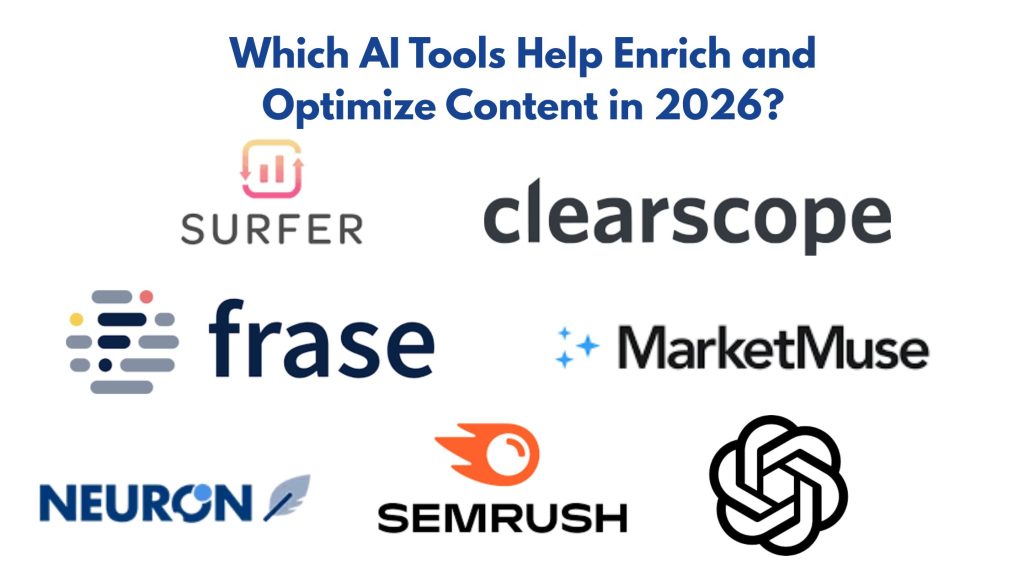
Here is a breakdown of the most effective beginner-friendly tools, what each one actually does, and who it is best suited for:
| Tool | Best For | Core Function | Pricing (2026) |
| Surfer SEO | Bloggers, agencies | Real-time on-page optimization scoring | From $89/month |
| Clearscope | Content teams | Semantic keyword enrichment | From $170/month |
| Frase.io | Solo marketers | Brief generation + content optimization | From $45/month |
| MarketMuse | Enterprise, agencies | Topical authority mapping | From $149/month |
| NeuronWriter | Small businesses | NLP-based content scoring | From $19/month |
| Semrush Writing Assistant | All levels | SEO + readability + tone scoring | Included in Semrush plans |
| ChatGPT + custom prompts | Beginners | Draft enrichment, gap filling | Free / $20 month |
Each tool approaches optimization differently. Surfer SEO grades your content against the top 10 ranking competitors for your target keyword in real time. Clearscope identifies the semantic terms (related concepts, entities, questions) that top-ranking pages cover, but yours might be missing. Frase builds content briefs by pulling SERP data, so you know what to write before you start.
For AI content optimization for small businesses on a tight budget, NeuronWriter offers the strongest value at entry-level pricing, while Frase is the most beginner-accessible full-featured option.
Best AI-Powered SEO Content Optimization Tools for Agencies
Agencies have different needs from solo users — they need scale, collaboration features, white-labeling, and consistent output across multiple clients. The best AI-powered SEO content optimization tools for agencies in 2026 are:
Surfer SEO (Agency Plan)
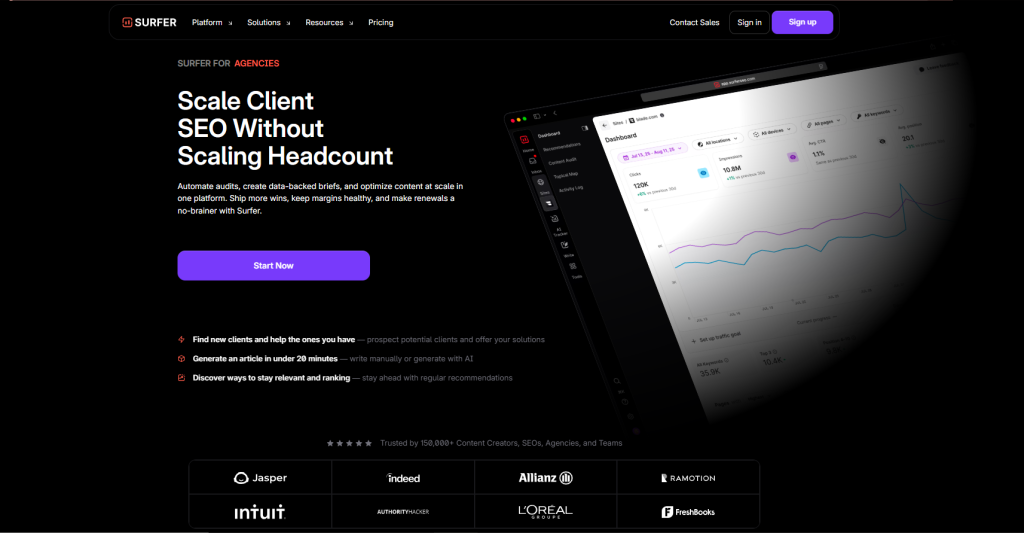
Supports unlimited content editors, team collaboration, white-label reporting, and direct CMS integrations with WordPress and Google Docs. The Content Planner feature automatically identifies topical clusters your client’s site is missing.
MarketMuse
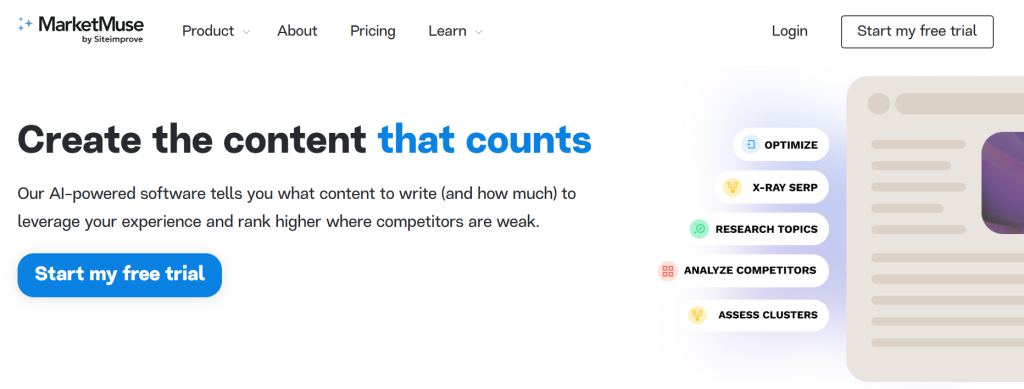
Particularly strong for agencies managing large content operations. Its site-level analysis identifies which existing pages need optimization versus which topics require new content — preventing the common mistake of building new pages when fixing existing ones would rank faster.
Clearscope
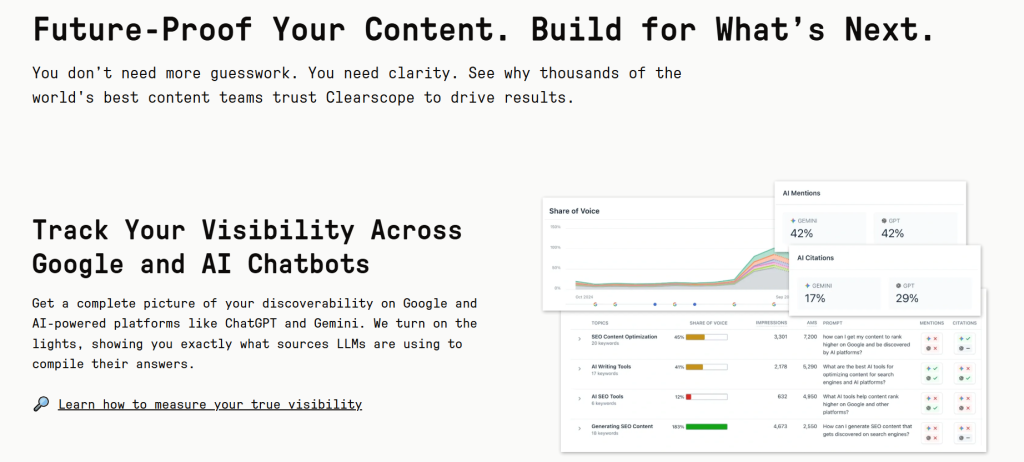
Preferred by agencies for its clean, intuitive interface that non-SEO writers can use without training. According to studies, clients report an average 2x improvement in organic traffic within 90 days of implementing their grading system consistently.
10-Step AI Search Content Optimization Checklist
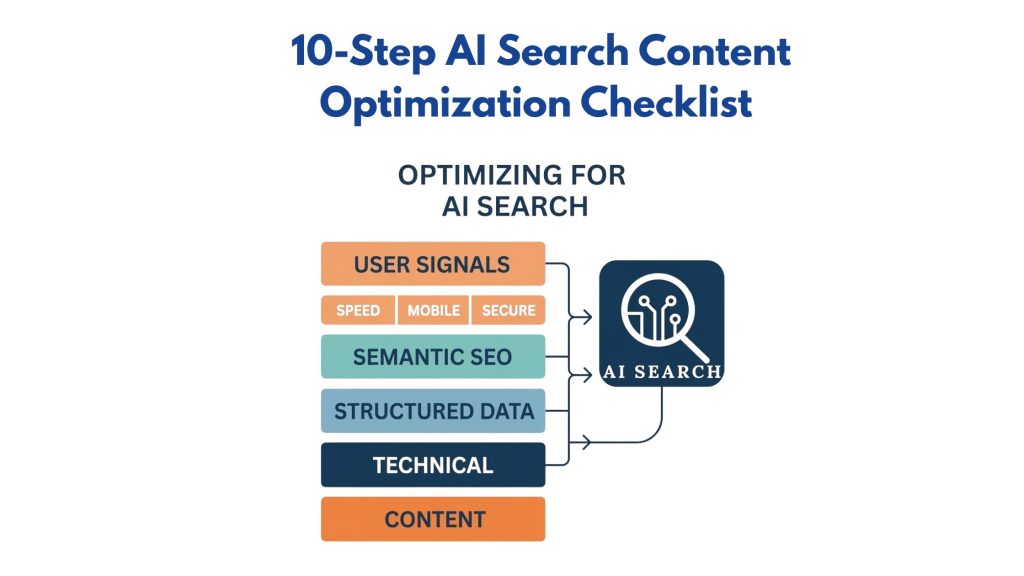
This 10-step AI search content optimization checklist applies whether you are creating new content or updating existing pages:
- Define your primary keyword and search intent — informational, navigational, or transactional. Never mix intent types in a single piece.
- Run a SERP analysis using Frase or Surfer to identify what the top 10 ranking pages cover, how long they are, and what questions they answer.
- Build a content brief that maps required headings, secondary keywords, questions to answer, and target word count before writing a single word.
- Draft with semantic coverage in mind — use your AI tool’s real-time scoring to ensure all relevant topic areas are addressed, not just your target keyword.
- Optimize your title tag and meta description — according to Moz’s title tag study, pages with keyword-optimized title tags rank higher 57% of the time versus those without.
- Check heading structure — ensure H2s and H3s reflect the specific questions and subtopics your target audience searches for.
- Add internal links to semantically related content on your site. Google’s documentation on site structure confirms that internal linking distributes PageRank and improves crawlability.
- Optimize images with descriptive, keyword-informed alt text. This improves both accessibility and image search visibility.
- Run a readability check — aim for a Flesch-Kincaid reading grade of 8 or below for most business audiences. Semrush Writing Assistant scores this automatically.
- Validate with a content score — Surfer, Clearscope, and NeuronWriter all produce a numerical grade. Do not publish until your score reaches the recommended threshold for your keyword’s competitive landscape.
How to Optimize Content for Generative AI?
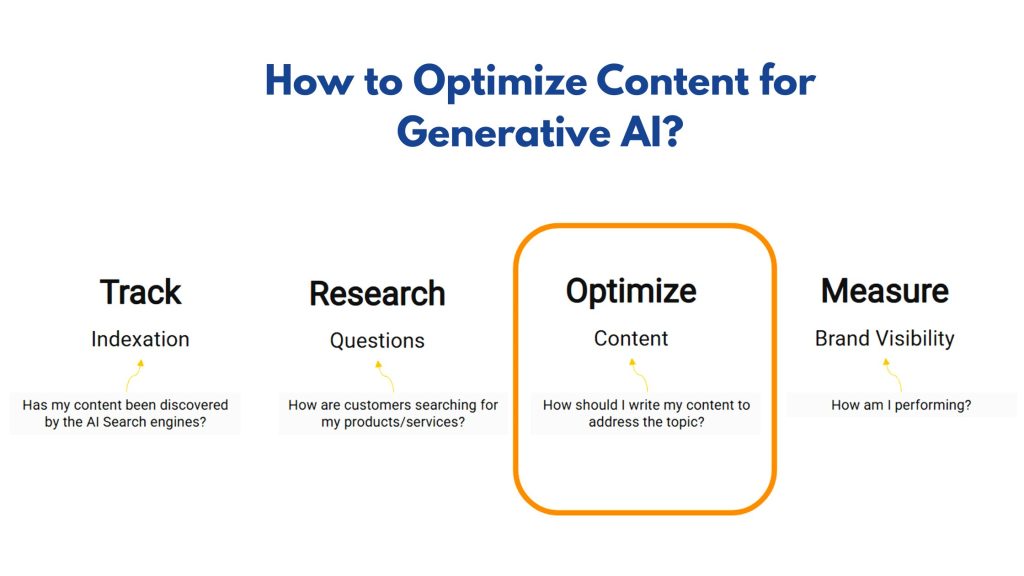
“How to optimize content for generative AI?” is the question every SEO professional is now asking. With Google’s AI Overviews, Bing Copilot, and ChatGPT search reshaping how information surfaces, traditional on-page SEO is no longer sufficient on its own.
Generative Engine Optimization (GEO) — a term now recognized across the SEO industry — requires a distinct approach:
- Structure answers explicitly.
Generative AI models pull direct answers from content that states conclusions clearly and early. Lead with your answer, then support it. Content buried in long paragraphs is less likely to be cited by AI engines.
- Use schema markup.
Google’s structured data documentation confirms that FAQ, HowTo, and Article schema help AI systems understand content context and extract answers more reliably.
- Build topical authority, not just keyword density.
AI search engines favor sources that comprehensively cover a subject domain. A single highly-ranked article matters less than a site that owns an entire topic area. This is why AI search content optimization monitoring tools like MarketMuse and Clearscope — which evaluate topical depth rather than just keyword frequency — are increasingly valuable.
- Earn citations.
Generative AI systems cite sources based on authority signals, including backlinks, brand mentions, and domain trust. Content optimization and off-page authority building must happen simultaneously.
AI SEO Tools for Beginners: The True Starting Point
If you are new to this and feeling overwhelmed by the number of tools available, here is the practical reality: you do not need five tools. You need one, used consistently. For beginners, this is the recommended entry sequence:
Month 1 — Start with Semrush Writing Assistant (included in any Semrush subscription starting at $139/month). It grades SEO, readability, originality, and tone simultaneously in a Google Docs add-on. No steep learning curve, no separate workflow.
Month 2 — Add Frase.io for content briefs. Before you write anything, run the target keyword through Frase to see what competing pages cover. This alone will improve content depth dramatically.
Month 3 — Graduate to Surfer SEO for real-time optimization scoring. Once you understand how content briefs work and why semantic coverage matters, Surfer’s scoring system becomes intuitive rather than confusing.
This progression builds your optimization instincts while each tool reinforces the principles of the last.
Work With SEO Experts Who Know These Tools From the Inside
Understanding which AI tools for content optimization to use is one thing. Building a system that applies them consistently across every page, every campaign, and every content update is another challenge entirely.
Directory One has spent over 30 years helping Houston businesses and B2B companies build content strategies that rank and convert. Their team uses the same AI-powered SEO content optimization tools covered in this guide — not as shortcuts, but as precision instruments within a broader, data-driven content strategy.
If your content is not producing the organic traffic your business deserves, the gap is almost always technical — and fixable.
Speak directly with a content SEO specialist at Directory One. Call us at 713.269.3094.
About The Author
