





AI Content Automation Tools to Automate 80% of Content Tasks: Complete Guide
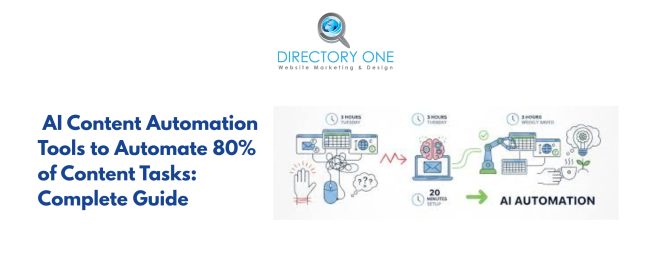
Your competitors are producing more content than you. They are doing it faster. And many of them are spending less time on it. That is not luck. That is AI content automation with the help of AI content automation tools.
92% of marketers now use generative AI for content creation and ideation, according to HubSpot. And generative AI reduces content production time by up to 60%, per Adobe research. If you are still writing everything manually, you are fighting a losing battle against the clock.
But is AI alone enough? No. You need the right AI content automation tools, the right workflow, and a clear understanding of what to automate. That is exactly what this guide covers. Let’s break it down.
Why AI Content Automation?
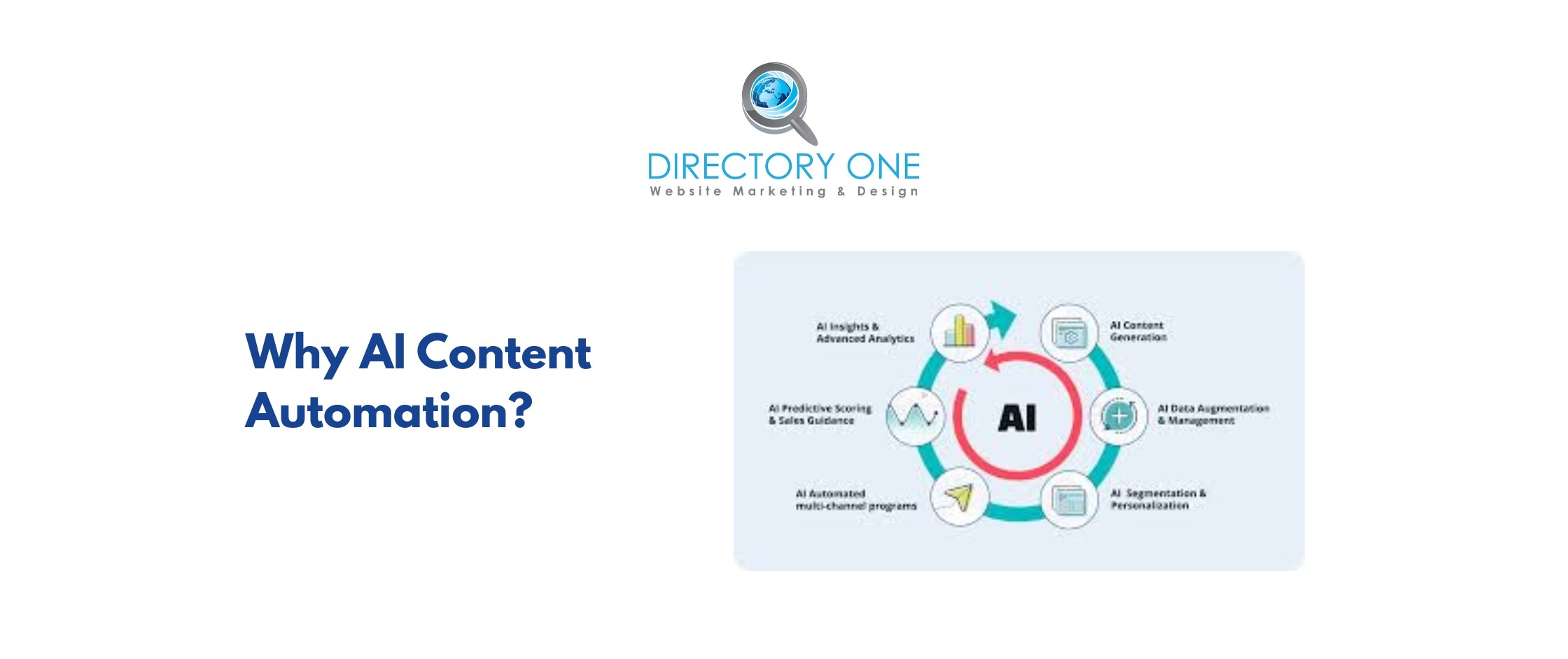
The shift is already happening — fast. AI marketing tools grew at a 31.4% CAGR between 2020 and 2025 — 3x faster than general marketing technology, according to research.
And the adoption curve keeps climbing. By 2026, more than 80% of enterprises will have deployed GenAI-enabled applications in production environments, up from less than 5% in 2023, according to a study. Meanwhile, among small businesses that have adopted generative AI, nearly 70% are using it specifically for marketing content and campaigns.
The reason is simple. Content marketing demands constant output — blog posts, social captions, email sequences, product descriptions, ad copy. No human team can keep up at scale without automation.
So the question is not whether to use AI content automation tools. It is which ones to use and how to set them up correctly.
What Makes an AI Agent For Writing Content Worth Using?

Before we delve into specific AI content automation tools, here is what distinguishes a genuinely useful AI content automation platform from a mere gimmick. When you use the best AI content generation tools:
- It saves meaningful time — not 5 minutes, but hours per week
- It produces output you can actually publish with light editing
- It integrates into your existing workflow without friction
- It supports SEO — keyword placement, structure, and readability
- It maintains a consistent brand voice across all content types
With that standard in mind, here are the best options available right now.
Best AI Content Automation Tools: Top Picks
1. Jasper AI — Best AI Agent for Writing Content at Scale
Best for: Marketing teams and agencies that need high-volume, brand-consistent content.
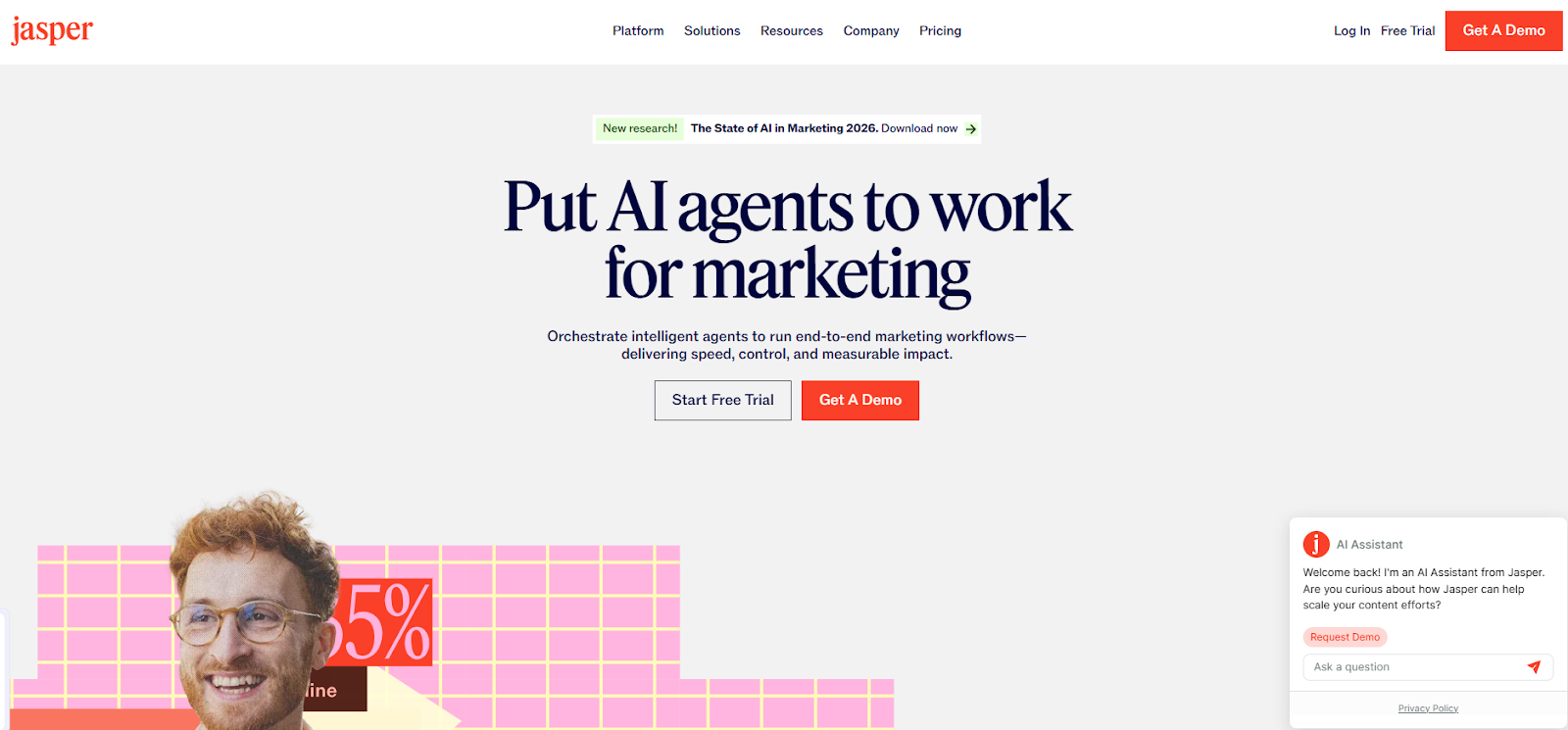
Jasper is one of the most established and best AI content generators on the market. It is built specifically for marketing output, not general chat. The platform uses templates for every content type: blog posts, landing pages, email sequences, social captions, ad copy, and more.
Key features:
- The Brand Voice feature trains Jasper on your tone, style, and messaging guidelines
- SEO mode integrates with Surfer SEO for keyword-optimized content
- Campaign workflows let you generate an entire content cluster from a single brief
- Team collaboration tools for content review and approval
Where it excels: Long-form blog content. Jasper consistently produces structured, readable drafts that require less editing than most AI competitors.
Honest note: It is not cheap. Plans start at $49/month. However, if you are currently paying for a freelance writer, the math often favors Jasper quickly.
Cost: From $49/month. Enterprise pricing available.
2. ChatGPT (GPT-4o) — Best Free AI Writing Assistant Online
Best for: Individuals, solopreneurs, and small businesses who want flexible AI writing at low or no cost.
ChatGPT needs no introduction. It is the tool that puts AI content automation in front of the mainstream — and for good reason. 69% of marketers specifically use ChatGPT as an effective AI agent for writing content in their daily workflows, and over 85% of AI users rely on it for content creation.
As a free AI writing assistant online, the free tier (GPT-4o) is genuinely powerful. You can draft blog outlines, rewrite weak paragraphs, generate social captions, and repurpose content — all without spending a dollar.
Key features:
- Conversational interface — no templates required
- Handles any content type with the right prompt
- Memory feature remembers your brand preferences across sessions (paid)
- GPT-4o processes text, images, and documents
Where it excels: Versatility. There is no content format ChatGPT cannot attempt. For teams with strong prompt skills, it is the most flexible tool available.
Limitation: Output quality is entirely dependent on your prompting. Without structured prompts and templates, results are inconsistent.
Cost: Free (GPT-4o). ChatGPT Plus is available at $20/month for priority access and advanced features.
3. Surfer SEO + AI — Best AI Tool for Writing SEO-Rich Blog Content
Best for: Anyone whose primary goal is ranking blog content on Google.
If you are wondering, “What is the best AI tool for writing SEO-rich blog content?” — Surfer SEO is the most direct answer. It combines AI writing with real-time on-page SEO scoring so you know whether your content will compete before it ever gets published.

Key features:
- Content Editor scores your content against top-ranking pages in real time
- AI-generated outlines based on what Google is rewarding for your target keyword
- NLP term suggestions are integrated directly into the writing interface
- The Topical Map feature identifies content gaps across your entire site
How it works: Enter your target keyword. Surfer analyzes the top 20 ranking pages and tells you exactly what word count, headings, and terms your content needs to compete. Then you write (or let Surfer’s AI agent for writing content compose) directly inside that framework.
Why this matters: Most AI writing tools produce readable content. Surfer produces content that is also structured to rank. That is a different output entirely.
Cost: From $99/month. Essential for businesses investing seriously in organic search.
4. Copy.ai — Best for Automating Short-Form and Repurposing Content
Best for: Social media managers and marketers who need high-volume short-form content fast.
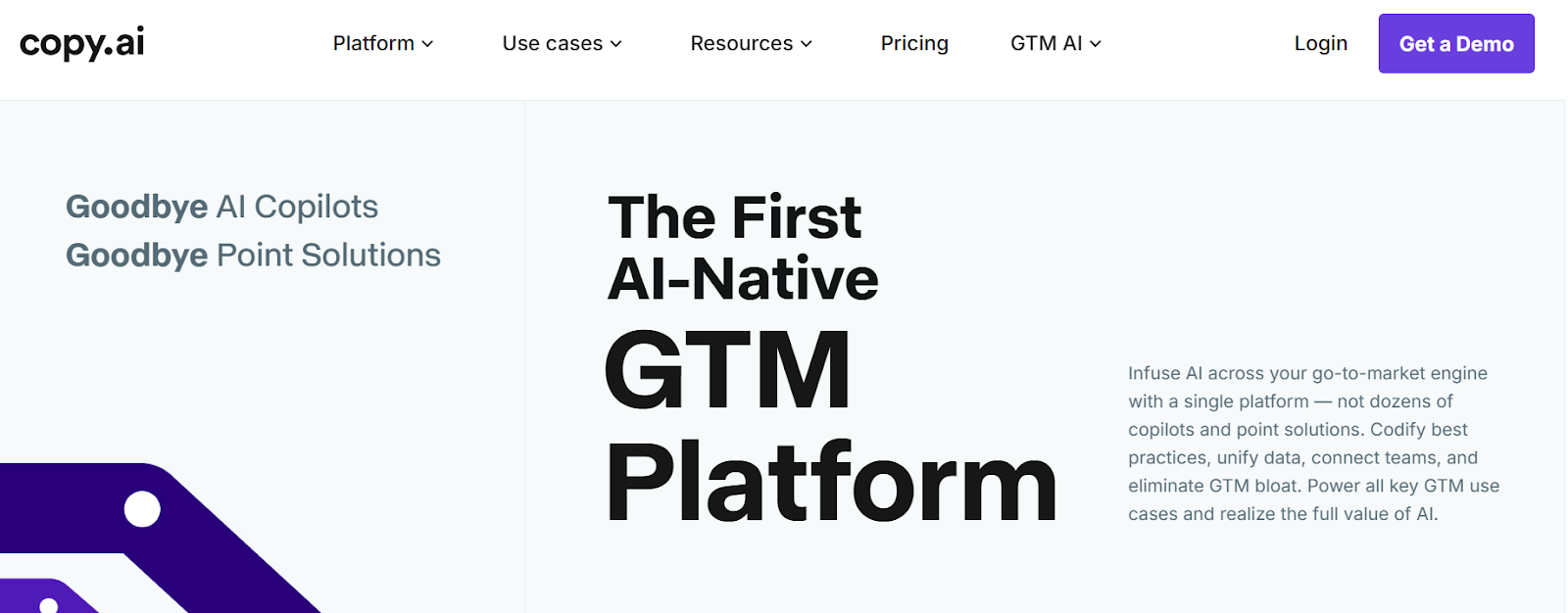
Copy.ai is built around workflows — automated sequences that take one input and produce multiple content outputs. For example: paste a blog post URL, and Copy.ai generates a LinkedIn post, a Twitter/X thread, three Instagram captions, and an email newsletter excerpt — automatically.
Key features:
- 90+ pre-built content workflows
- Repurposing workflow: one long-form piece ? multiple short-form outputs
- The infobase of this free AI writing assistant online stores your brand information for consistent output
- API access for teams who want to embed AI into their own systems
Where it excels: Volume and repurposing. If your content strategy involves distributing one piece of content across many channels, Copy.ai removes almost all the manual work.
Cost: Free plan available (limited words). Pro plan at $49/month.
5. Notion AI — Best for Teams That Already Use Notion
Best for: Teams who manage their content calendar, briefs, and drafts inside Notion.
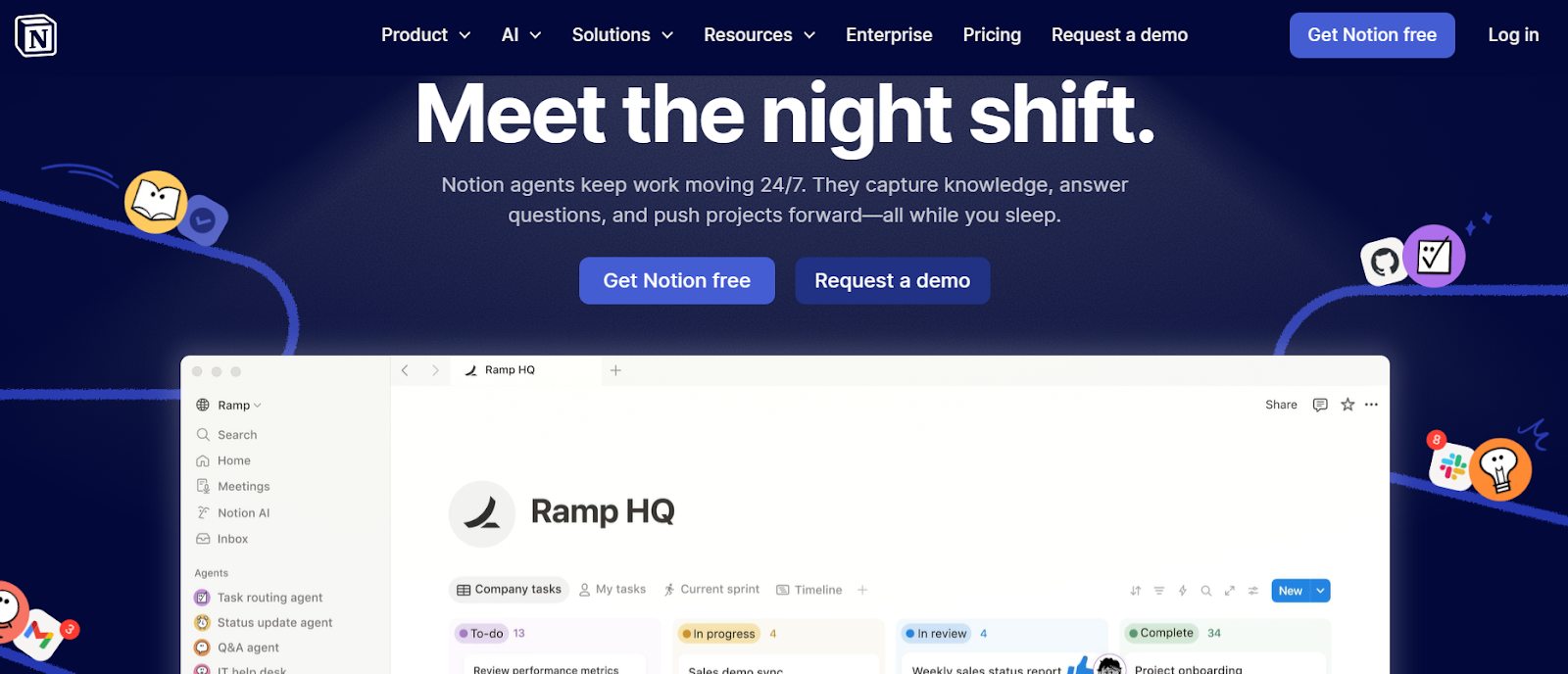
Notion AI is not a standalone writing tool. But if your team already uses Notion for project management, it adds an AI layer to your existing workflow without adding another platform.
Key features:
- Draft, summarize, and edit directly inside any Notion page
- Generate content from meeting notes, briefs, or outlines
- Translate and reformat content for different audiences
- AI-powered search across your entire workspace
Where it excels: Reducing context-switching. Instead of opening a separate AI tool, writing, and pasting back, you stay in one place.
Cost: $10/member/month added to any Notion plan.
6. Writer — Best Enterprise AI Content Automation Platform
Best for: Mid-size to large teams that need brand consistency at scale across departments.
Writer.com is built for enterprise content operations. It is not the tool for a solopreneur — but for companies producing hundreds of pieces of content monthly across multiple teams and channels, it is among the most powerful platforms available.
Key features:
- AI trained on your brand voice, style guide, and terminology
- Compliance checks flag off-brand language automatically
- Co-writing mode for human-AI collaboration on long-form content
- Integrates with Figma, Contentful, Google Docs, and Slack
Cost: Contact for enterprise pricing. Starter plans from $18/member/month.
How to Use AI for Content Writing: The Right Workflow
Knowing which tools to use is only half the answer. The other half is how you structure the process. Most teams that struggle with AI content automation are not using bad tools — they are using good tools badly.
Step 1: Build Content Templates First
This is the most important step. AI performs best when it has a structure to follow.
Create a template for each content type you produce regularly. Each template should define:
- Goal: What should this piece accomplish?
- Audience: Who is reading this, and what do they already know?
- Tone: Conversational, authoritative, persuasive, educational?
- Structure: Required headings, sections, word count ranges
- Keywords: Primary and secondary terms to include
- CTA: What action should the reader take at the end?
Store these in a shared Notion page, Google Doc, or directly inside your AI platform. The more specific your template, the better your AI output. This is the single highest-leverage action you can take to improve results.
Step 2: Write Smarter Prompts
Weak prompts produce weak content. Strong prompts include context, constraints, and examples.
Weak prompt: “Write a blog post about email marketing.”
Strong prompt: “Write a 1,200-word blog post for small business owners who are new to email marketing. The tone should be conversational and practical. The primary keyword is ’email marketing for small business.’ Structure the post with these H2 sections: . Include a numbered list in the third section. End with a clear CTA to book a free consultation.”
The second prompt takes 30 seconds more to write. It produces output that takes 70% less time to edit.
Step 3: Edit, Don’t Rewrite
Your job when using AI content automation tools is not to rewrite what the AI produces. It is to edit it. Scan for accuracy, brand voice, and factual claims. Add one or two original insights or statistics. Adjust the intro and CTA. Then publish.
This workflow — template ? prompt ? edit ? publish — is what allows experienced teams to produce 5x more content without 5x more staff.
The Best AI Content Generators: Comparison at a Glimpse
Here is a side-by-side comparison of the best AI content generation tools covered in this guide:
| Tool | Best For | SEO Features | Free Plan | Starting Price |
| Jasper AI | Long-form blog, brand scale | Surfer SEO integration | ? Trial | $49/month |
| ChatGPT (GPT-4o) | Flexible writing, all formats | Manual prompt-based | ? Yes | Free / $20/month |
| Surfer SEO + AI | SEO-optimized blog content | Built-in NLP scoring | ? Trial | $99/month |
| Copy.ai | Short-form, repurposing | Basic | ? Limited | $49/month |
| Notion AI | Team workflows in Notion | None | ? Add-on | $10/member/month |
| Writer | Enterprise brand consistency | Style compliance | ? | $18/member/month |
Our recommendation: Start with ChatGPT (free) paired with a strong template system. Once you see consistent results, invest in Surfer SEO if ranking on Google is a priority, or Jasper if volume and brand consistency matter more.
What AI Cannot Do (And Where Humans Still Win)
This matters for anyone building a serious content strategy. 77% of businesses express concern about AI hallucinations, and 47% of enterprise AI users admitted to making at least one major business decision based on hallucinated content in 2024.
AI produces volume. It does not produce judgment. It cannot:
- Verify facts or statistics independently
- Replace original research, interviews, or proprietary data
- Create genuinely novel ideas, or contrarian takes
- Build real trust through authentic human storytelling
The strongest content combines AI efficiency with human expertise. If you want to automate content creation with AI, use the best AI content generators to handle structure, drafts, and distribution. Use human judgment to verify, add depth, and inject originality.
Automate Your Content Strategy with Directory One

Setting up an AI content workflow that actually delivers results takes more than picking an AI agent for writing content. It takes a clear strategy, the right templates, and experienced oversight.
At Directory One, we help businesses build AI-powered content systems — from tool selection and workflow design to SEO-optimized blog production and content marketing execution.
Our content services include:
- SEO Content Writing & Copywriting — human-edited, AI-assisted content built to rank.
- Blog Posting Services — consistent, optimized blog content published on your schedule.
- Search Engine Optimization — full-service SEO including content strategy.
Conclusion
AI content automation tools are not a replacement for a good content strategy. They are an accelerator. When used correctly — with clear templates, strong prompts, and human editorial oversight — they allow you to produce more content, rank for more keywords, and stay consistent across every channel.
The businesses winning at content every day are not necessarily those with the biggest teams. They are the ones who built the smartest workflows. Start with one tool. Build your templates. Refine your prompts. Then scale what works.
If you are ready to automate content creation with AI, speak with our AI content strategy specialists. Call 713.269.3094 now for your free consultation.
About The Author
