





Mobile SEO vs. Desktop SEO: Key Differences Explained
Mobile SEO vs. Desktop SEO is no longer a debate about which one matters more — it’s about understanding that Google treats them as one index with two distinct ranking environments. If you optimize only for one, you’re leaving rankings on the table for both.
Since Google completed its mobile-first indexing rollout in July 2024, every new and existing website is evaluated by the mobile Googlebot first. Your mobile site’s performance now sets the ceiling for your organic visibility — regardless of how polished your desktop experience is. That changes the rules for desktop SEO, mobile SEO services, and the entire way agencies structure optimization strategies.
This guide breaks down exactly where mobile SEO and desktop SEO diverge — in indexing, ranking signals, user behavior, Core Web Vitals, and conversion strategy — so you can build a smarter approach for both.
What Is Mobile SEO vs. Desktop SEO?
Mobile SEO vs. Desktop SEO refers to the differences in how websites are optimized for mobile devices compared to desktop computers.
- Mobile SEO focuses on optimizing websites for smartphones and tablets
- Desktop SEO focuses on optimizing websites for larger screens like laptops and desktops
Both approaches fall under broader SEO strategies but differ in execution, user experience, and ranking signals.
Mobile SEO vs. Desktop SEO: The Fundamental Distinction
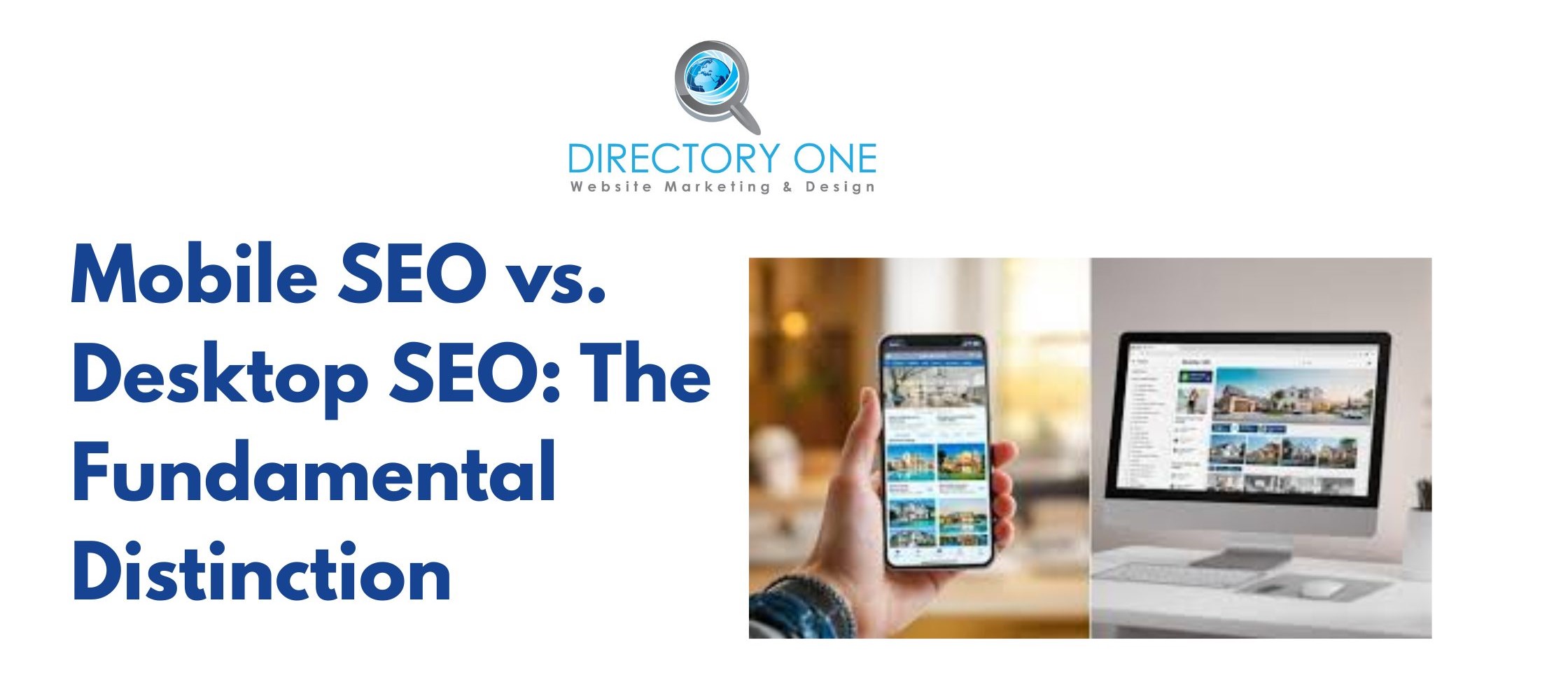
The biggest structural difference between mobile SEO vs. desktop SEO is indexing priority. Google’s mobile-first indexing means your rankings — on both device types — are predominantly determined by what Google’s smartphone crawler sees on your mobile site.
As Google’s official documentation confirms: “Google predominantly uses the mobile version of a site’s content, crawled with the smartphone agent, for indexing and ranking.”
That said, desktop SEO still matters independently. Google maintains separate Core Web Vitals scoring for mobile and desktop — and desktop CWV data specifically influences desktop rankings. A brand running a complex SaaS product, for example, may find that its highest-converting sessions come from desktop users who spend 8+ minutes on the site. Neglecting desktop performance metrics has measurable revenue consequences.
Mobile SEO vs. Desktop SEO: Core Differences
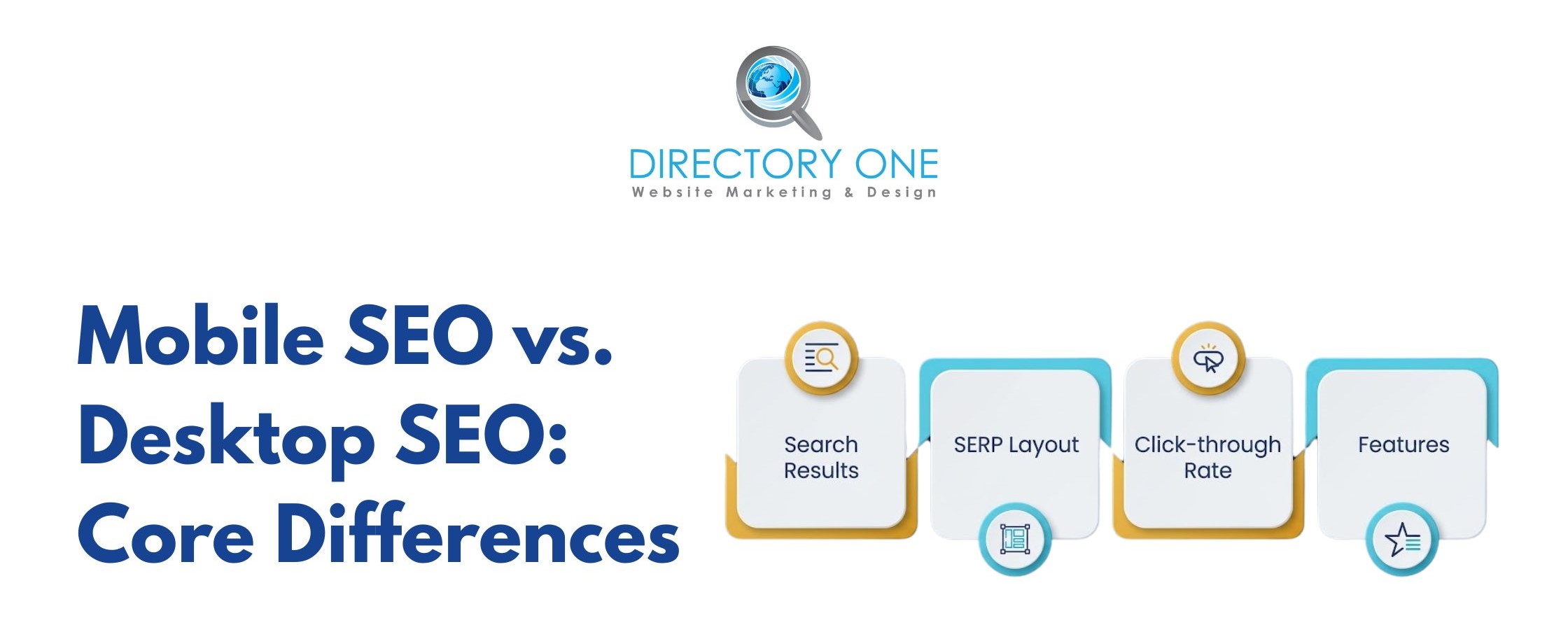
| Ranking Factor | Mobile SEO | Desktop SEO |
| Google Indexing | Primary — mobile crawler determines rankings for all searches | Secondary — desktop pages reviewed after mobile evaluation |
| Page Speed Standard | LCP <2.5s critical; slower networks, less CPU | LCP <2.5s expected; faster hardware gives more headroom |
| Click-Through Rate (CTR) | #1 rank earns ~23.6% CTR on mobile | #1 rank earns ~29.8% CTR on desktop |
| Search Query Style | Shorter, voice-driven, conversational, location-intent | Longer, research-oriented, comparison queries |
| Local SEO Weight | Very high — 46%+ of mobile searches have local intent | Moderate — fewer location-triggered searches |
| Core Web Vitals Scoring | Scored independently; typically harder to pass | Scored independently; easier due to faster hardware |
| Conversion Rate | Lower (2–3%) but higher volume | Higher (3–5%) with higher average order value |
| Content Layout | Short paragraphs, tap-friendly CTAs, collapsible content | Richer layouts, sidebars, larger media, detailed tables |
| Interstitial/Popup Rules | Google penalizes intrusive interstitials on mobile | No specific Google penalty for pop-ups on desktop |
| Voice Search | High relevance — 58% of consumers use voice for local search | Low relevance — voice search primarily mobile/smart speaker |
Complete Mobile SEO Checklist for Better Rankings
Use this checklist whether you’re working with a mobile SEO agency, a mobile SEO company, or managing your own mobile SEO service in-house.
- Responsive design with correct viewport meta tag
- LCP under 2.5 seconds on mobile (PageSpeed Insights)
- INP under 200ms — minimize main-thread JavaScript
- CLS under 0.1 — reserve space for images and ads
- Full content parity between mobile and desktop
- No intrusive interstitials covering main content
- Tap targets minimum 48×48px, 8px apart
- Structured data (schema) on the mobile version
- Local SEO: Google Business Profile optimized
- Voice search: FAQ content, conversational keywords
- Images in WebP format with lazy loading
- Mobile-first internal linking in primary navigation
- Canonical tags are consistent on mobile and desktop
- Test in Google Search Console — Mobile Usability report
Desktop SEO: Still Relevant?

Despite the rise of mobile, desktop SEO still plays a critical role, especially for:
- B2B websites
- Research-heavy industries
- Long-form content consumption
Desktop SEO strengths are:
- Better for detailed content
- Higher conversion rates in some industries
- Easier navigation for complex websites
Balancing mobile SEO vs. desktop SEO ensures full audience coverage.
Mobile SEO Service: When Do You Need Professional Support?

A professional mobile SEO service helps when:
- Your site is not mobile-friendly
- Rankings are dropping after mobile updates
- You experience high mobile bounce rates
At Directory One, our mobile SEO service includes:
- Mobile usability audit
- Speed optimization
- Technical SEO fixes
- UX improvements
Working with our mobile SEO company ensures your site meets modern search standards and ranks well.
Conclusion
The debate around mobile SEO vs. desktop SEO is no longer about choosing one over the other—it’s about prioritizing mobile while maintaining strong desktop performance. A well-balanced strategy ensures your website delivers a seamless experience across all devices.
For businesses aiming to fully optimize their digital presence, working with an experienced team like Directory One can make a measurable difference. Their expertise in SEO for mobile vs desktop ensures your website is built to perform across all platforms.
Explore more at https://www.directoryone.com/ or speak with an expert at 713.269.3094 to refine your SEO strategy.
About The Author
