





AI Search Optimization vs Traditional SEO: Complete Comparison
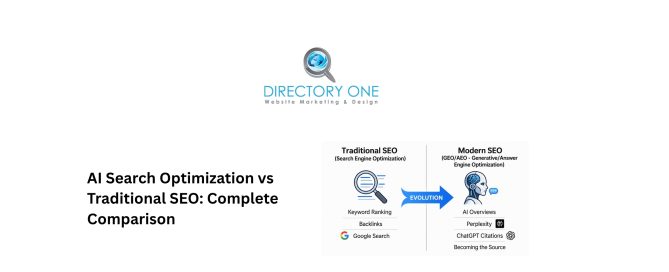
The world of search is shifting beneath our feet. For decades, businesses relied on a steady stream of keywords and backlinks to reach the top of Google. However, the rise of “Answer Engines” and generative artificial intelligence has introduced a new challenger. Understanding AI search optimization vs traditional SEO is no longer optional for business owners.
If you want your brand to be found in 2026, you must understand how these two strategies work together. While one focuses on ranking in a list of links, the other focuses on being the “chosen” answer provided by an AI.
What Is AI Search Optimization vs Traditional SEO?
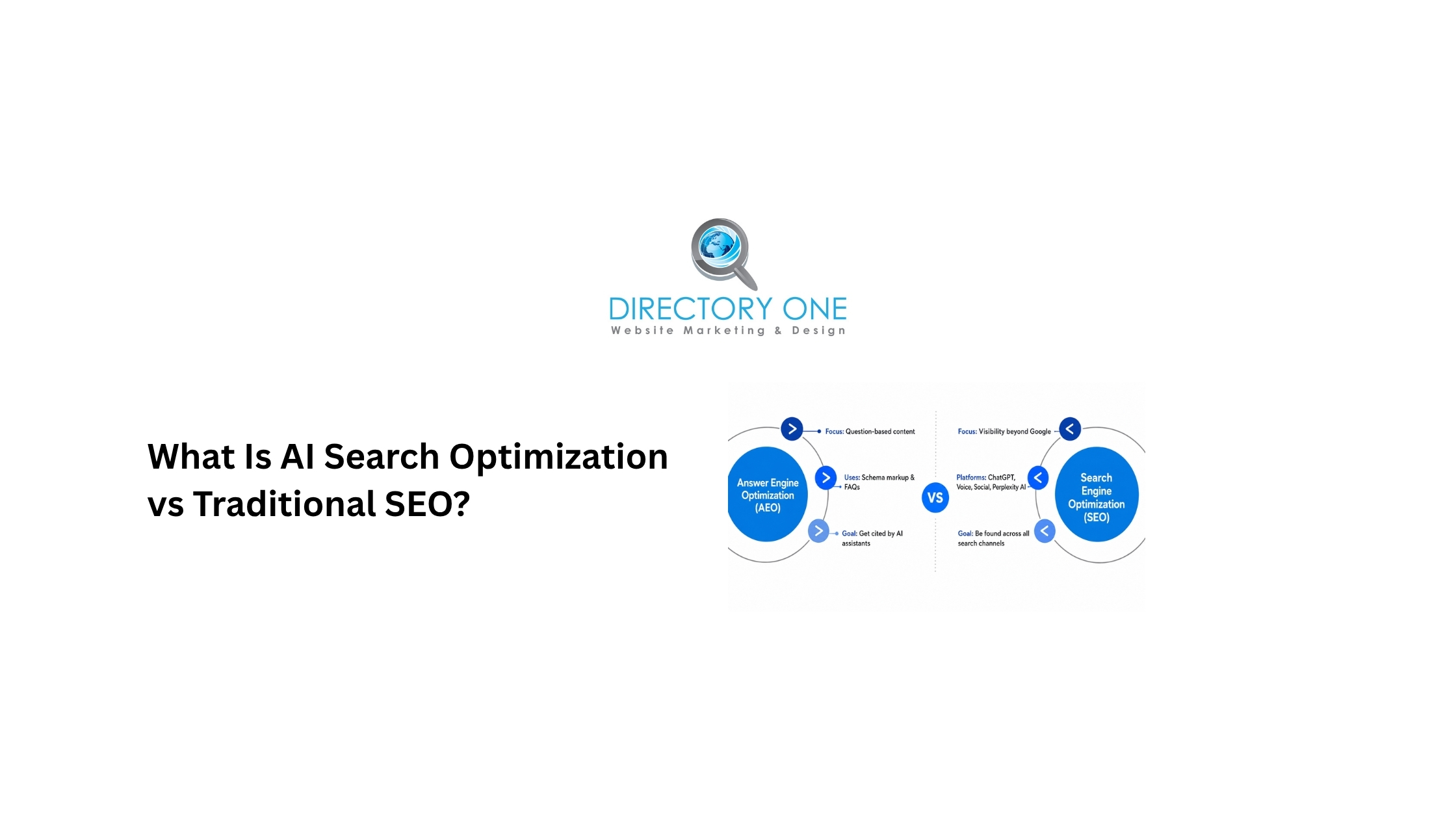
Traditional SEO is the practice of optimizing a website to rank higher in organic search engine results pages (SERPs). It relies on technical health, keyword density, and domain authority.
In contrast, AI search optimization vs traditional SEO introduces “Generative Engine Optimization” (GEO). This involves optimizing content so that AI models—such as Google’s Gemini or OpenAI’s SearchGPT—cite your website as a primary source when directly answering a user’s question. According to Gartner, search engine volume is predicted to drop by 25% by 2026 as users pivot toward AI chatbots for quick answers.
In short,
- Traditional SEO focuses on keywords, backlinks, and rankings.
- AI powered search engine optimization focuses on intent, context, and AI-generated answers.
AI SEO vs Traditional SEO: Key Differences Explained
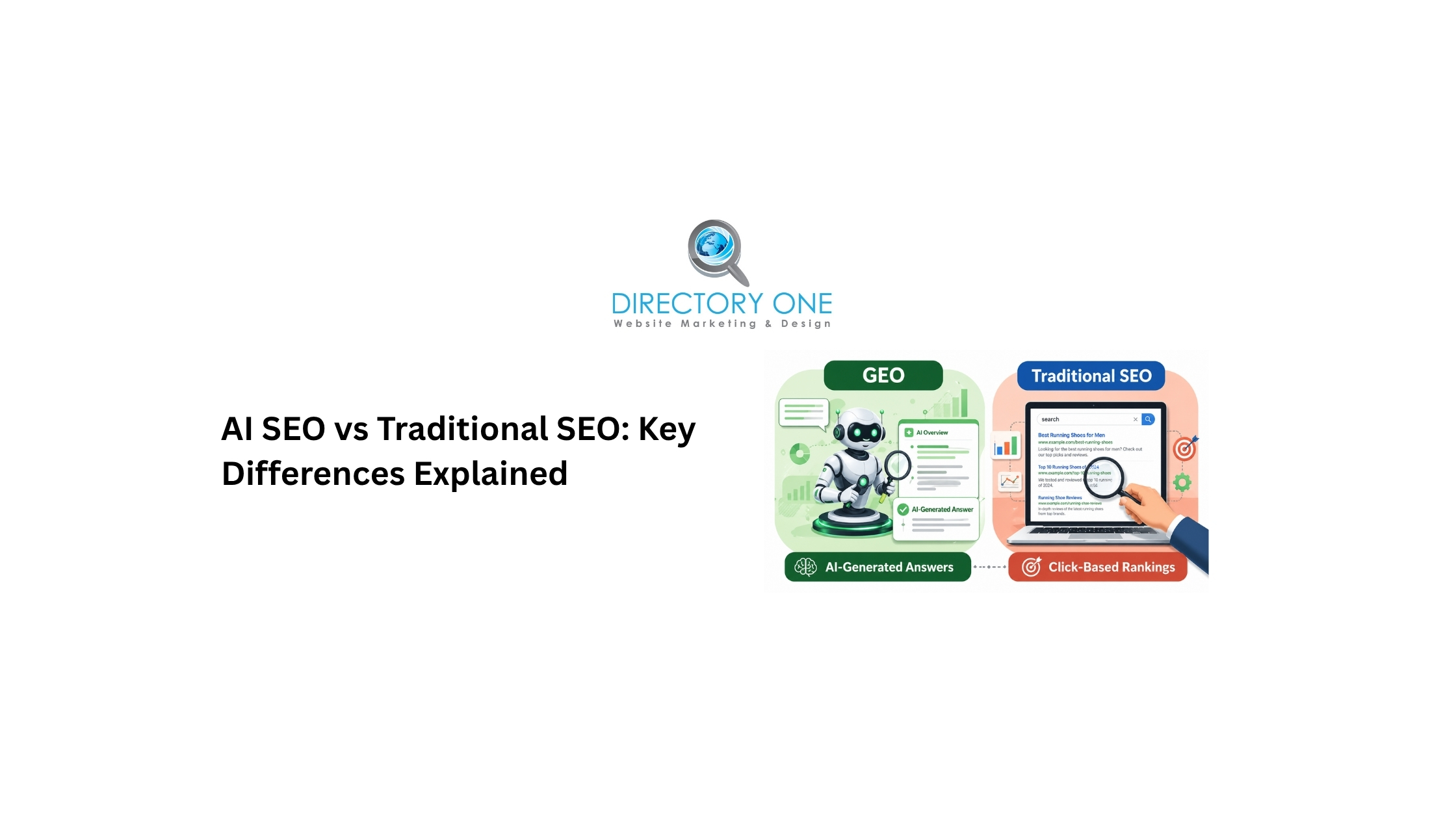
Understanding AI SEO vs. traditional SEO is critical. When comparing AI SEO vs Traditional SEO, the biggest difference is the “target.”
- Traditional SEO: Targets a search engine algorithm that displays a list of websites.
- AI SEO: Targets a Large Language Model (LLM) that synthesizes information into a single response.
In traditional SEO vs AI search optimization, the metrics for success change. Instead of just tracking “Position 1,” marketers now track “Brand Mentions” and “Citation Share” within AI responses.
| Traditional SEO | AI Search Optimization |
| Keyword-focused | Intent-focused |
| Ranking-based | Answer-based |
| Static results | Dynamic AI responses |
| Manual optimization | AI-driven insights |
Traditional SEO vs AI Search Optimization: How Search Is Evolving
The evolution of search is moving from “discovery” to “delivery.” In the past, a user would search for “how to fix a leak” and click a link. Now, an AI-powered search engine explains how to fix the leak directly on the results page.
This shift in AI search optimization vs traditional SEO differences means your content must be more than just keyword-rich. It must be authoritative and structured in a way that AI can easily parse. Google Search Central emphasizes that high-quality, people-first content remains the gold standard, regardless of how it is produced.
How AI Is Changing SEO in 2026?
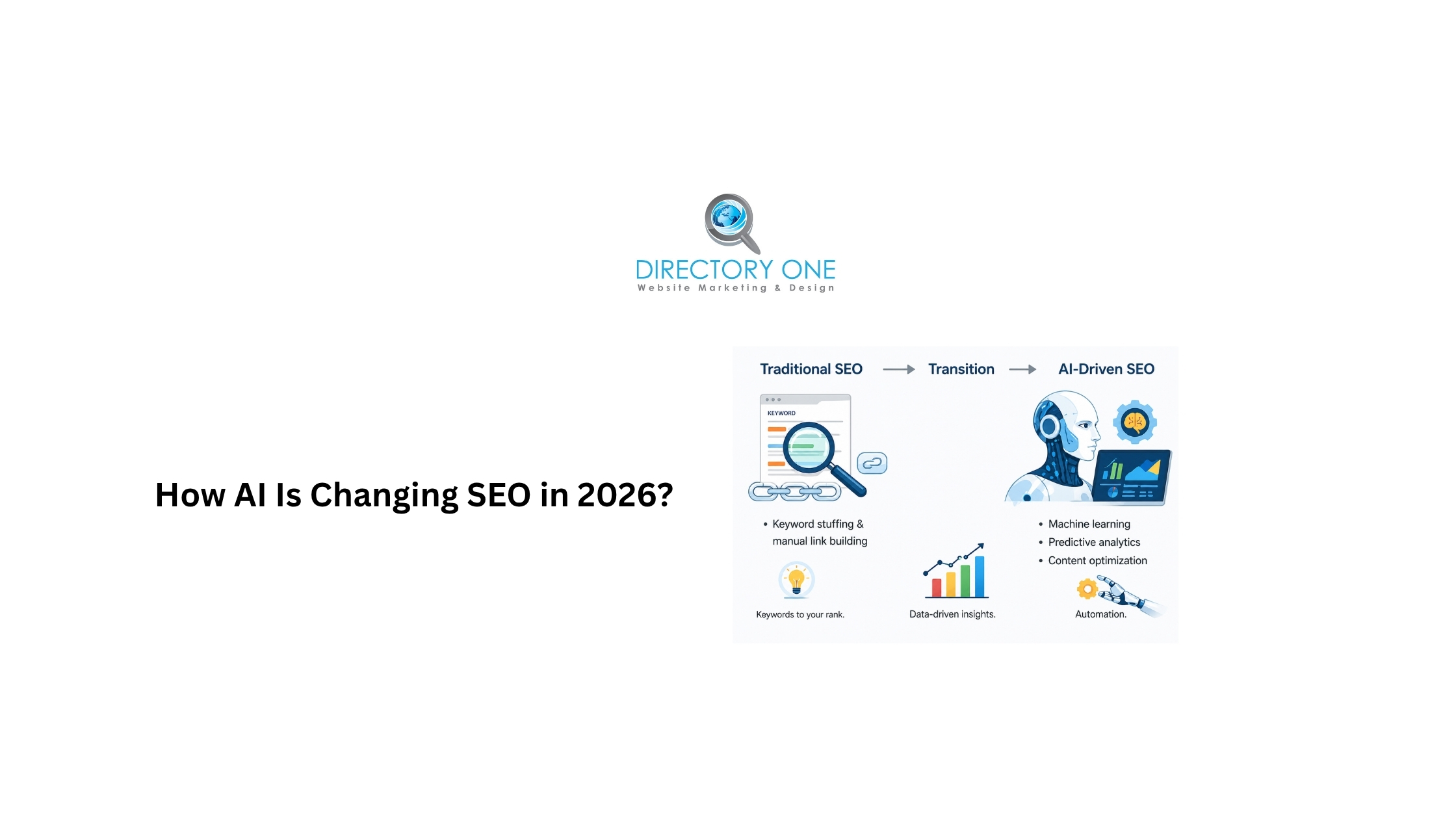
By 2026, the “blue link” will become less prominent. How AI is changing SEO in 2026 is mostly seen through “Zero-Click Searches.” This happens when a user gets their answer without ever leaving the search page. To survive, businesses must optimize for these snippets to ensure their brand name is the one providing the solution.
AI is transforming:
- Search intent understanding
- Content creation
- User experience
According to HubSpot, AI-driven content strategies significantly improve engagement. Besides, the shift toward AI isn’t just a trend; it’s a measurable change in consumer behavior.
- Traffic Decline: Traditional search engine volume is projected to drop by 25% by the end of 2026 as users move toward AI-powered answers.
- Zero-Click Dominance: Approximately 93% of Google AI Mode sessions now end without a single click to an external website.
- The Power of Citations: Even without clicks, brand visibility matters. AI Overviews now appear in roughly 25% of all Google searches.
- Conversion Quality: While clicks may be fewer, AI referral traffic is approximately 5x more valuable per session, converting at a rate of 14.2% compared to the 2.8% average for traditional search.
AI SEO Automation vs Traditional SEO Agencies
There is a growing debate regarding AI SEO automation vs traditional SEO agencies.
- AI SEO Automation: Uses tools to generate meta tags, perform keyword research, and even write code updates instantly.
- Traditional Agencies: Provide strategic oversight, human creativity, and complex problem-solving that machines cannot yet replicate.
For most businesses, the best results come from a hybrid approach. Using automation for repetitive tasks allows human experts to focus on high-level online brand presence and storytelling.
Traditional SEO Tools vs AI Answer Engines
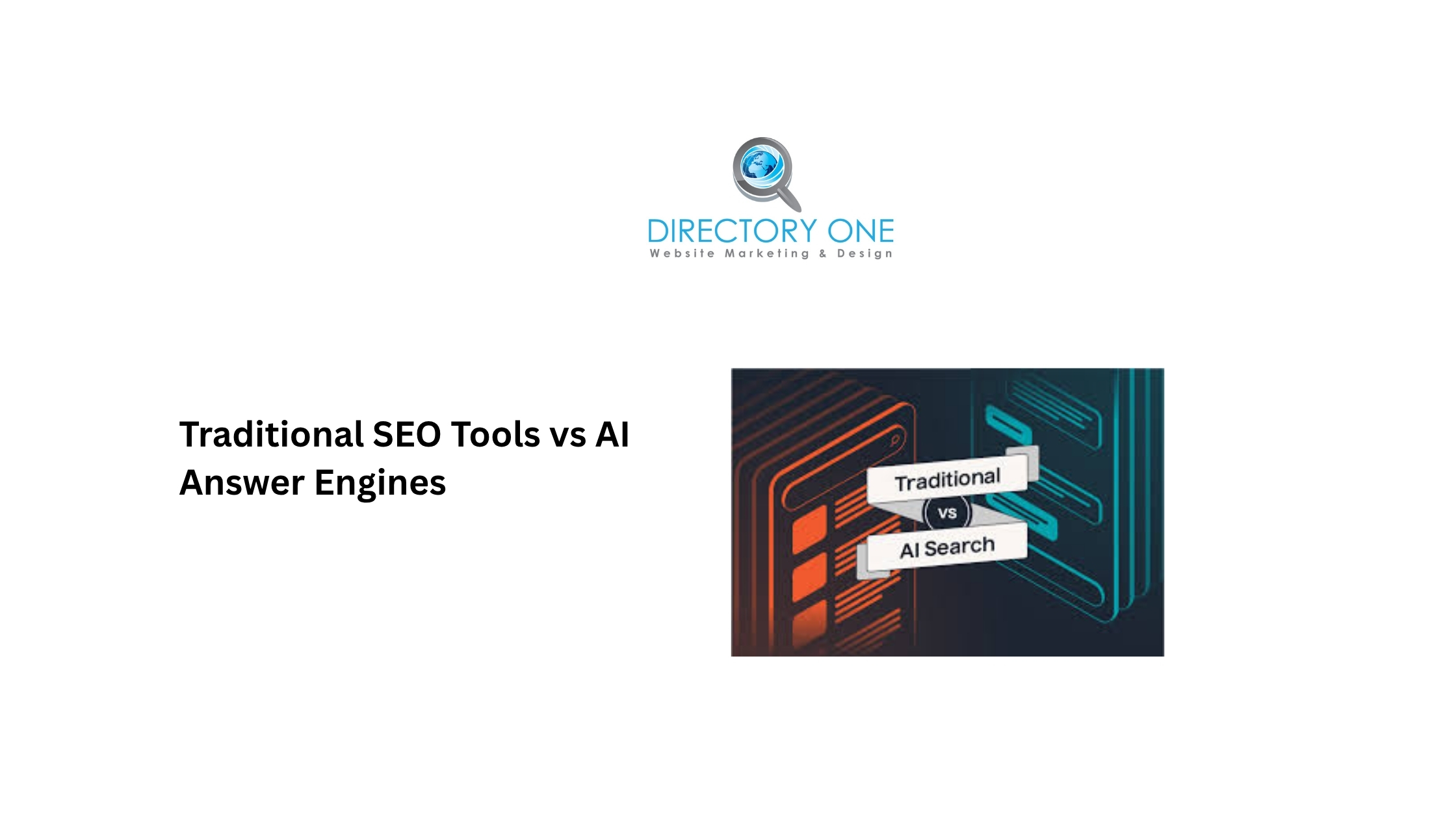
The toolkit is changing. Traditional SEO tools vs. AI answer engines offer different insights. While tools like Ahrefs show you what people are typing into a search bar, AI answer engines show you how people are “conversing” with technology.
| Feature | Traditional SEO | AI Search Optimization (GEO/AEO) |
| Primary Goal | Rank in the top 10 organic results | Be cited as the direct answer or recommendation |
| Target Audience | Human searchers scrolling through links | AI models synthesizing information for users |
| Core Metric | Click-Through Rate (CTR) and Keywords | Citations, Brand Mentions, and Share of Voice |
| Content Style | Comprehensive, keyword-optimized articles | Structured, factual, and easily extractable data |
| Discovery | Crawling and Indexing by Googlebots | Training on LLMs and real-time “web-browsing” bots |
If you want to stay ahead, you need to use AI search optimization tools that analyze sentiment and context, not just search volume.
Generative AI vs AI Search: What’s the Difference?
It is easy to confuse generative AI vs. AI search.
- Generative AI: Creates new content, images, or text based on a prompt.
- AI Search: Uses generative capabilities to pull real-time data from the web to answer a query.
In the context of SEO vs AI search, your goal is to make sure the “AI Search” tool picks your “Generative AI” content as the most reliable source.
Strategies to Enhance Visibility in AI-Powered Search Engines
To bridge the gap between traditional SEO vs AI search optimization, you must adapt your content structure. AI models prefer “nuggets” of information they can easily digest.
1. Structure for Extraction
Use the “inverted pyramid” style of writing. Start with a direct, factual answer to a potential question, then follow with supporting details. This makes it easier for an AI powered search engine to pull your text verbatim as a featured snippet or AI Overview.
2. Prioritize Brand Authority (E-E-A-T)
AI models weigh brand reputation and factual accuracy heavily. To win at AI SEO vs traditional SEO, you must move beyond keywords and focus on “entities.” Ensure your brand is mentioned across high-authority third-party sites, forums like Reddit, and industry-specific directories.
3. Implement Advanced Schema
Schema markup is the “language” of AI. By using detailed structured data, you help AI search optimization tools understand the context of your content—whether it’s a product, a review, or a technical guide.
Best AI Search Optimization Tools in 2026
If you want to track your online brand presence in the age of AI, you need a new set of tools.
| Tool | Best For | Key AI Feature |
| Ahrefs / Brand Radar | Competitor Analysis | Tracks brand mentions across 243M+ AI prompts |
| Surfer SEO | Content Creation | Real-time AI visibility and EEAT compliance checks |
| SE Ranking | Rank Tracking | Monitors how often you appear in Google AI Overviews |
| Mangools / AI Grader | Free Visibility Check | Analyzes brand performance in ChatGPT, Claude, and Llama |
What Is the Future of SEO with AI?
So, what is the future of SEO with AI? The future includes:
- AI-driven search results
- Personalized experiences
- Zero-click searches
Businesses that adapt early will win.
When to Hire a Generative AI Search Engine Optimization Agency?
Many businesses struggle to balance AI SEO automation vs traditional SEO agencies. Automation is excellent for scaling, but it often lacks the “human touch” that Google’s 2026 algorithms reward.
If your rankings are slipping or you aren’t appearing in AI-generated answers, it may be time to consult Directory One, a Generative AI search engine optimization agency. Being a specialized SEO audit Houston, our team can identify if your site is being blocked by AI crawlers or if your content lacks the structural clarity required for modern search.
Final Statement
The future of search is a hybrid model. Traditional SEO provides the foundation of technical health and organic reach, while AI Search Optimization ensures your brand remains the primary source of truth in a conversational world. To stay ahead, you must optimize for both the human who clicks and the AI that summarizes.
Future-proof your business with Directory One. At Directory One, we don’t just follow trends; we set the standard. Our team combines decades of traditional SEO expertise with cutting-edge generative AI search strategies to keep your business at the top of every screen.
Contact our experts in Houston today at 713.269.3094.
About The Author
