




Social Media Marketing Strategy for Business Reach: Step-by-Step Guide
Today, every brand needs a well-planned social media marketing strategy for business growth. Without a plan, results stay inconsistent.
Most businesses are active on social media. Far fewer have an actual strategy because there is a real difference between posting and strategizing. Posting is an activity. Strategy is direction. And without direction, even consistent posting produces inconsistent results. It needs to be clear, consistent, and built around your specific goals and audience.
This guide walks you through every step — from platform selection and content planning to a 30-day launch plan and how to measure what is working.
What Is a Social Media Marketing Strategy for Business?
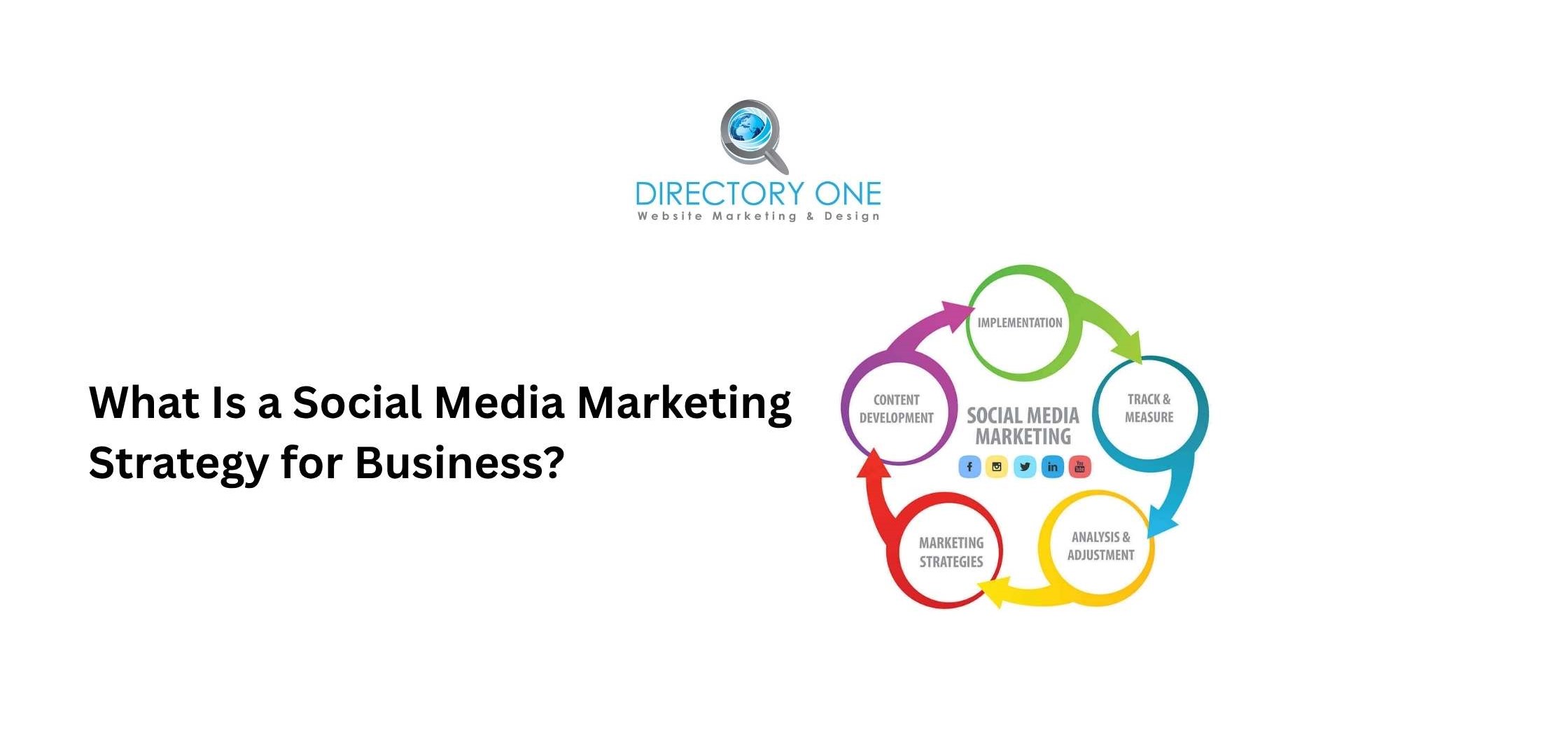
A social media marketing strategy for business is a documented plan that defines what you want to achieve on social media, who you are trying to reach, and what content and actions will get you there.
It is not a content calendar. It is not a posting schedule. Those things support the strategy — but they are not the strategy itself.
A complete strategy includes:
- Clear, measurable goals tied to business outcomes
- Defined audience target by platform, demographic, and intent
- Platform selection based on where your audience actually spends time
- A content marketing strategy framework that guides what you create
- A social media content calendar with best practices for cadence and format
- Metrics for measuring performance and adjusting the plan
Without all of these working together, social media becomes a time-consuming activity that is difficult to justify and hard to improve.
Why Every Business Needs a Social Media Marketing Strategy?
The scale of social media in 2026 makes strategy non-negotiable.
There are now 5.17 billion active social media users worldwide, representing 63.7% of the global population — and that number grew by 4.7% year-over-year, according to reports. Meanwhile, 93% of marketers believe social media has been crucial for business growth, and 73% say it has been somewhat or very effective for their business, as per the Sprout Social Index.
But here is the challenge: social platforms are more competitive than ever. Organic reach is declining on most platforms. Attention spans are shorter. And audiences expect brands to be responsive, relevant, and consistent.
Without a strategy, you are competing in that environment blind. With one, you have a measurable advantage.
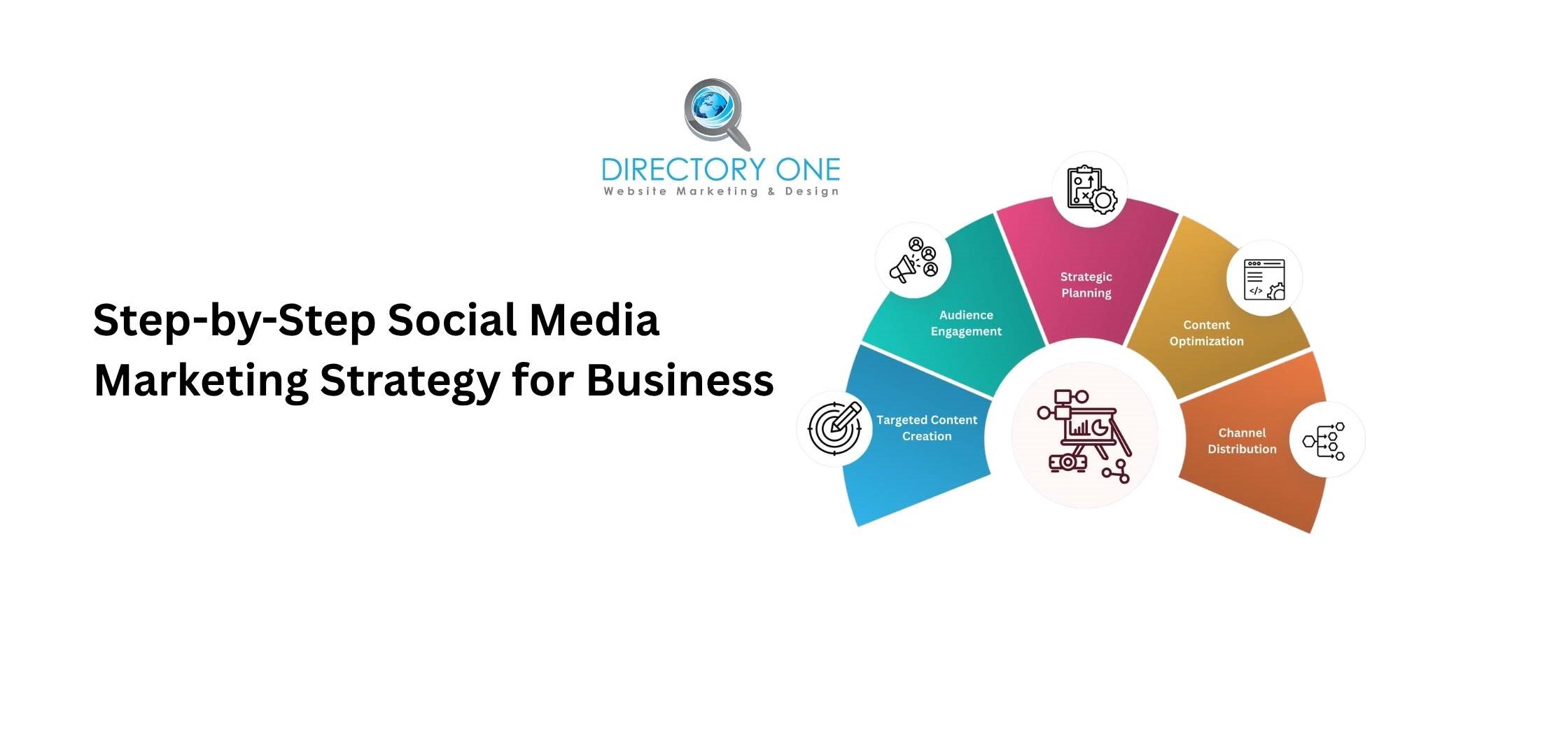
Step-by-Step Social Media Marketing Strategy for Business
Step 1: Define Goals Tied to Business Outcomes
Every element of your social media marketing strategy for business should trace back to a specific goal. Common goals include:
- Building online brand presence and awareness with new audiences
- Generating leads and driving traffic to your website
- Nurturing existing customers and increasing retention
- Supporting sales through social commerce and direct messaging
Set goals that are specific and measurable. “Get more followers” is not a goal. “Increase LinkedIn follower count by 20% in 90 days while maintaining a 2%+ engagement rate” is.
Step 2: Define Your Audience Target
Knowing your audience target is the most important step in any social media marketing strategy for business. Without it, you cannot choose the right platforms, create relevant content, or write copy that resonates.
Build an audience profile that includes:
- Demographics (age, location, income level, job title)
- Primary pain points and goals
- What content do they engage with most
- Which platforms they use daily versus occasionally
- When they are most active online
Step 3: Choose the Right Platforms
Not every platform deserves your time. Focus first. Expand later.
Choose platforms based on where your audience already is — not where you assume they should be. More on platform selection in the next section.
Step 4: Build Your Content Marketing Strategy Framework
A content marketing strategy framework defines what types of content you will create, in what ratio, and for what purpose.
A practical framework for most businesses:
- 40% educational content — teaches your audience something useful
- 30% brand storytelling — builds trust and shows your values
- 20% promotional content — highlights offers, services, case studies
- 10% engagement content — polls, questions, user-generated content
This balance prevents your feed from becoming a sales pitch — while still driving business results.
Step 5: Build a Social Media Content Calendar
Planning social media content in advance dramatically improves consistency and quality. A social media content calendar with best practices includes:
- Scheduled post dates and times for each platform
- Content type for each post (video, image, text, link, story)
- Copy and visual assets prepared in advance
- Relevant hashtags and tagging strategy
- Repurposing plan for high-performing content
Tools like Hootsuite, Buffer, and Sprout Social allow you to schedule and manage content across multiple platforms from a single dashboard.
Best Social Media Marketing Strategies for Business Growth
Beyond the foundational steps, these strategies consistently drive stronger results:
- Prioritize short-form video.
Short-form social videos drive the highest ROI among all video formats for B2B marketers at 41%, followed by brand storytelling at 38%, according to Sprout Social’s 2026 statistics. If you are not producing short video content, you are leaving meaningful performance on the table.
- Use employee advocacy.
Content shared by employees generates significantly higher engagement than the same content posted from a brand account. According to Sprout Social, brands that embrace employee advocacy grow faster than those relying only on brand-published content.
- Respond within 24 hours.
Around 73% of social users say that if a brand does not respond on social media, they will buy from a competitor, per Sprout Social Index 2025. Responsiveness is not just good service — it is a direct revenue factor.
What Are the Best Social Media Platforms for Your Business?
Choosing the right platform depends entirely on your audience and goals. Here is how the major platforms break down in 2026.
Which Social Media Platform Is Best for B2B Marketing?
LinkedIn is the clear answer for B2B. With over 1.2 billion users and LinkedIn ads reaching nearly 92% of working-age US adults, it is the most direct path to professional decision-makers. LinkedIn users are there specifically to engage with business content — not to be entertained.
According to Hootsuite survey data, 70% of marketers report LinkedIn provides a positive ROI for their company, higher than any other platform for B2B. LinkedIn also drives the highest engagement for long-form articles, with replies running significantly ahead of short text posts.
For a complete LinkedIn marketing strategy for business, prioritize thought leadership content, employee advocacy posts, and direct outreach to your ideal client profile.
How to Use Different Social Media Platforms for Marketing Effectively?
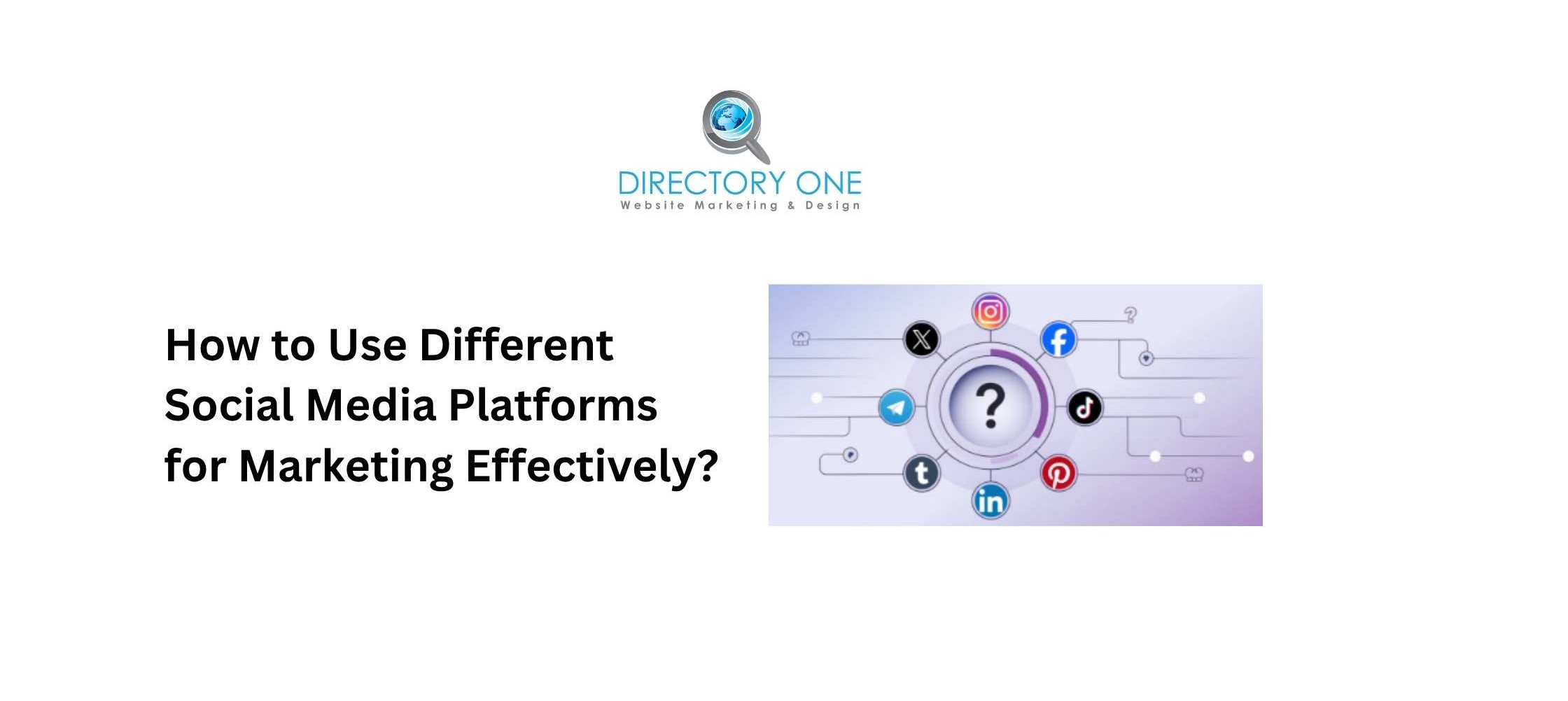
Understanding different social media platforms for marketing — and their distinct roles — prevents wasted effort. Here is how to use different social media platforms for marketing:
| Platform | Best For | Avg. Engagement Rate | Primary Audience |
| B2B, thought leadership, hiring | ~1.84% | Professionals, 25–34 | |
| Brand visual identity, product discovery | ~1.41% | 18–34, consumer-focused | |
| Community, local business, ads | ~0.07% | 25–44, broad demographics | |
| TikTok | Brand awareness, younger audiences | ~3.70% | 18–34, entertainment-led |
| YouTube | Long-form education, tutorials | High (video-based) | All ages, research-intent |
| X (Twitter) | Real-time news, PR, thought leadership | ~0.05% | News-focused, 18–34 |
Match your content type to each platform’s native format. LinkedIn rewards professional insight. Instagram rewards strong visuals and Reels. TikTok rewards authentic, fast-moving video. Repurpose content across platforms — but always adapt the format and tone for each one.
Tools to Improve Your Social Media Marketing Strategy
The right tools reduce manual work and improve decision-making.
- Scheduling and management:
Hootsuite, Buffer, or Sprout Social for cross-platform scheduling, analytics, and team collaboration.
- Design:
Canva for fast, brand-consistent visual content across all platforms without design expertise.
- Analytics:
Native platform insights (LinkedIn Analytics, Meta Business Suite, TikTok Analytics) combined with Google Analytics 4 for tracking social traffic and conversions on your website.
- Social listening:
Mention or Sprout Social’s listening tools to monitor brand mentions, industry conversations, and competitor activity in real time.
How to Measure ROI of Your Social Media Marketing Strategy
73% of marketers say social media has been effective for their business — but measurement is what separates those who can prove it from those who cannot. Focus on metrics that tie back to your goals:
| Goal | Primary Metric | Supporting Metric |
| Brand awareness | Reach, impressions | Follower growth |
| Engagement | Engagement rate | Comments, shares |
| Website traffic | Sessions from social | Bounce rate, time on page |
| Lead generation | Form submissions, DMs | Cost per lead |
| Sales | Social commerce conversions | Revenue from social channels |
Social networks generated 17.11% of total online sales in 2025, according to Statista — and the global social commerce sector is growing at a 13.7% CAGR projected to pass $1 trillion by 2028. Measuring the sales contribution of social media is now essential, not optional.
Review metrics weekly. Adjust content type or posting cadence monthly. Realign strategy quarterly.
Planning Social Media Content That Converts
Planning social media content around what your audience cares about — not what you want to say — is the single biggest quality shift most businesses can make.
Before creating any content, ask:
- What problem does this solve for my audience?
- What action do I want them to take after seeing this?
- Is this format native to the platform I am posting on?
High-converting content types by business goal:
- Lead generation: Free resource promotions, webinar announcements, case study highlights
- Trust building: Behind-the-scenes content, client results, team stories
- Product/service awareness: Short demonstration videos, before/after comparisons, testimonials
- Community engagement: Questions, polls, opinion prompts, response threads
Always end every content piece with a clear, specific next step — whether that is visiting a link, leaving a comment, or sending a DM.
Create a 30 Day Social Media Plan and Scale to a 3 Month Social Media Plan
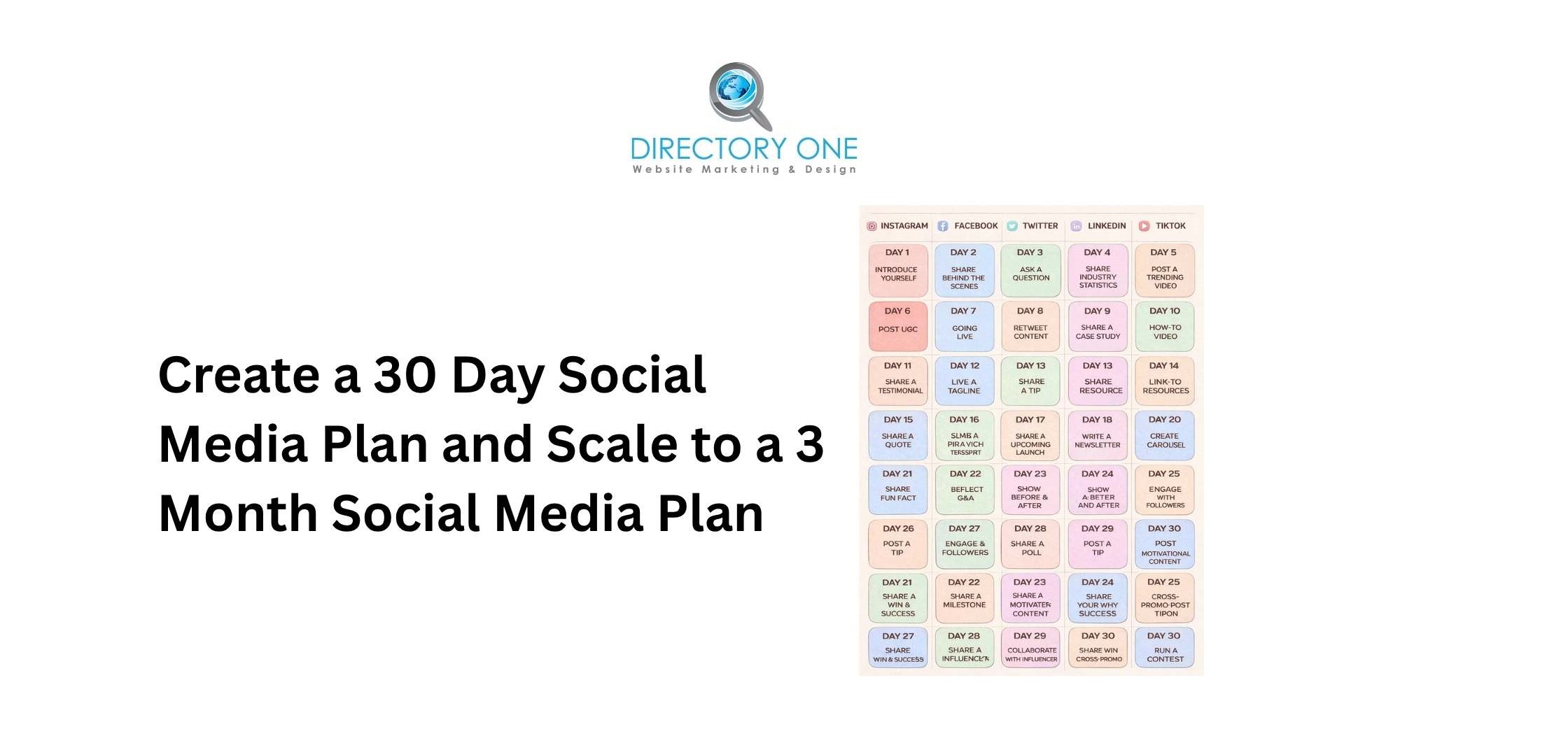
30 Day Social Media Plan
A 30 day social media plan is your proof of concept. The goal is to build consistency, gather data, and identify what resonates before scaling.
Week 1: Set up and optimize all platform profiles. Publish 3–4 introductory posts that establish who you are and what you offer. Focus on LinkedIn and one secondary platform.
Week 2: Shift to value-first content. Publish educational posts, a short video, and one piece of social proof (testimonial, case study, or result). Engage actively in the comments of industry conversations.
Week 3: Introduce a direct CTA. Promote a free resource, consultation offer, or product. Monitor what content drove the most engagement and replicate the format.
Week 4: Review the data. Which posts got the most reach? Which drove clicks or DMs? Use this to inform your 3 month social media plan.
3 Month Social Media Plan
A 3 month social media plan — also called a social media plan for the quarter — builds on what the first 30 days revealed.
Month 1: Establish voice and consistency (your 30-day plan).
Month 2: Increase publishing frequency on your top-performing platform. Begin testing paid promotion on 1–2 high-performing organic posts. Introduce a recurring content series (weekly tips, client spotlights, or industry news commentary).
Month 3: Build a content repurposing system. Turn your best LinkedIn posts into blog content. Convert blog posts into short-form video scripts. Use your analytics to optimize posting times and content formats for maximum reach.
Organic Social Media Marketing Strategy vs Paid Campaigns
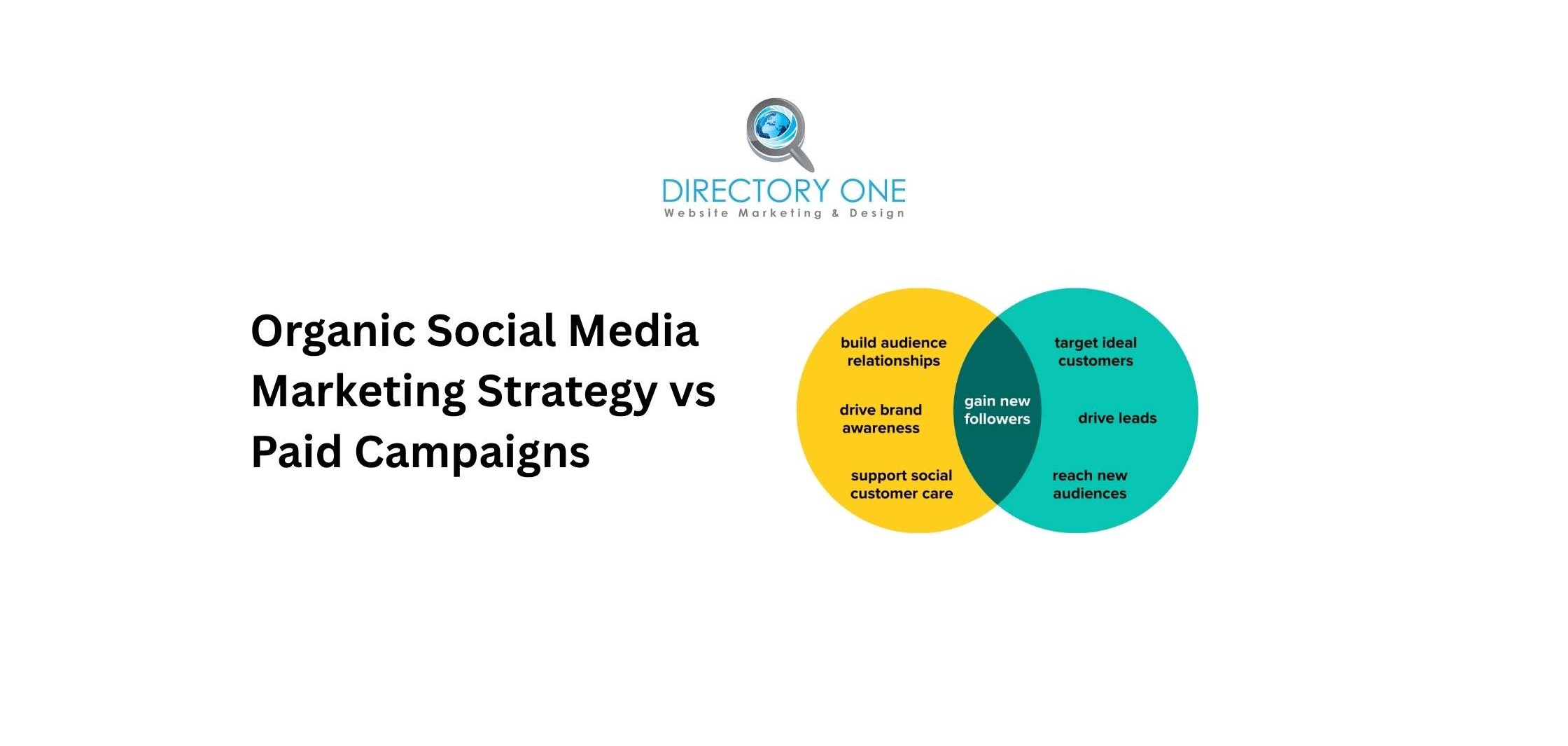
An organic social media marketing strategy builds long-term brand equity without direct ad spend. It is slower — but it is also more sustainable and trust-building.
Paid campaigns, by contrast, deliver faster reach and precise targeting. They are ideal for lead generation, product launches, and reaching audiences beyond your existing followers.
The most effective approach in 2026 combines both. According to B2B social media research, nearly 90% of B2B marketers use organic social content distribution as their primary channel, while also using paid campaigns to scale high-performing organic content and reach new audiences precisely.
Start organic. Amplify what works with paid.
Common Mistakes to Avoid in Social Media Marketing
Even experienced teams make these mistakes. Avoiding them accelerates results significantly.
- Posting without a plan.
Reactive posting produces inconsistent results. A social media content calendar prevents this.
- Ignoring analytics.
If you are not reviewing performance weekly, you are making decisions based on assumptions rather than data.
- Being on too many platforms at once.
Spreading effort thin across five platforms produces weak results on all of them. Master one or two first.
- One-directional communication.
Social media is not a broadcast channel. Brands that only post — but never reply, comment, or engage — miss the entire point of the medium.
- No clear CTA.
Every piece of content should tell your audience what to do next. Without a call to action, engagement rarely translates to business outcomes.
Future Trends in Social Media Marketing (2026)
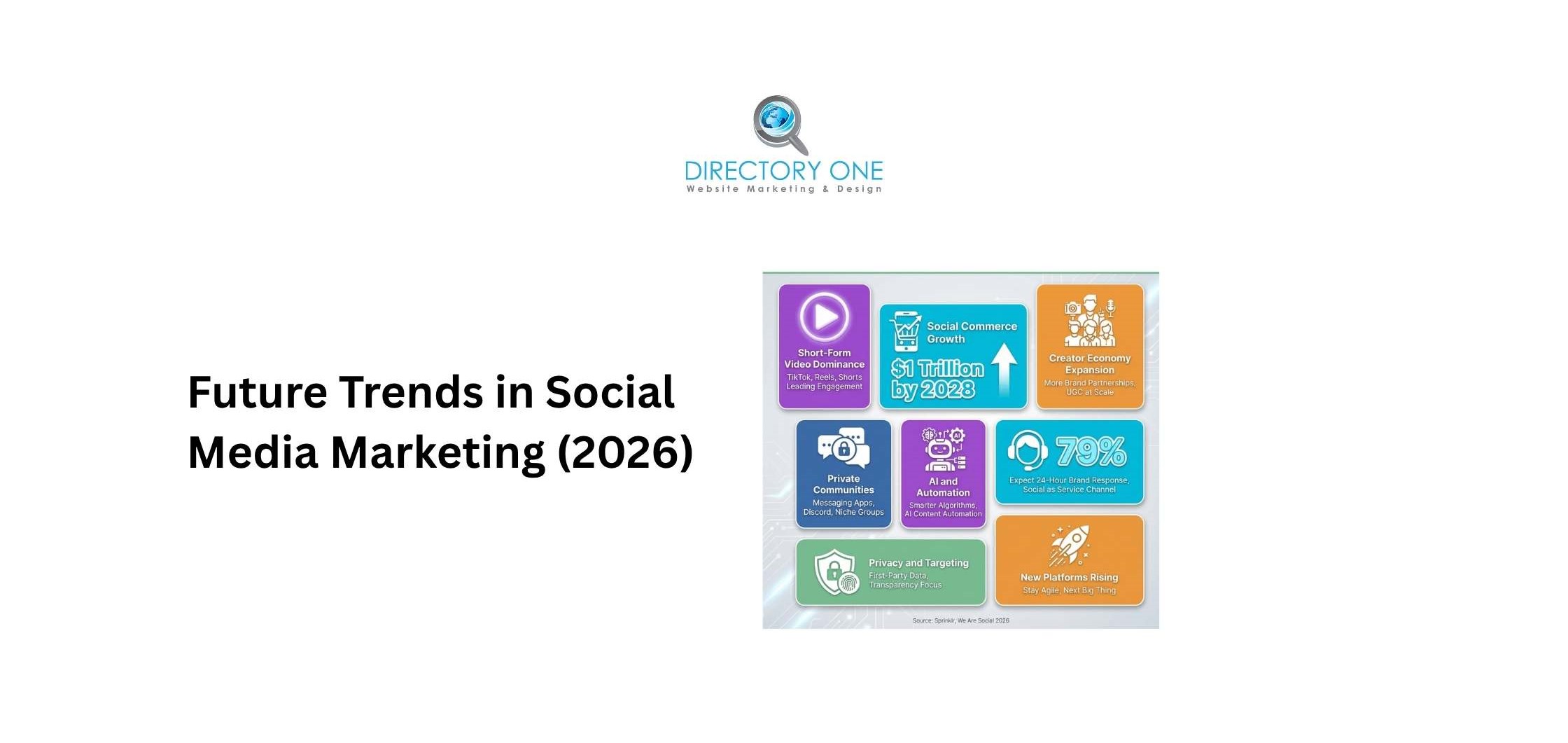
These trends are already shaping performance in 2026 and will define the next 12–24 months.
- AI-assisted content creation is mainstream.
85% of brands plan to use AI-generated content as part of their social media strategy by the end of 2026, according to Hootsuite’s Digital Report 2025. However, the brands winning are those combining AI efficiency with authentic human insight.
- Social commerce is a primary sales channel.
Social networks generated 17.11% of all online sales in 2025. Integrating shopping directly into social content — not just driving traffic away from the platform — is the direction every major network is moving.
- Micro-influencers outperform mega-influencers.
Micro-influencers (10K–100K followers) deliver higher engagement rates than mega-accounts at a fraction of the cost, according to reports. For most businesses, partnering with a few relevant micro-influencers outperforms a single expensive celebrity endorsement.
- Short-form video remains dominant.
TikTok grew engagement 49% year-over-year to a 3.70% rate in 2025 — the highest of any major platform. Instagram Reels generate 2.6x higher engagement than standard posts. Video is not a trend. It is the default.
Choosing the Right Social Media Marketing Company Houston
Building and executing a social media marketing strategy for business takes consistent time, expertise, and creative output. For many businesses, partnering with a dedicated team delivers faster, more measurable results than managing it in-house.
When evaluating a social media marketing agency in Houston, look for:
- A clear process for audience research and platform selection
- Demonstrated experience in both organic social media marketing strategy and paid social campaigns
- Transparent reporting tied to your business goals — not just vanity metrics
- Affordable social media marketing services for small businesses and scalable options for growing companies
- Local knowledge of the Houston market, combined with national-level digital strategy experience
At Directory One, we are a social media marketing company Houston businesses have trusted for over two decades. Our team manages social media marketing services across LinkedIn, Instagram, Facebook, and beyond — from strategy and content creation to paid campaign management and performance reporting.
Whether you are searching for “social media marketing services near me” or a full-service partner for a nationwide campaign, we build strategies around your goals, your audience, and your market.
Summing Up
A social media marketing strategy for business is not something you set and forget. It is a living framework that evolves as your audience grows, platforms change, and data accumulates.
Ready to transform your social media marketing strategy for business? Our team offers expert social media marketing services and content marketing strategy services tailored to your unique goals.
Contact our experts at Directory One today at 713.269.3094 or visit our Social Media Marketing Services. Let’s build a social media presence that actually drives revenue!
About The Author
