





Free AI Keyword Research Tool: Best Options to Discover Low-Competition Keywords

Most keyword research guides tell you what to do. This one shows you exactly how to do it — using a free AI keyword research tool that rivals premium platforms in terms of practical output.
Ranking on Google in 2026 is not about volume alone. It is about finding the intersection of real search demand and beatable competition. That sweet spot is where low-competition keywords live — and the right AI-powered tools can surface them in minutes.
According to Backlinko’s keyword research study, long-tail keywords — which often carry the lowest competition scores — account for 91.8% of all Google searches. Yet most content creators chase the same short, high-volume terms and never rank for any of them.
This guide covers the best free and affordable AI keyword research tools, a step-by-step methodology on how to search low competition keywords for blogs?, and the common mistakes that keep even experienced SEOs stuck on page two.
What Are Low Competition Keywords??
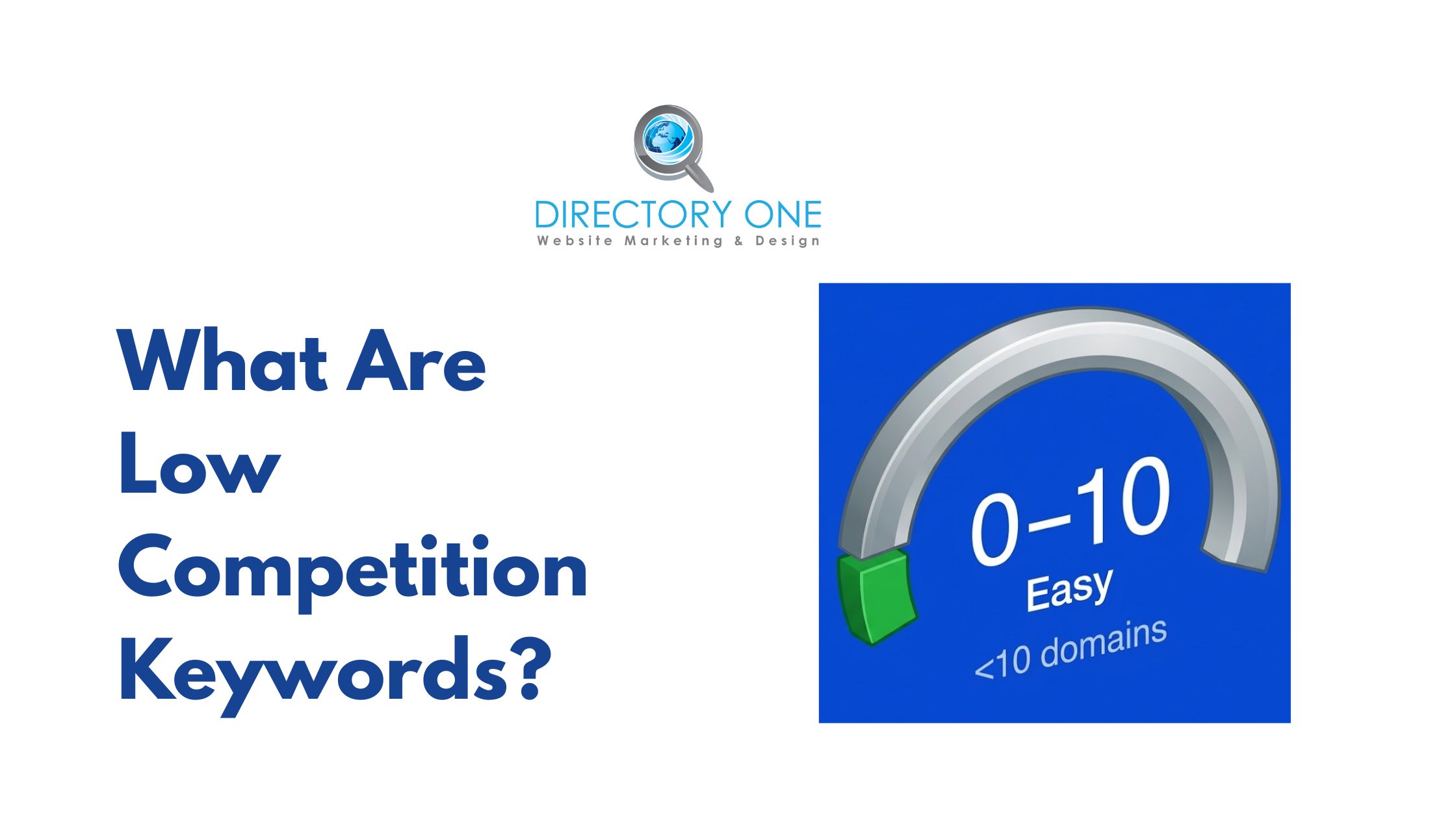
Low-competitive keywords are search queries that have measurable monthly search volume but lack strong, authoritative content competing for the top positions. On most AI keyword research tools for SEO research, these are flagged with a Keyword Difficulty (KD) score below 30, on a scale of 0 to 100.
The practical definition matters more than the score: low competitive keywords are one where a well-written, on-topic article on a smaller website can realistically reach page one within 3–6 months.
Low competition does not mean low-quality traffic. A 400-search-per-month keyword with a KD of 8 can outperform a 10,000-search-per-month keyword with a KD of 75 — because you’ll actually rank for the first one. Compounding traffic from dozens of low-KD keywords often exceeds chasing a single high-competition term for years.
The three key filters when evaluating any keyword:
- Search Volume: Monthly searches (target 100–2,000 for starter sites)
- Keyword Difficulty / KD: Competition score from 0–100 (aim for under 30)
- Search Intent: What does the searcher actually want — information, comparison, or a product?
Best AI Keyword Research Tool Free in 2026
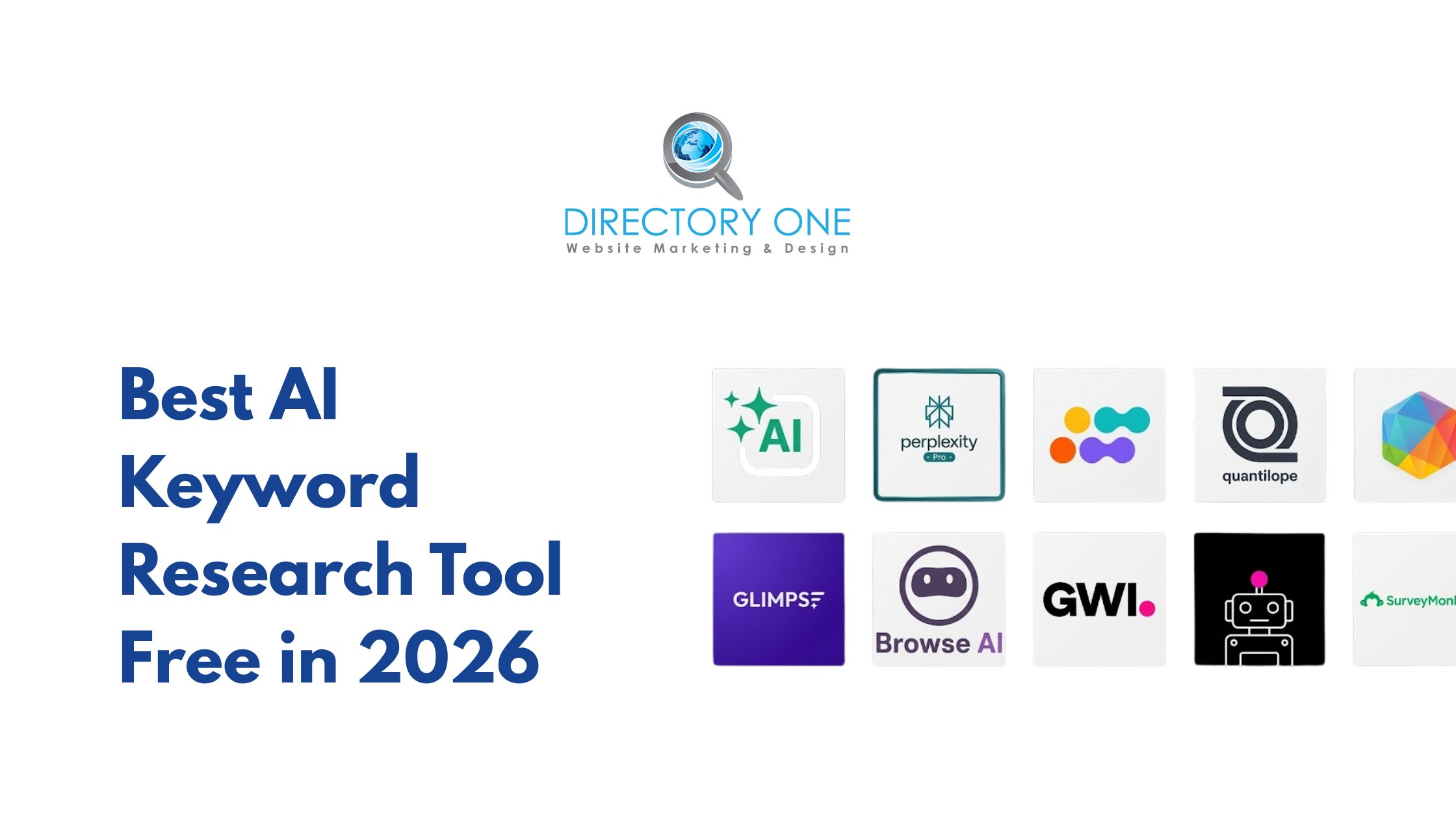
Not all powerful keyword research AI tools require a paid subscription. The following tools offer genuinely useful free tiers — and several are built on AI or machine-learning models that surface intent-driven keyword suggestions automatically.
| Tool | Free Tier | AI Features | Best For |
| Google Keyword Planner | Free | Intent grouping, seasonality forecasting | Volume data, PPC + SEO baseline |
| Semrush Free Plan | 10 searches/day | Keyword Magic Tool, AI intent labels | KD scores, SERP analysis |
| Ubersuggest | 3 searches/day | AI-generated content ideas, NLP suggestions | Beginner-friendly research |
| Ahrefs Free Keyword Generator | Free | KD scores, question-based suggestions | Quick competitive snapshots |
| Google Search Console | Free | Real impressions + CTR data for your site | Finding existing low-KD gains |
| AnswerThePublic | 2 searches/day | NLP question clustering, visual intent mapping | Content brief ideation |
| WordStream Free Keyword Tool | Free | Opportunity score, niche filters | Small business / local SEO |
Using two or three free AI keyword research tools in combination beats relying on any single platform. Cross-reference volume from Google Keyword Planner with KD data from the Ahrefs free generator and question data from AnswerThePublic for a comprehensive, cost-free research stack.
How to Find Low Competition Keywords Using Free AI Keyword Research Tool

The process below is the same framework used by the SEO team at Directory One to identify ranking opportunities for clients in competitive industries — adapted here for use with free keyword research AI tools? only.
1. Start with a Seed Keyword
Enter a broad topic term — not your target keyword — into Google Keyword Planner or Ubersuggest. Example: instead of “free AI keyword research tool,” enter “keyword research” to generate the widest possible suggestion set.
2. Filter by KD and Volume
In Semrush’s Keyword Magic Tool (free searches), set KD to 0–29 and volume to 100–5,000. This surfaces keywords with real traffic potential that most competitors overlook.
3. Mine Question-Based Queries
Switch to AnswerThePublic and enter the same seed. Questions like “how to find low-competition keywords for blogs” often have high informational intent and low competition — perfect for educational content.
4. Validate Intent via Google SERP
Search your shortlisted keyword in a fresh browser window (or incognito). If the results page shows mostly forums, thin content, or older articles, that is a strong signal that the keyword is winnable.
5. Check Google Search Console for Quick Wins
For existing sites, sort GSC data by “Impressions” descending and filter for queries where you rank in positions 8–20. These are keywords already driving impressions — targeted content improvements can push them to page one.
According to HubSpot’s Marketing Statistics Report, 75% of users never scroll past the first page of search results. Ranking on page two is effectively invisible. The step-by-step process above is specifically designed to find terms where page-one ranking is achievable, not just aspirational.
How to Identify High Volume Low Competition Keywords
“High search volume low competition” is the holy grail phrase in Search Engine Optimization — but it is often misunderstood. True high-volume low-competition keywords are rare at the top level. What you are more likely to find — and what is equally valuable — is a cluster of medium-volume, low-KD keywords that together drive substantial traffic.
Here’s how to identify these clusters with free AI keyword research tools:
- Enter a broad seed keyword into Semrush’s Keyword Magic Tool and group results by Topic.
- Look for topic clusters where multiple related terms all show KD < 30 — this is a content pillar opportunity.
- Cross-check volume data in Google Keyword Planner for the US (or your target region) to validate the numbers.
- Use the Ahrefs Free Keyword Generator to confirm KD estimates before committing to a piece.
A study by Ahrefs found that 94.74% of all keywords receive 10 searches per month or fewer. This means the vast majority of ranking opportunities are in the long tail — precisely where free AI keyword tools excel at surfacing ideas that paid tools’ dashboards can miss.
Keyword Research Tools AI: What Makes AI-Powered Research Different
Traditional keyword research tools work by pulling data from a fixed database and filtering it by metrics. AI-powered keyword research tools go further — they interpret search intent, suggest topically related clusters, and generate question-based queries using Natural Language Processing (NLP).
The practical difference for an Search Engine Optimization practitioner:
- Intent classification: AI tools label whether a keyword is informational, commercial, navigational, or transactional — critical for matching content format to user expectation.
- Semantic clustering: Instead of a flat list of keywords, AI surfaces related subtopics — helping you plan comprehensive content that covers a full subject.
- Predictive suggestions: Tools like Semrush’s AI writing assistant and Ubersuggest’s AI content ideas can suggest angles and headers you may not have considered.
Google’s own documentation confirms that its ranking systems use advanced language models to understand the meaning behind queries — not just exact matches. AI keyword tools are designed to align with that same logic, which makes them more SEO-accurate than older volume-only databases.
How to Use a Free AI Keyword Research Tool for Blog Content
Finding low-competition keywords for blogs is where free tools deliver the most immediate return. Blog content ranks for informational queries — and informational queries are the lowest-competition segment of most niches.
The most effective workflow for bloggers:
- Use AnswerThePublic to generate 50–100 question-based keyword ideas around your topic.
- Copy the question list into the Ahrefs Free Keyword Generator to check KD for each.
- Flag any question with KD < 25 and monthly volume > 150.
- Validate in Google: search the question, review the top 5 results. Are they thin, old, or off-topic? Write something better.
- Organize approved keywords into a content calendar grouped by sub-topic.
The team at Directory One applies this exact approach across client campaigns ranging from local service businesses to national e-commerce brands. The methodology works because it puts search intent — not keyword volume — at the center of every content decision.
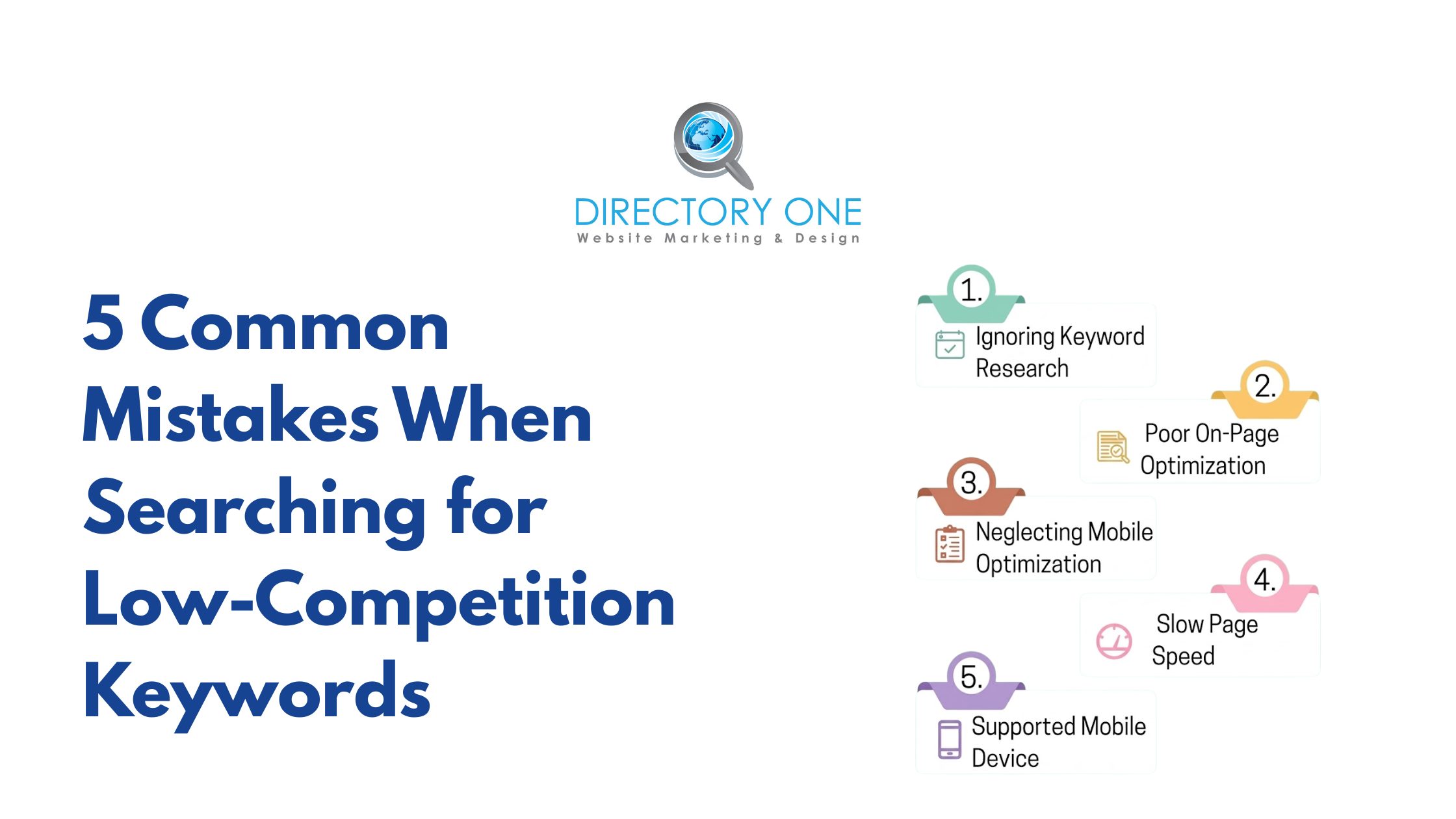
5 Common Mistakes When Searching for Low-Competition Keywords
Only checking volume
A 10,000/mo keyword with KD 80 is less useful than a 500/mo keyword with KD 12. Always check both dimensions.
Ignoring search intent
Writing a product page for an informational query — or vice versa — is a common ranking killer. Match format to intent.
Trusting one tool’s data
Volume estimates vary significantly between tools. Cross-reference at least two free sources before committing to a keyword.
Skipping SERP review
A KD score doesn’t tell the full story. Always manually review the actual search results page before writing.
One keyword per article
Modern SEO rewards semantic coverage. Each article should target a primary keyword and 4–8 closely related secondary terms.
Conclusion
The most effective keyword strategy for 2026 is not about budget — it is about methodology. Using the right free AI keyword research tools in combination, you can build a comprehensive, low-competition keyword map that drives measurable organic traffic without paying for expensive software.
Need expert SEO guidance? Call us today at 713.269.3094 or visit us at www.directoryone.com.
The team at Directory One has helped businesses across Texas and beyond identify high-impact keyword opportunities, build content strategies, and rank on page one for competitive terms. If you’d like a professional keyword audit or Search Engine Optimization consultation, we’re here to help.
About The Author
