





How To Perform An SEO Content Audit? Beginner’s Checklist
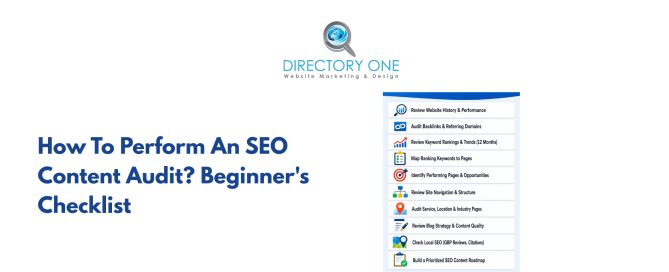
You have published dozens — maybe hundreds — of blog posts and pages. But traffic is either flat or declining. Sound familiar? The fix usually starts with an SEO content audit.
Most websites are carrying dead weight: outdated posts, thin pages, duplicate content, and keyword-stuffed articles that Google no longer rewards. An audit surfaces exactly what is hurting you and what you should do about it.
This guide walks you through the full SEO content audit process — from inventory to action — with a practical SEO content audit checklist chalked out by a Houston SEO audit company you can use immediately, even if you have never done one before.
What Is an SEO Content Audit?
An SEO content audit is a systematic review of every piece of content on your website. The goal is to evaluate what is performing, what is underperforming, and what should be updated, consolidated, or removed.
It is not just about finding weak content. It is about maximizing the value of everything you have already published.
Importance of SEO Content Audit
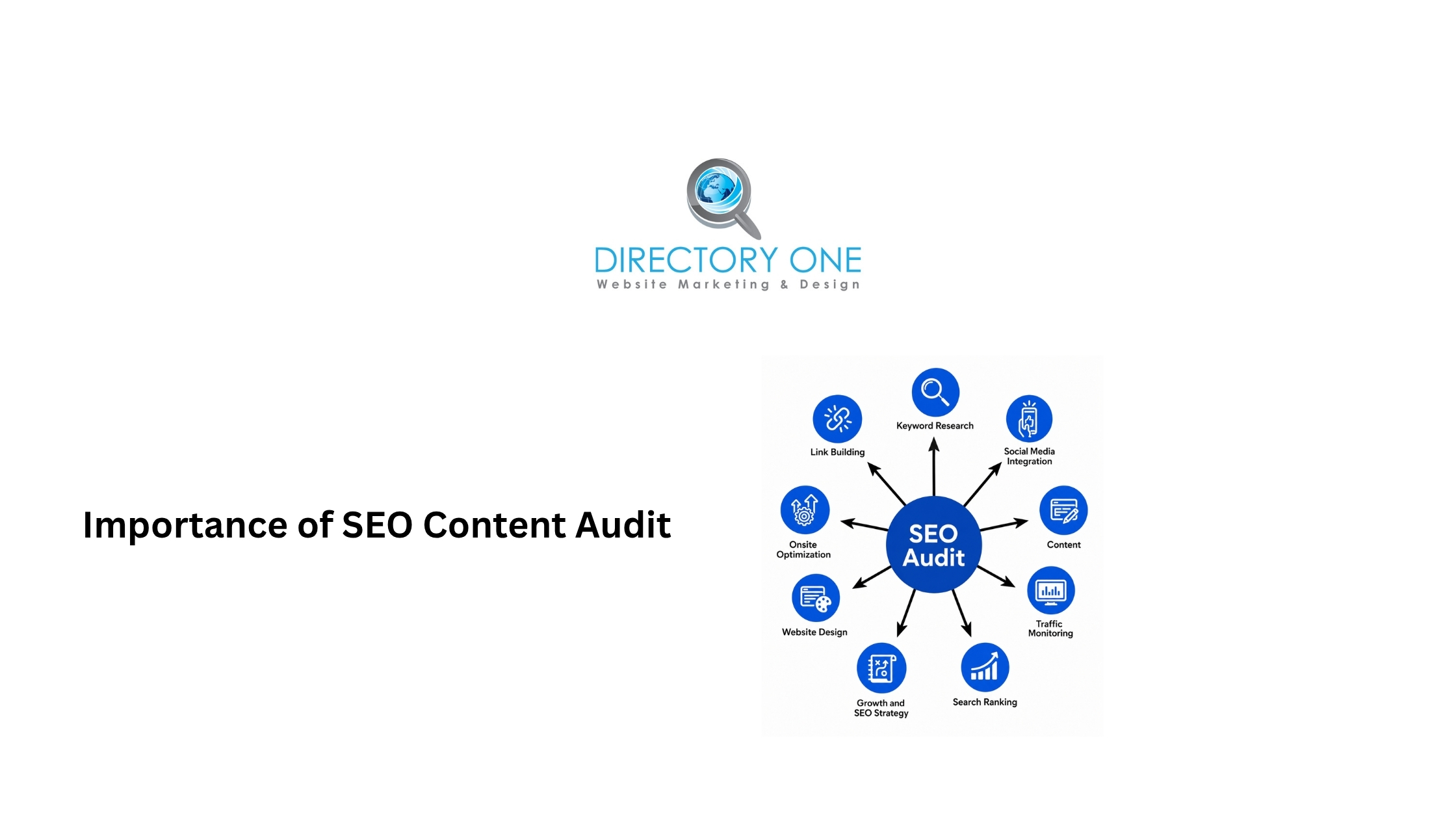
Moving from position 2 to position 1 in Google results in a +50% organic traffic increase on average, according to Semrush. Even climbing from position 7 to position 6 delivers a 20% traffic boost. Small improvements to existing content compound fast.
Additionally, 94% of all web pages on the internet get zero organic traffic from Google, per Ahrefs. A content audit is the process that identifies which of your pages fall into that category — and what to do about it.
Without regular audits, your site accumulates content that confuses Google, dilutes your topical authority, and wastes your crawl budget SEO on-page audit that will never rank.
When Should You Perform an SEO Content Audit?
There is no single rule, but here are clear signals that an audit is overdue:
- Organic traffic has declined in the last 3–6 months without an obvious cause
- You recently experienced a drop following a Google core algorithm update
- Your site has over 50 published pages and has never been audited
- You are planning a new content strategy and need to understand your baseline
- You have been publishing content for 12+ months without reviewing performance
As a general practice, conducting a SEO content audit once every 6–12 months keeps your site healthy and prevents content debt from accumulating. In this process, professional SEO audit and content cleanup services can help.
SEO Content Audit Process
The SEO content audit process follows a logical sequence. Skipping steps creates blind spots.
Step 1: Build Your Content Inventory
Start by listing every URL on your site. Use Google Search Console to export all indexed URLs. Then cross-reference with a crawl tool to catch pages that may not be indexed yet.
Create a spreadsheet with columns for: URL, page title, word count, last modified date, target keyword, organic traffic (from Search Console), impressions, average position, and backlinks.
This inventory becomes your working document for the entire audit.
Step 2: Pull Performance Data
Connect Google Analytics 4 and Google Search Console to your inventory. For each URL, record:
- Organic sessions over the last 3 and 12 months
- Impressions and average position in search results
- Click-through rate (CTR)
- Bounce rate and time on page
- Number of external backlinks
This data tells you which pages are earning traffic, which are close to ranking but underperforming, and which have been invisible to Google.
Step 3: Categorize Every Page
Now assign each page to one of four action categories:
- Keep and optimize — performing well, minor improvements needed
- Improve — ranking but underperforming; needs content updates, better keywords, or structural changes
- Consolidate — similar pages covering the same topic; merge into one authoritative piece
- Remove or redirect — thin, outdated, or duplicate content with no traffic or backlinks
This categorization is the core decision-making step of the SEO content audit process.
Step 4: Prioritize and Execute
Sort your prioritized pages by opportunity. Pages already ranking on page 2 (positions 11–20) often respond fastest to optimization — a targeted improvement can push them to page 1 and generate significant traffic gains.
Complete SEO Content Audit Checklist for Beginners
Use this SEO content audit checklist for every page you review.
Content Quality
- Does the page target a specific, clearly defined keyword?
- Is the content comprehensive — does it fully answer the user’s query?
- Is the information accurate and up to date?
- Are there thin sections that need expanding?
- Does the content demonstrate E-E-A-T (Experience, Expertise, Authority, Trust)?
On-Page SEO
- Is the primary keyword in the H1, first paragraph, and at least one H2?
- Is the meta title under 60 characters with the keyword included?
- Is the meta description under 155 characters and written to generate clicks?
- Are internal links pointing to this page from relevant existing content?
- Are there relevant internal links going out from this page?
Technical Health
- Does the page load in under 3 seconds on mobile?
- Is the page indexed in Google Search Console?
- Are there any crawl errors or redirect issues on this URL?
- Is there any duplicate content or cannibalization with another page?
Content Performance
- Has this page received organic traffic in the last 6 months?
- Is the CTR above 2% for its average position?
- Has this page earned any backlinks?
- Has the content been updated in the last 12 months?
If a page fails more than half of these checks and has received no traffic in 6 months, it is a candidate for removal or consolidation.
Website Content Audit Checklist for Better Rankings
A website content audit checklist extends beyond individual pages to evaluate site-wide patterns.
Here is a long list of site-wide inspections to include in your audit list:
- Keyword cannibalization.
Multiple pages targeting the same keyword split your ranking potential. Use Google Search Console to identify URLs competing for the same queries. Consolidate or differentiate them.
- Orphan pages.
Pages with zero internal links pointing to them are invisible to Google’s crawlers — and to users. Identify them during your crawl and add relevant internal links from existing content.
- Thin content clusters.
If you have six posts on similar topics, each only 400 words, they likely perform worse than one well-researched 1,500-word piece. Consolidating thin content into comprehensive pillar pages is one of the highest-ROI actions in any SEO content audit.
- URL structure.
Check for inconsistent URL formats, unnecessary parameters, and overly long slugs. Clean, descriptive URLs improve both click-through rates and crawlability.
Blog Content Audit: How to Fix Low-Performing Posts
A blog content audit focuses specifically on your published posts. It answers one question: which posts deserve more attention, and which are dragging your site down?
Here is how to fix low-performing posts after a blog content audit checklist review:
- Update with current data.
Outdated statistics, broken links, and references to old tools immediately signal to readers — and Google — that a page has not been maintained. Replace stale data with current sources. This alone can recover rankings for time-sensitive content.
- Improve the introduction.
Most readers decide within 5 seconds whether to continue reading. If your opening paragraph buries the key point, rewrites the question the reader typed, or starts with vague platitudes, rewrite it. Be direct. State the value immediately.
- Add internal links.
Every strong post should have 2–5 internal links going out to related content. Also, go back to older posts and add links pointing to newly updated pages. This distributes authority and improves crawl efficiency.
- Fix keyword targeting.
Many older posts target broad, high-competition keywords that were never realistic. After reviewing Search Console data, you may find a page already ranking for a more specific long-tail keyword — update the H1 and meta title to match that actual ranking keyword.
- Expand thin sections.
If a post is ranking on page 2 for a valuable keyword, the most likely reason is insufficient depth. Review the top 3 ranking pages for that keyword. Identify what they cover that your post does not. Then add it.
Best SEO Content Audit Tools You Should Use
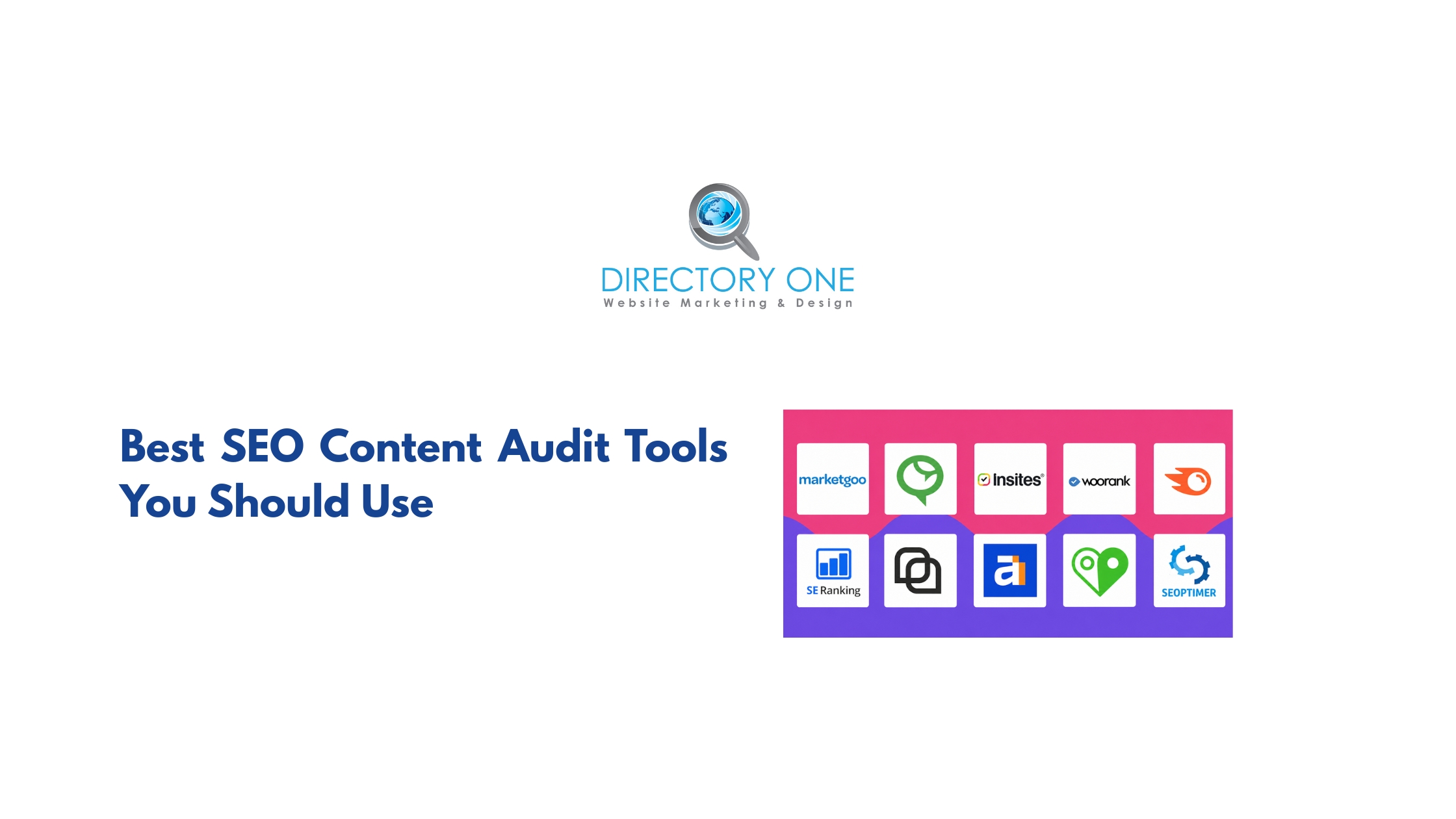
The right SEO content audit tools turn a manual, time-consuming process into a structured, data-driven workflow.
Google Search Console (Free)
Your most important starting point. Shows which pages are indexed, which queries they rank for, and where click-through rates are weak. Essential for any SEO on-page audit.
Google Analytics 4 (Free)
Tracks actual user behavior after the click: time on page, bounce rate, conversion events. Connects organic traffic to business outcomes.
Screaming Frog SEO Spider (Free up to 500 URLs / Paid for larger sites)
Crawls your entire site and surfaces technical issues: broken links, missing meta tags, duplicate content, redirect chains, and orphan pages. Indispensable for the SEO content audit process.
Ahrefs or Semrush (Paid)
Provide keyword rankings, backlink data, and content gap analysis across your entire site. Both offer site audit features that identify SEO issues at scale. These are the platforms most professional SEO content audit services are built around.
Surfer SEO (Paid)
For evaluating content against what is currently ranking for your target keywords. Useful for the improvement phase of your audit, not the inventory phase.
For beginners, starting with Google Search Console, Google Analytics 4, and Screaming Frog covers the essentials at little to no cost.
SEO On-page Audit Tips to Improve Content
A SEO on-page audit does not require paid tools. Use these steps using only Google’s free resources:
- Use Search Console’s Coverage report to identify indexed vs. non-indexed pages. Investigate any “Excluded” URLs — many exclusions are fixable issues that are costing you rankings.
- Use the URL Inspection tool to check individual pages. Verify the page is indexed, review the last crawl date, and check for any structured data or mobile usability issues.
- Use Search Console’s Performance report to filter by page and find posts with high impressions but low CTR. These are your quick wins — good rankings, but the title or meta description is not compelling enough to earn the click. Rewriting titles for these pages can deliver fast traffic gains.
- Use Google PageSpeed Insights (free at pagespeed.web.dev) to test page load speed on mobile and desktop. Slow pages lose both rankings and users. According to Google’s research, bounce probability increases 32% when page load time goes from one to three seconds.
SEO Content Audit Services: When Should You Hire Experts?
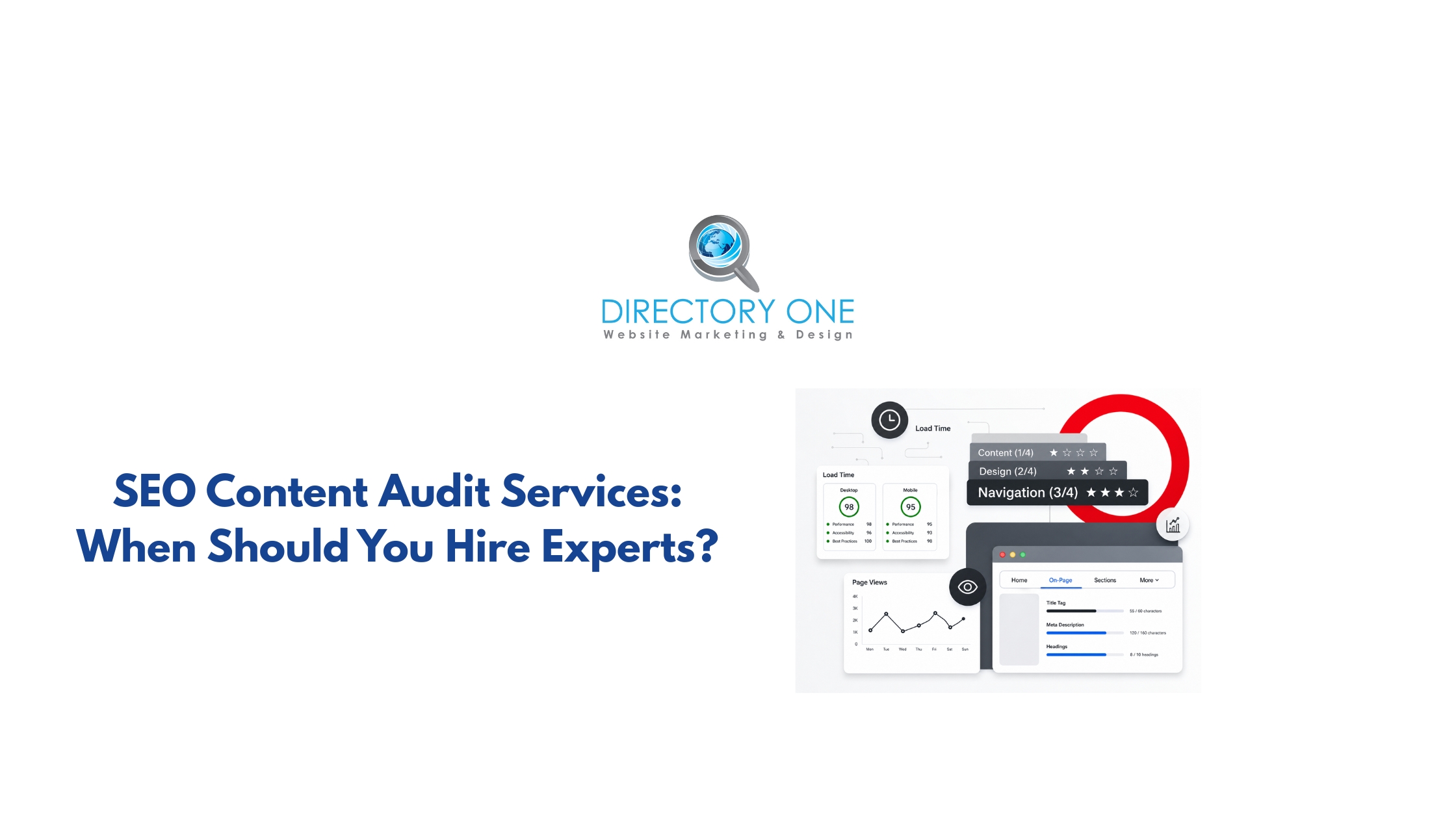
A SEO content audit service makes sense when:
- Your site has more than 200 pages, and a manual audit is not realistic.
- You have experienced a significant organic traffic drop and cannot identify the cause.
- You need a complete website audit services report to present to stakeholders or leadership.
- You want a structured action plan — not just a list of issues — with prioritized recommendations.
- You are launching a new content strategy and need a clean, accurate baseline.
Professional SEO audit services deliver more than a spreadsheet. They include competitive analysis, keyword opportunity mapping, content consolidation strategy, and prioritized fixes tied to estimated traffic impact.
At Directory One, our SEO audit services Houston team provides full-scope content and technical audits — identifying every drag on your rankings and delivering a prioritized roadmap to fix it. Whether you are a local business in Houston or a national brand, a proper SEO content audit is the foundation of any sustainable organic growth strategy.
Let Expert Houston SEO Audit Company? Handle Your SEO Content Audit
If you want a complete, professional SEO content audit service without spending weeks doing it yourself, Directory One, a renowned Houston SEO audit company?, delivers the data and the action plan.
At Directory One, our SEO audit and content cleanup services? include:
- Search Engine Optimization — full-service organic growth strategy.
- Content Marketing Solutions — content strategy built on audit insights.
- Blog Posting Services — ongoing optimized content creation.
- Website Content Writing — rewrites and refreshes for underperforming pages.
- Pay Per Click Management — while your organic strategy builds.
The Final Statement
An SEO content audit is the most effective way to keep your website healthy and profitable. By following this SEO content audit process, you can turn a cluttered site into a streamlined lead-generation machine. Don’t let your hard work go to waste—audit your content and start ranking higher today!
Are you ready to see real results? At Directory One, we provide comprehensive SEO website audit services designed to boost your visibility and ROI. Whether you need a simple blog content audit or a full-scale SEO content audit service, our experts in Houston are here to guide you.
Call us at 713.269.3094.
