





Ecommerce Website Audit: 7 Steps for Better Conversions
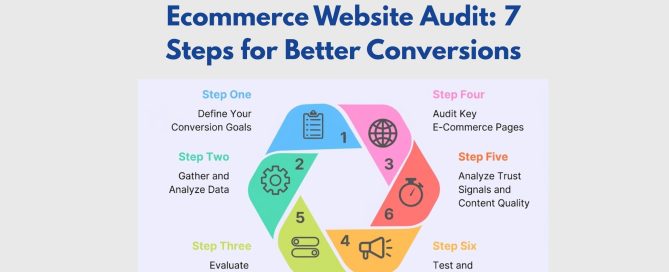
If your ecommerce store is getting traffic but not enough sales, the problem might not be your product or your pricing — it’s likely your website. An ecommerce website audit is the process of systematically reviewing your online store to identify what’s working, what’s broken, and what’s holding your conversions back. Done right, it’s one of the most direct paths to measurable growth.
Whether your traffic has plateaued or your checkout abandonment is rising, a professional ecommerce website audit provides the roadmap needed to refine your digital storefront and reclaim your market share. This guide walks you through 7 practical steps to audit your ecommerce website and start fixing what matters.
The Importance of Ecommerce Website Audit
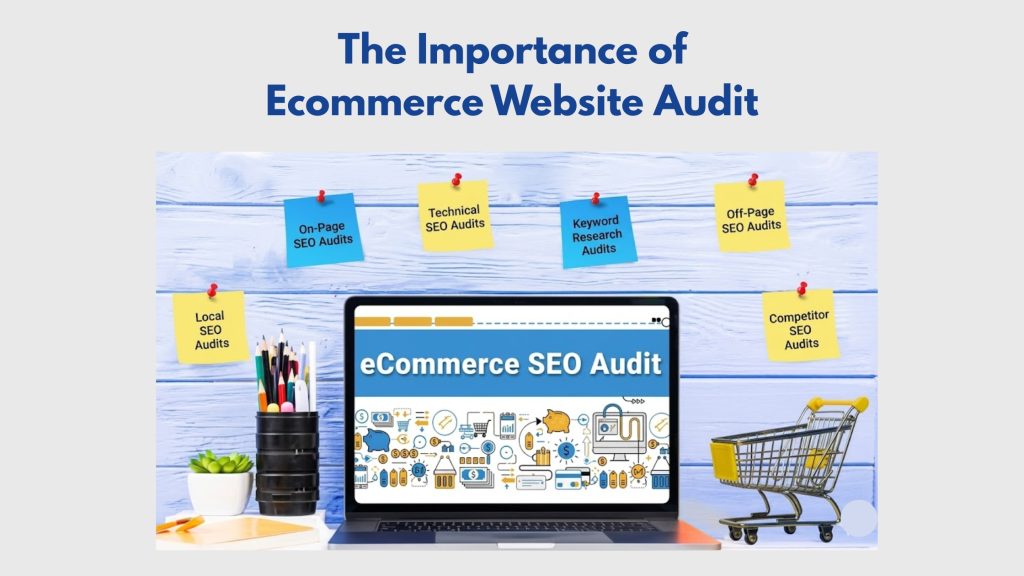
An ecommerce website audit highlights areas that directly impact conversions, including:
- Page speed and mobile usability
- Checkout experience
- SEO visibility
- Product page structure
At Directory One, we’ve run complete e-commerce website audits for businesses across Houston and beyond — and the patterns are consistent. Small technical issues and overlooked SEO gaps add up to serious revenue loss.
So, understanding the benefits of website audits for ecommerce businesses allows you to fix performance issues before they affect revenue. Many businesses choose complete SEO audit services for ecommerce website optimization to ensure no critical element is overlooked.
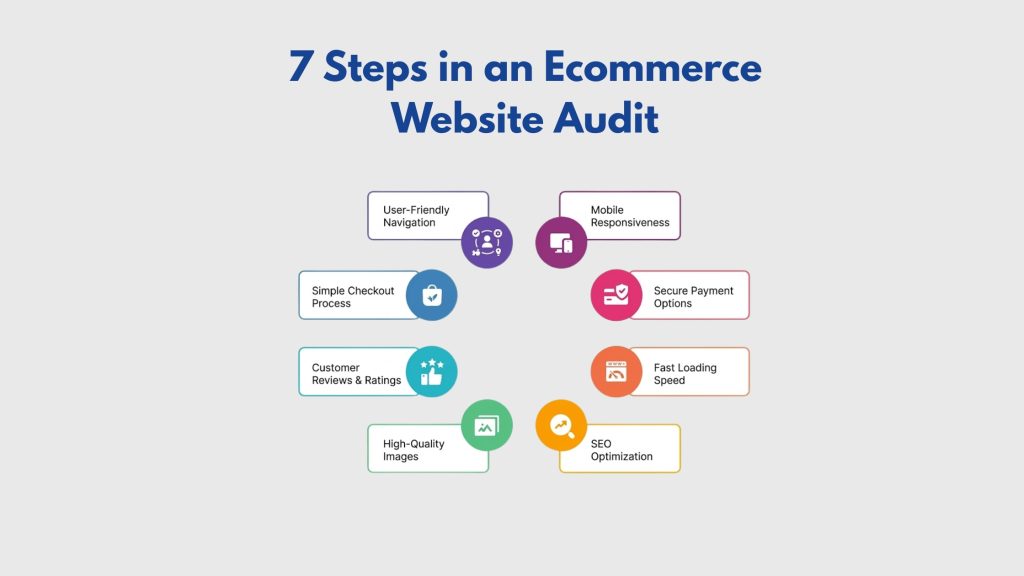
7 Steps in an Ecommerce Website Audit
Step 1: Start with an Ecommerce Website SEO Audit
Before anything else, you need to understand how search engines see your site. An ecommerce website SEO audit covers the basics that directly impact your visibility in search results: page titles, meta descriptions, heading structure, keyword placement, and canonical tags.
Check that every product page and category page has a unique title and meta description. Duplicate content is more common on ecommerce sites than most people realize, especially with filtered URLs and pagination. Google won’t rank pages it considers identical.
This is also the phase where you confirm your target keywords are actually present on the pages that matter. If your product pages aren’t optimized for what people are searching, no amount of traffic strategy will fix your conversion rates.
Step 2: Run a Technical Ecommerce Website Audit
Technical issues quietly destroy both rankings and user experience. During a technical e-commerce website audit, focus on the following areas:
- Page speed — According to Google, a 1-second delay in load time can reduce conversions by up to 7%.
- Mobile responsiveness — Over 60% of ecommerce traffic now comes from mobile devices.
- Broken links and 404 errors — These damage trust and hurt crawlability.
- Crawl errors and indexation problems — Pages that Google can’t crawl won’t rank.
- SSL certificate and HTTPS — Non-secure sites lose trust signals immediately.
These aren’t minor tweaks. A slow-loading product page or a broken checkout flow can wipe out the work you’ve done on everything else.
Step 3: Use the Right E-commerce Website Audit Tool
You can’t audit what you can’t measure. Using a reliable ecommerce website audit tool gives you data instead of guesswork. Some widely used options include
- Google Search Console (free, essential)
- Screaming Frog for technical crawling
- Ahrefs or SEMrush for keyword and backlink analysis
- GTmetrix for page speed.
The right e-commerce website audit tool for your business depends on your platform — Shopify, WooCommerce, Magento — and the depth of insight you need. Pairing two or three tools tends to give a more complete picture than relying on any single one.
Step 4: Follow an Ecommerce Website Audit Checklist
Audits can get overwhelming fast. A structured e-commerce website audit checklist keeps you focused on what actually moves the needle. Here’s a simplified version of what that looks like:
On-Page SEO
- Unique title tags and meta descriptions on every page
- Proper H1/H2/H3 structure on product and category pages
- Optimized product descriptions (not manufacturer copy-paste)
User Experience (UX)
- Clear navigation and category structure
- Simple, frictionless checkout process
- Clear calls to action (Add to Cart, Buy Now, etc.)
Trust Signals
- Customer reviews are visible on product pages
- Return and refund policies are easy to find
- Security badges and payment logos at checkout
This e-commerce website audit checklist isn’t exhaustive, but it covers the areas that tend to generate the biggest conversion improvements.
Step 5: Understand the Benefits of Website Audits for Ecommerce Businesses
Some businesses treat audits as a one-time fix. The reality is that the benefits of website audits for ecommerce businesses go far beyond patching technical issues. Regular audits help you stay ahead of algorithm changes, catch new errors before they compound, and keep your site competitive as your product catalog grows.
Practically speaking, the benefits of website audits for ecommerce businesses include better organic rankings, higher conversion rates, reduced cart abandonment, improved user experience, and a stronger foundation for paid advertising. Every dollar you invest in ads performs better when your site is doing its job.
Step 6: Apply Ecommerce Website Audit Best Practices
There are a few e-commerce website audit best practices that separate thorough audits from surface-level reviews:
- Prioritize by impact. Fix checkout and product page issues before worrying about blog formatting.
- Compare before and after. Document your baseline metrics so you can measure what the audit actually changed.
- Don’t audit in isolation. Involve your development, marketing, and sales teams so fixes are implemented, not just identified.
- Schedule regular audits. Quarterly is reasonable for most ecommerce businesses; monthly if you’re scaling quickly.
Following ecommerce website audit best practices means being systematic, being honest about what you find, and taking action on what matters most — not just the easiest items to check off.
Step 7: Get Complete SEO Audit Services for Ecommerce Website Optimization
DIY audits have value, but there’s a ceiling to what you can catch without professional tools and years of pattern recognition.
Complete SEO audit services for ecommerce website optimization go deeper — identifying issues like keyword cannibalization, thin content across hundreds of product pages, internal linking gaps, and structured data opportunities that most business owners miss entirely.
When you audit ecommerce website performance at a professional level, you also get a clear action plan — not just a report full of red flags with no direction. The goal is always the same: more qualified traffic, better user experience, and higher revenue from the store you’ve already built.
Work With Experts in Ecommerce Website Audit Services
At Directory One, we provide structured ecommerce website audit solutions tailored to your business goals. As a professional agency, we offer:
- Comprehensive ecommerce website SEO audit
- Technical and conversion-focused e-commerce website audit checklist
- Performance evaluation using advanced e-commerce website audit tool systems
- Complete SEO audit services for ecommerce website optimization
We help clients understand the real benefits of website audits for ecommerce businesses by delivering clear, actionable recommendations.
Our team follows proven e-commerce website audit best practices to improve visibility, usability, and conversions.
Summing Up
An online store is never truly “finished.” It requires constant refinement and professional oversight to stay ahead of the curve. A well-executed e-commerce website audit provides clarity and direction for sustainable growth. If your online store is not performing as expected, it may be time to audit e-commerce website performance with professional guidance.
Directory One offers expert-level e-commerce website audit services designed to strengthen SEO, improve user experience, and increase conversions. If you are ready to transform your online store into a high-performing sales engine, partner with the experts at Directory One. We provide the clarity and technical precision necessary to scale your brand effectively.
Call us today at 713.269.3094 to schedule your professional consultation.
About The Author
