





Apple Maps SEO vs. Google Maps SEO: 5 Essential Differences You Must Know
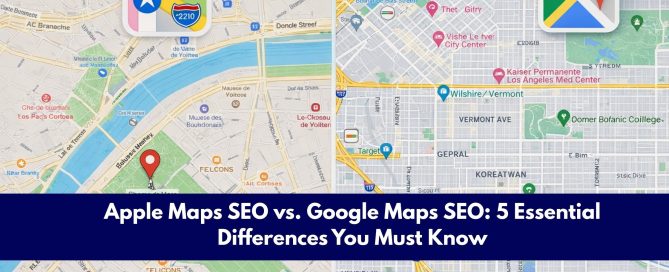
When optimizing for Apple Maps SEO, most local business owners follow the same playbook they use for Google Maps—and that’s a critical mistake. While both platforms serve similar functions, their ranking algorithms, data sources, and user demographics differ significantly. Ignoring these distinctions means leaving potential customers on the table.
Apple Maps SEO is increasingly important as the platform gains traction among iOS users. With over 1 billion iPhone users worldwide and growing engagement, Apple Maps local SEO now rivals Google Maps for many business categories.
This comprehensive guide reveals the five most important differences between Apple Maps SEO and Google Maps optimization, providing actionable strategies to dominate both platforms.
How Does Apple Maps SEO Differ From Google Maps?
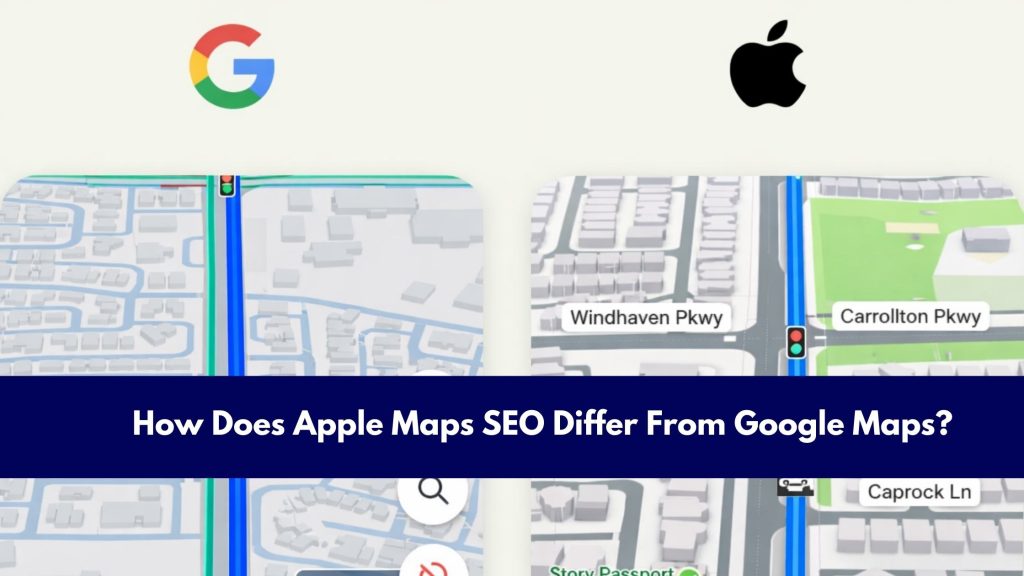
Understanding how each platform’s algorithm works is foundational to success. Apple Maps SEO and Google Maps SEO operate on different principles, even though both consider business relevance and location signals.
Difference #1: Platform Reach and User Behavior
Google Maps
- Integrated directly with Google Search
- Dominates Android and desktop usage
- Strong influence on “local pack” rankings
Apple Maps
- Default mapping app for all iOS devices
- Deep integration with Siri, Spotlight Search, and CarPlay
- Frequently used for navigation-driven searches (e.g., “near me” queries)
Key Insight:
Google Maps focuses on search-first discovery, while Apple maps SEO is driven by device-level and voice-based intent.
Difference #2: Business Listing Management Systems
Google Maps SEO
Businesses manage visibility through Google Business Profile, which includes:
- Business categories
- Reviews and responses
- Photos and videos
- Posts, updates, and Q&A
Google confirms that complete and accurate profiles improve local ranking performance.
Apple Maps SEO
Apple Maps uses Apple Business Connect, which:
- Controls business name, categories, and location data
- Displays branding across Apple Maps, Wallet, and Siri
- Relies more heavily on structured data accuracy
SEO Impact:
Apple Maps SEO places greater emphasis on data consistency and category relevance, while Google Maps SEO rewards engagement signals.
Difference #3: Reviews, Trust Signals, and Authority
Reviews remain a major trust factor in local SEO.
Google Maps SEO
- Reviews are native to the platform
- Star ratings directly affect click-through rates
- Google states reviews influence prominence in local results
Apple Maps SEO
- Does not operate a proprietary review system
- Pulls review data from approved third-party sources
- Trust signals are less interactive but still visible to users
Best Practice:
For Apple Maps SEO, reputation management must extend beyond Apple itself and focus on authoritative review ecosystems.
Difference #4: Ranking Signals and Local SEO Weighting
| Ranking Factor | Google Maps SEO | Apple Maps SEO |
| Business Relevance | High | High |
| Reviews & Ratings | Very High | Moderate |
| Profile Engagement | High | Low |
| Data Accuracy (NAP) | High | Very High |
| Voice Search Signals | Moderate | High |
Google confirms that relevance, distance, and prominence drive local map rankings.
Apple places a stronger weighting on:
- Structured business data
- Location accuracy
- Siri search intent
Difference #5: Voice Search and Ecosystem Integration
Google Maps
- Integrated with Google Assistant
- Supports conversational queries across devices
- Closely tied to Google’s local SEO algorithm updates
Apple Maps
- Powers Siri voice searches
- Integrated with iOS, Apple Watch, and CarPlay
- Optimized for hands-free, intent-driven navigation
Apple confirms Siri handles billions of requests weekly, many tied to location-based queries.
Strategic Insight:
Apple Maps SEO must account for voice-first discovery, while Google Maps SEO remains more text-query-driven.
Step-by-Step Framework: Optimizing for Apple Maps SEO
- Claim and verify your Apple Business Connect listing
- Ensure NAP consistency across authoritative platforms
- Select precise business categories
- Optimize descriptions for local and voice intent
- Monitor location accuracy and updates regularly
Directory One routinely helps businesses align both Apple Maps SEO and Google Maps SEO strategies, ensuring no visibility gaps across platforms.
Partner With Directory One for Apple Maps SEO Success
Understanding Apple Maps SEO differences is one thing—implementing a winning strategy is another. At Directory One, we specialize in dual-platform local optimization that maximizes your visibility on both Apple Maps and Google Maps.
Our expert team conducts comprehensive audits of your current Apple Maps local SEO presence, identifies optimization gaps, and implements platform-specific strategies proven to drive results. We handle everything from government business registration verification to Open Street Map optimization and quality review generation.
Whether you’re launching Apple Maps and local SEO for the first time or refining an existing presence, Directory One delivers measurable improvements in rankings, visibility, and local search traffic.
Ready to dominate Apple Maps and Google Maps? Schedule your free Apple Maps SEO consultation with Directory One today. Call us at 713.269.3094 or visit directoryone.com.
About The Author
