





On-page SEO Techniques Every Company Must Implement in 2026
On-page SEO is the engine room of your digital presence. In 2026, the landscape of search has shifted from “finding links” to “receiving answers.” With the rise of AI-driven search overviews and a heavier emphasis on user experience, simply having a website is no longer enough. To compete, brands must leverage advanced on page SEO techniques that prioritize intent, semantic relevance, and technical precision.
Whether you are a local business looking for on-page SEO techniques in Texas or a global brand, your ability to rank on Page 1 depends on how well you satisfy both search algorithms and human readers. This guide provides a step-by-step roadmap to mastering on page SEO tools and techniques in this new era of digital marketing.
Understanding On-page SEO
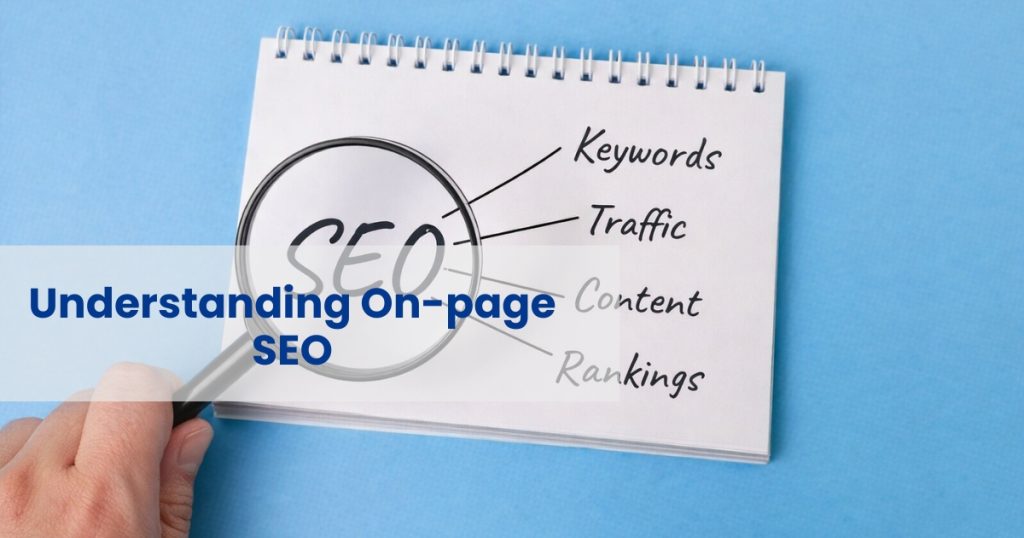
On-page SEO refers to the practice of optimizing individual web pages to rank higher and earn more relevant traffic in search engines. Unlike off-page SEO, which focuses on external signals like backlinks, on-page optimization is entirely within your control.
In 2026, the distinction between on page SEO vs technical SEO has blurred. While technical SEO ensures your site can be crawled and indexed, on-page SEO ensures your content is the best possible answer to a user’s query. According to some recent Statistics, pages that rank #1 on Google capture nearly 39.8% of all clicks, a number that increases significantly if the page also wins a “Featured Snippet” or an AI Overview citation.
Why Does Your Business Need to Consider On-Page SEO?
As search engines become increasingly sophisticated and user expectations evolve, the distinction between effective on-page SEO and poor optimization determines whether your content dominates Google’s first page or disappears into obscurity.
According to Google, on-page relevance and usability are core ranking considerations. Over 90% of searchers only click on results from the first page, and position 1 gets 10x more clicks than position 10. This disparity makes on-page optimization non-negotiable for any company serious about organic visibility.
Moreover, with engagement signals now contributing a decisive 20–23% of ranking influence (CTR, bounce rate, dwell time, scroll depth, and goal completion), Google’s AI uses these behavioral patterns as proof of intent satisfaction. This means a perfectly optimized page that fails to engage visitors will lose ground to competitors whose pages are both technically sound and designed for user satisfaction.
Why Advanced On Page SEO is Crucial in 2026?
The search environment is no longer just “ten blue links.” Today, we deal with “Zero-Click Searches” where AI summaries provide answers directly on the search page. To remain relevant, companies need to provide cutting-edge on-page SEO techniques that allow AI models to “cite” their content as a primary source.
Besides, SEO generates +1000% more traffic compared to social networks, remaining the main acquisition channel for most websites.
For E-commerce & Service-Based Companies:
If you’re selling products or services, on-page optimization directly impacts qualified traffic and conversions. Conversion rates vary by page type, with white papers leading at 4.6%, followed by case studies at 3.5%, and landing pages at 3.1%. The difference between 1% and 4% conversion rates compounds across hundreds or thousands of monthly visitors.
For B2B & Educational Content:
The average first-page result on Google contains about 1,400 words. Pages that thoroughly address search intent, with proper on-page structure and semantic completeness, earn higher rankings and position your company as a thought leader.
On-Page SEO vs. Technical SEO vs. Off-Page SEO
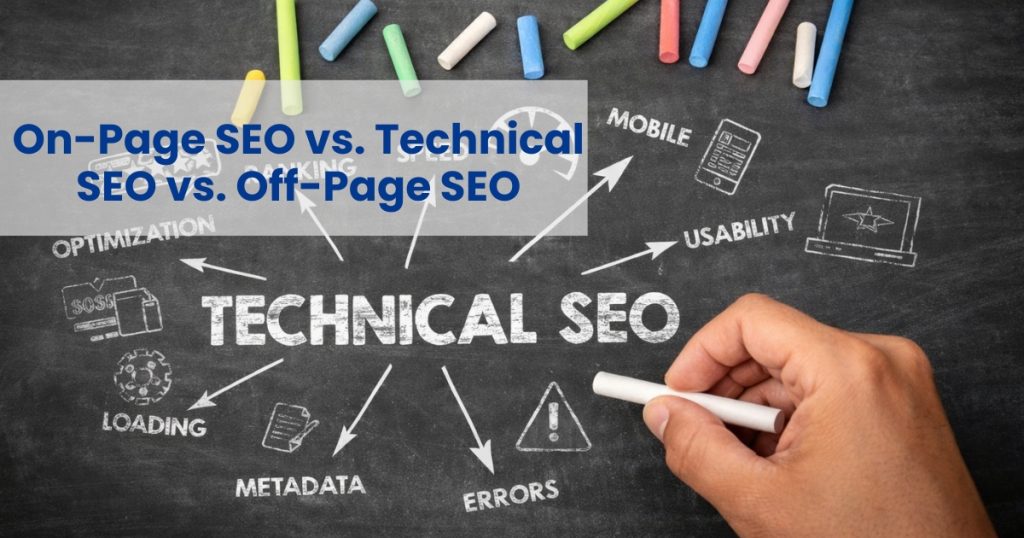
Companies often confuse these three pillars of SEO. Understanding their distinct roles helps you allocate resources effectively.
| Aspect | On-Page SEO | Technical SEO | Off-Page SEO |
| Definition | Optimizing content, titles, headings, internal links | Optimizing site architecture, crawlability, speed, security | Optimizing signals outside your site (backlinks, citations) |
| Examples | Title tags, meta descriptions, keyword placement | Site speed, XML sitemaps, mobile responsiveness, structured data | Backlinks, social mentions, brand citations |
| Ownership | Content team, editors | Developers, technical SEO specialists | PR, link builders, marketing team |
| Time to Impact | Weeks to months | Weeks to months | Months to years |
| Difficulty Level | Low to medium | Medium to high | Medium to high |
The Three Pillars of Modern On-Page SEO
Google’s focus on Experience, Expertise, Authoritativeness, and Trustworthiness (E-E-A-T) is at an all-time high. Search engines now prioritize content that shows firsthand experience. This means your best on page SEO techniques must include:
- Author Bios: Showing who wrote the content and why they are an expert.
- Original Data: Using case studies or proprietary research.
- Transparency: Clearly visible contact information and physical address (crucial for on page SEO services in local markets like Houston or Dallas).
A Step-by-Step Guide to Improve On Page SEO
96.55% of all pages get zero traffic from Google. This isn’t because the web is oversaturated—it’s because the vast majority of companies fail to optimize the pages they publish. They create content, hit publish, and wonder why organic traffic never materializes.
SEO still delivers 91% positive ROI for marketers, making it one of the highest-returning marketing channels. But this return only manifests when on-page SEO is executed strategically. To truly improve on page SEO, you must move beyond keyword stuffing. Follow this systematic approach used by any top-tier on-page SEO expert.
Step 1: Conduct a Semantic Audit
Don’t just look for one keyword. Use on page SEO tools and techniques to find “entities” and related topics. Search engines now use Natural Language Processing (NLP) to understand the context of your page. If you are writing about “Cloud Hosting,” the algorithm expects to see terms like “scalability,” “latency,” and “server architecture.”
Step 2: Optimize for Micro-Intents
Users search with different “micro-intents” (e.g., I want to know, I want to go, I want to buy). Ensure your page structure matches this:
- Informational: Use long-form guides (1,500+ words).
- Transactional: Use clear product features and pricing tables (essential for on page SEO for e-commerce website success).
Step 3: Master Title Tag Optimization
Your title tag—the blue text users see in search results—is one of the highest-impact on-page elements. Google has stated that using an H1 tag “helps Google understand the structure of the page”, and similar logic applies to titles.
- Lead with your primary keyword (ideally within the first 3-5 words).
- Keep it under 60 characters to prevent truncation in search results.
- Add emotion or specificity to improve click-through rate (CTR).
- Match search intent exactly.
Step 4: Be Proficient in Technical On Page SEO
On page technical SEO ensures that the “bones” of your page are healthy.
- Core Web Vitals: Focus on INP (Interaction to Next Paint). Your page should respond to user clicks in under 200ms.
- Schema Markup: Use JSON-LD structured data for FAQs, Products, and Articles. This helps your site appear in rich results, which receive 58% of all clicks according to HubSpot data.
Step 5: Fine-tune Heading Structure (H1, H2, H3 Hierarchy)
Clean header hierarchy, predictable structure, intuitive spacing, and frictionless navigation reduce cognitive load and guide visitors naturally across the page.
Google uses heading tags to understand content hierarchy and topic relevance. Misusing them signals poor organization to search engines and creates a disorienting experience for users.
Proper Heading Structure should include:
- One H1 per page (your main topic)
- Multiple H2s (supporting subtopics aligned with secondary keywords)
- H3s nested under H2s (specific points within each subtopic)
- Skip no heading levels (don’t jump from H1 to H3)
Step 6: Use Your Primary Keyword in the First 100 Words
All you need to do is use your main keyword once in the first 100-150 words of your article. Google puts more weight on terms that show up early on your page.
This signals to Google that your page is immediately relevant to the search query. If a user searches for “on-page SEO,” and your article doesn’t mention that phrase until paragraph five, Google questions whether your page truly addresses the query.
Step 7: Craft Semantically Rich, Intent-Driven Content
Traditional keyword optimization is dead. Ranking in 2026 isn’t about cramming a focus keyword; it’s about proving content fluency. Semantic SEO has evolved from a buzzword to the backbone of digital marketing. Instead of obsessing over single keywords, SEOs now utilize topic modeling and NLP-based tools to understand search intent.
Step 8: Implement Strategic Internal Linking
These are the links on your page that take the reader to other pages on your site. Your page should not only include internal links, but other pages on your site should link to the one you’re optimizing. For any case with linking, the anchor text should be specific to the page you’re linking to and contain the keyword it’s targeting.
Internal links serve three critical functions:
- Distribute page authority throughout your site
- Guide user navigation to related content
- Help Google understand topic relationships and site structure
On-Page SEO Tools and Techniques for Implementation
You don’t need expensive software to optimize on-page elements, but the right tools accelerate the process.
| Tool | Purpose | Link |
| Google PageSpeed Insights | Measure Core Web Vitals and page speed | https://pagespeed.web.dev |
| Google Search Console | Monitor search performance and indexation | https://search.google.com/search-console |
| Google Keyword Planner | Research keyword search volume | https://ads.google.com/keyword-planner |
| Ubersuggest | Content ideas and keyword analysis | https://ubersuggest.com |
| Yoast SEO (WordPress) | On-page optimization guidance | https://yoast.com |
| MozBar | Quick domain authority checks | https://moz.com/tools/mozbar |
Summing Up
Mastering On-page SEO in 2026 requires a commitment to quality and a deep understanding of user intent. By implementing advanced on page SEO strategies—from semantic clustering to high-performance technical hygiene—your company can secure its place at the top of the search results. Remember, search engines don’t just rank websites; they rank the most helpful and trustworthy answers.
Looking to dominate your local or national market? Whether you need a comprehensive on page SEO service or a full digital strategy, we can help. Learn more about our specialized on-page SEO techniques in Texas and beyond. Visit https://www.directoryone.com/ or call 713.269.3094 for a free consultation.
About The Author
